Munich Travel Guide: Beer Gardens, Castles & Old Town
When to go, the Old Town and Marienplatz, beer gardens and halls, Oktoberfest timing, day trips to Neuschwanstein and Dachau, transport, food and costs.
In this guide
- Table of Contents
- Why Munich Is Worth a Proper Visit
- Best Time to Visit
- Marienplatz and the Old Town
- Beer Gardens and Beer Hall Culture
- Oktoberfest: Timing and Tips
- Day Trip: Neuschwanstein Castle
- Day Trip: Dachau Memorial
- Other Day Trips
- Getting Around Munich
- Costs and Budget
- Food Beyond Pretzels
- Where to Stay
- Final Practical Tips
- Explore Munich & Germany in Depth: My Detailed Guides
- Explore in Depth
This guide is part of our Germany Travel Guide — start there for the overview, when to go and how to get around.
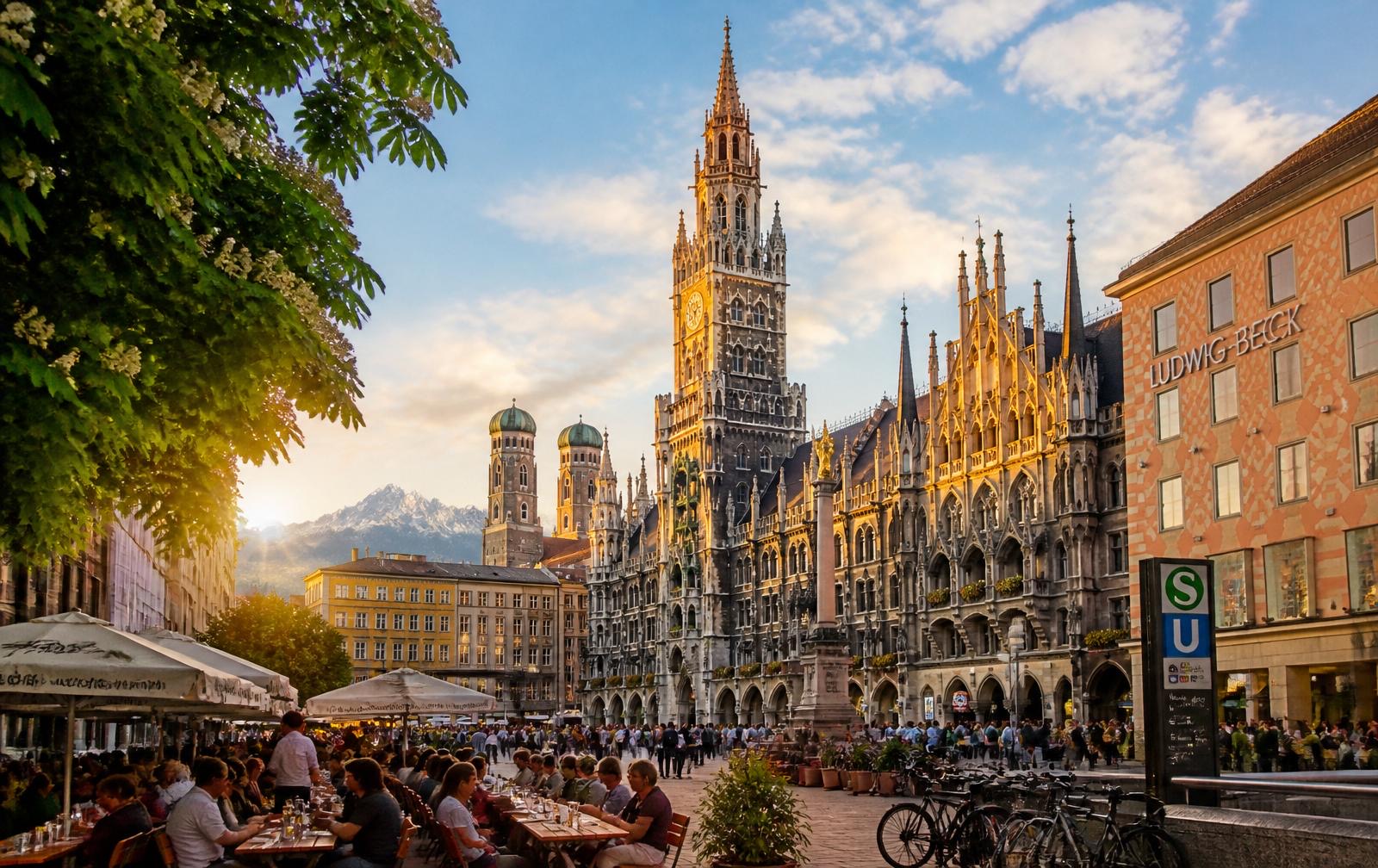
On a warm September evening around Marienplatz, half of Munich can seem to be sitting under the chestnut trees with a litre of beer — no urgency, no phones, just conversation and the smell of pretzels drifting from the Viktualienmarkt across the street. Whether you're coming to Bavaria for Oktoberfest or for everything else, this guide answers the questions people actually ask before their first visit.
Munich is often written up as either a giant beer festival or a stopover on the way to the castles, and it deserves better than both framings. It's one of the most liveable cities in Europe, wrapped around a walkable historic core, ringed by beer gardens the size of small parks, and less than an hour by train from the Alps. This guide is written with a first trip in mind.
Table of Contents
- Why Munich Is Worth a Proper Visit
- Best Time to Visit
- Marienplatz and the Old Town
- Beer Gardens and Beer Hall Culture
- Oktoberfest: Timing and Tips
- Day Trip: Neuschwanstein Castle
- Day Trip: Dachau Memorial
- Other Day Trips
- Getting Around Munich
- Costs and Budget
- Food Beyond Pretzels
- Where to Stay
- Final Practical Tips
Why Munich Is Worth a Proper Visit
Munich is the capital of Bavaria, and Bavaria is essentially its own country wearing a German passport. The dialect is different, the food is different, the beer laws are different (the Reinheitsgebot purity rule from 1516 still shapes what's brewed here), and the pace is noticeably calmer than Berlin or Frankfurt. If your idea of Germany is efficient trains and grey business hotels, Munich will rearrange your expectations inside an afternoon.
The city was flattened in 1945 and rebuilt with an unusual decision: rather than clearing the historic centre to make way for post-war modernism, planners reconstructed the medieval and Baroque core more or less as it had been. The result is a walkable Altstadt (Old Town) where the twin onion domes of the Frauenkirche still dominate the skyline, and where you can spend three days without ever needing a taxi.
The other thing that makes Munich unusually rewarding is what surrounds it. Within a two-hour train radius you have the Bavarian Alps, half a dozen fairytale castles, the lake district around Starnberg and Chiemsee, and Salzburg just over the Austrian border. Very few European city breaks let you eat schnitzel in an old town on Monday and be hiking above 2,000 metres on Tuesday.
Best Time to Visit
The short version: late May to early July, or early September if you can tolerate Oktoberfest crowds (or want to be in them). Munich has a proper four-season climate, and the shoulders are much kinder than the extremes.
Late spring (May–June) is my favourite window. The beer gardens have opened, the chestnut trees are in full leaf, days are long enough for 9pm sunsets, and the Alps are still snow-capped for photos without being freezing on top. Hotel rates are noticeably below September peak.
Summer (July–August) is warm and busy. Highs of 25–28°C, plenty of Italian and Spanish tour groups, and the beer gardens genuinely earn their reputation. Book accommodation early; last-minute weekend rates get ugly.
Oktoberfest window (mid-September to first Sunday in October) is a specific decision — see the dedicated section below. If you're not there for the festival, avoid this fortnight: hotel prices triple and central restaurants stop taking regular reservations.
Autumn (mid-October to late November) is underrated. The Alps get their first snow, the beer halls fire up their tile stoves, and the city fills with locals rather than tourists. Bring a proper coat.
Christmas market season (late November to 23 December) is genuinely magical if you like markets — Marienplatz, Residenz and Schwabing all run separate ones. It's also cold, often below freezing, and the days are short. Weekends are heaving; weekdays are wonderful.
Winter proper (January–February) is quiet, cheap and cold. If you're combining Munich with an Alps ski trip, it works beautifully. As a standalone city break in dark, damp weather, it's a tougher sell.
Marienplatz and the Old Town
Marienplatz has been the geographic heart of Munich since 1158. The square is dominated by the New Town Hall (Neues Rathaus), whose Neo-Gothic facade is the postcard image most people arrive with in their heads. The Glockenspiel — the mechanical figures in the tower — performs daily at 11am and noon year-round, and additionally at 5pm from March to October. It's twelve minutes long, it draws a crowd, and it is entirely optional; the tower itself is more interesting than the figurines.
The lift up the Rathaus tower (currently around €6) is worth the queue for the closest view of the twin onion domes of the Frauenkirche across the rooftops. If the Rathaus tower is closed for renovation, the Peterskirche tower one block south — climbed by 306 stone steps rather than a lift — gives a better, more atmospheric view for €5. On a clear day you can see the Alps.
From Marienplatz, everything worth seeing in the historic core is within a fifteen-minute walk. Head south past the Peterskirche and you're at the Viktualienmarkt, Munich's daily food market since 1807 — a small permanent beer garden sits in the middle, shaded by a maypole, and it's one of the best cheap lunch spots in the city (a plate of Leberkäse with sweet mustard and a Brezel costs under €10, plus whatever you're drinking).
North of Marienplatz, the pedestrianised Weinstraße leads past the Frauenkirche (free entry, dress modestly, look for the Devil's Footprint just inside the entrance) and on to the Residenz, the former royal palace of the Wittelsbach dynasty. The Residenz is enormous — 130 rooms open to the public — and easily fills two hours. The Antiquarium hall alone, a 66-metre Renaissance vaulted room lined with classical busts, is worth the €10 ticket.
Keep walking north and you reach the Hofgarten, a formal Italian-style garden that opens onto the vast Englischer Garten — larger than New York's Central Park, cut through by an artificial river where surfers ride a standing wave at the Eisbach year-round. Watching the surfers in wetsuits in mid-winter is one of Munich's most unlikely spectacles.
Beer Gardens and Beer Hall Culture
You cannot understand Munich without understanding that a beer garden is not a bar. It's a public institution with rules going back to a royal decree of 1812, which permitted breweries to serve beer over their cellars provided customers could bring their own food. That rule still applies: at any traditional Bavarian beer garden, you're legally allowed to bring your own picnic to the self-service section. Locals arrive with wooden boards, radishes, cold cuts and pretzels, order a Maß (a one-litre stein) at the counter, and stay for hours.
The five beer gardens I'd steer any first-time visitor toward:
- Chinesischer Turm in the Englischer Garten. 7,000 seats, live brass band, chestnut trees, the classic Munich experience. Get here by 5pm on a summer Friday or you won't find a table.
- Hirschgarten. The largest beer garden in the world at 8,000 seats, with a fenced deer enclosure at one end. Locals-heavy, less touristed than Chinesischer Turm.
- Augustiner-Keller. A ten-minute walk from the main train station, mature chestnut trees, and — importantly — Augustiner beer straight from wooden barrels tapped by hand. Many Müncheners will tell you this is the best beer in the city, and I don't disagree.
- Viktualienmarkt beer garden. Small, central, rotates the brewery every six weeks so all six Munich breweries take turns. Perfect for a one-hour stop rather than a full evening.
- Seehaus in the Englischer Garten. On the shore of the Kleinhesseloher See, quieter and more couples-and-families than the Chinesischer Turm.
Beer halls are a different animal — indoor, year-round, and where the umpah bands live. The Hofbräuhaus is the famous one, and it's fine, but it is 60% tourists on any given night. For a more genuine experience, walk ten minutes to the Augustiner-Bräustuben on Landsberger Straße, or the Wirtshaus in der Au in the Au neighbourhood (which also makes the best dumplings in the city — see the food section).
One practical note: order by the Maß (litre) or the Halbe (half-litre). Ordering "a beer" without specifying will get you a Maß by default at most traditional places, and a full litre of Bavarian lager on an empty stomach at altitude is more than most people expect.
Oktoberfest: Timing and Tips
Oktoberfest, confusingly, is mostly in September — it runs from the Saturday after 15 September through to the first Sunday in October, totalling about sixteen days. The dates shift each year but the pattern is fixed. The whole thing is held on the Theresienwiese, a permanent fairground site a fifteen-minute walk from the main train station, and it draws around six million visitors.
The single most useful thing to know is that Oktoberfest is genuinely free to attend. There is no gate, no ticket, no wristband. You walk in, and if you can find a seat in one of the 17 large beer tents, you can order (only from your seat — no bar service). The catch is that the tents fill up. On any Saturday, on the Sundays, and on the closing weekend, tables inside the popular tents (Schottenhamel, Hofbräu, Augustiner, Hacker) are effectively fully reserved by 11am and turned away.
How to actually get a table:
- Arrive on a weekday — Monday to Thursday are dramatically easier. Tuesday lunchtime is the quietest slot of the whole festival.
- Get there for the tent doors opening (10am on weekdays, 9am on weekends). Walk in, grab any unreserved table (they're marked), and stay put.
- If you can't get into a big tent, the smaller "gourmet" tents like Käfer Wiesn Schänke and Kufflers Weinzelt are easier and still full-experience.
- The beer garden sections outside the tents are first-come-first-served all day — great backup, weather-dependent.
Costs: A Maß at Oktoberfest currently runs €14.80–15.90 (roughly double the standard beer garden price the rest of the year). Half a roast chicken is about €14, a giant pretzel €6, and tipping about 10% on top is standard. Hotels within the S-Bahn ring triple their normal rates and require minimum stays of 3–4 nights. Book at least six months out, ideally more.
What to wear: Tracht (lederhosen and dirndl) is genuinely worn by the majority of attendees, locals included, and you will not feel out of place in it. Cheap costume-shop lederhosen from Amazon looks exactly like what it is; if you want to blend in, buy a mid-range set from Angermaier or Ludwig Beck for €150–300, or rent from Bavarian Outfitters. Wear proper closed shoes — the tent floors get slippery with spilled beer by hour four.
If you're visiting outside the festival and still want the atmosphere, the two spring alternatives are excellent: Frühlingsfest (late April to early May, usually about two weeks) and Starkbierfest (Lent — the "strong beer season" at breweries like Paulaner am Nockherberg). Both are much smaller, much more local, and infinitely easier to walk into.
Day Trip: Neuschwanstein Castle
Neuschwanstein — the fairytale castle King Ludwig II built into an Alpine cliff face in the 1870s, and the model Disney's designers used for Sleeping Beauty's castle — is the most-visited day trip from Munich for good reason. It's also the trip that gets bungled most often, so a few specifics matter.
The castle is near the village of Hohenschwangau, about two hours south of Munich by public transport (train to Füssen, then bus 73 or 78 to Hohenschwangau — the Bayern-Ticket at around €29 covers the whole return trip for one person, cheaper per person for groups up to five). Driving is faster (roughly 1h45 each way) and gives you flexibility for other stops.
The critical rule: reserve tickets online. The interior of Neuschwanstein can only be visited on a timed guided tour (35 minutes), and tickets are limited. In summer, the on-site ticket office regularly sells out by 10am — arrive at 11am and you may find no tour slots until 4pm, at which point the last bus back is uncomfortably close. Book at least a week ahead at the official reservation site.
Even more important: what most photographs of Neuschwanstein show is not the castle itself, it's the view of the castle from Marienbrücke, a footbridge over the Pöllat gorge. The bridge is a 15-minute uphill walk from the castle and completely free. If the bridge is closed for winter or repairs (check the Bavarian Palace Administration website before you go — it happens more than you'd think), the second-best viewpoint is the trail continuing past the bridge for another ten minutes.
Combine Neuschwanstein with Hohenschwangau Castle directly opposite — Ludwig's boyhood home, arguably more interesting inside than Neuschwanstein because it's fully furnished (Neuschwanstein was never finished; only fourteen rooms were completed). A combo ticket is €29.50, and doing both takes a full day well.
A final small note: Neuschwanstein was never a "real" castle in any military sense. It was a private theatrical fantasy built by an increasingly isolated king who died mysteriously in June 1886; the castle opened to the public seven weeks after his death. The story is more interesting than the interiors, and reading a paragraph about Ludwig II beforehand transforms the visit.
Day Trip: Dachau Memorial
Dachau is the site of the first Nazi concentration camp, opened in March 1933 — nearly six years before the war — and the model on which every subsequent camp was based. It operated for twelve years and more than 40,000 people were murdered there. It is now a memorial site (KZ-Gedenkstätte Dachau), free to visit, and it is one of the most important things any visitor to this region can do.
I'm including it here because Dachau is often skipped or squeezed in as a half-day between beer halls, and it deserves better than that. Some practical guidance, written with the seriousness the place demands:
- Getting there: S2 from Munich Hauptbahnhof to Dachau station (about 25 minutes), then bus 726 to KZ-Gedenkstätte (10 minutes). A single MVV day ticket covers the whole trip and costs roughly €10.
- Time needed: Half a day minimum. The main documentation building alone is a 90-minute exhibition, and walking through the reconstructed barracks, the parade ground, and the crematorium at the back of the site takes at least another two hours.
- Guided tours: The official English-language tour (€4, about 2.5 hours) is worth taking. Audio guides (€5) are also excellent. Avoid the third-party "Munich beer hall + Dachau in one day" tours; they're inappropriate framing.
- Etiquette: No selfies at the memorial gate ("Arbeit macht frei"), no jumping on the crematorium steps for photos, keep phones on silent, and keep children with you and briefed on where they are.
- Opening hours: 9am to 5pm daily, closed 24 December. Free entry; parking costs €3 per car and audio guides €5.
Do not schedule anything joyful for the afternoon after Dachau. Plan a quiet dinner in your neighbourhood and an early night — you'll want it.
Other Day Trips
Beyond the two obvious ones, four more day trips reward the effort:
Salzburg — 1h45 direct on the Meridian train. A full-day trip that gives you Mozart's birthplace, the Hohensalzburg fortress, and (yes) Sound of Music sites. Bring your passport just in case, though there's rarely a border check.
Zugspitze — Germany's highest peak (2,962m), reachable in about 2h15 via Garmisch-Partenkirchen. The Bayerische Zugspitzbahn cog railway plus cable car combo (around €65 return) delivers you to a summit with two glaciers, Alpine panoramas across four countries, and a very civilised terrace restaurant. Even in July, the top is 5–10°C — pack a jacket.
Nuremberg — 1h05 on ICE. Medieval walled Altstadt, the Documentation Centre at the former Nazi rally grounds, and Germany's most famous Christmas market. Not to be confused with Munich in feel — Nuremberg is Franconian, not Bavarian, and locals will remind you of the distinction.
Chiemsee and Herrenchiemsee — Ludwig II's third and final castle, a full-scale copy of Versailles built on an island in Bavaria's largest lake. About 1h15 by train to Prien plus a short lake steamer. A quieter, less-crowded alternative to Neuschwanstein if you've seen the postcard shot already.
Getting Around Munich
Munich's public transport system (MVV) is one of the best in Europe and covers virtually every day trip in this guide. You will not need a taxi except maybe once from the airport late at night.
Tickets: A single ride in the inner zone (M) is €3.90 at the time of writing, but nobody buys those. Get a Tageskarte (day ticket, €10.10 for the inner city) or, better, a Deutschlandticket (€63/month) if you're staying long enough or doing multiple day trips — it covers every regional train, bus, tram, S-Bahn and U-Bahn in Germany, including all trips in this guide. For a five-day trip with two day trips, the Deutschlandticket is cheaper than buying tickets individually.
The airport (MUC) is about 40 minutes by S1 or S8 into the city (€13 single). The Lufthansa Express Bus (about 45 minutes to Hauptbahnhof, €13) is a non-stop alternative if your hotel is near the main station. Taxis run €70–90 and offer no time saving in traffic.
Cycling is genuinely fantastic here. Munich has more than 1,200km of dedicated cycle lanes and the city is flat. The MVG Rad bike-share (unlock via the app, €1 unlock + €0.10/minute, capped at €12/day) is my default way of moving around when it's not raining.
Walking: The Altstadt is entirely walkable — Marienplatz to the Residenz is 8 minutes, to the Viktualienmarkt 3 minutes, to the Englischer Garten 12 minutes. You could see 80% of central Munich without ever touching a ticket machine.
Costs and Budget
Munich is the most expensive city in Germany, but it's still meaningfully cheaper than Paris, Amsterdam or Copenhagen. A rough mid-range budget outside Oktoberfest looks like:
- Mid-range hotel in a central district: €140–200/night (May–August), €90–130 (November–March, outside Christmas market weekends).
- Breakfast at a bakery (coffee + Brezel + pastry): €5–7.
- Lunch at a beer garden or Wirtshaus (main + drink): €14–20.
- Dinner at a decent mid-range restaurant with a beer or two: €30–45 per person.
- Maß of beer at a traditional beer garden: €9.50–11.50 (roughly €14.80–15.90 at Oktoberfest).
- MVV day ticket: €10.10; Deutschlandticket for the month: €63.
- Museum admission: €7–15 (many Munich state museums are €1 on Sundays — worth planning around).
A comfortable mid-range trip works out to roughly €160–220 per day per person including lodging. Budget travellers using hostels and self-catering breakfasts can bring it to €80–110/day; luxury travellers with 5-star hotels and Michelin dinners can easily spend €500+.
Card acceptance has improved sharply in the last few years but Munich is still a cash city compared with Scandinavia or the Netherlands. Beer gardens self-service counters are frequently cash-only, small bakeries often have a €10 card minimum, and public toilets take €0.50 in coins. Keep €50 in small notes and coins on you.
Food Beyond Pretzels
Bavarian food is often unfairly reduced to sausages and pretzels, both of which are excellent but nowhere near the whole picture. Order these at least once:
- Weißwurst — the classic Munich white sausage, traditionally eaten before noon (the joke is that they shouldn't hear the church bells at midday). Served with sweet mustard, a Brezel and a Weißbier. Peel the skin off before eating; only tourists eat the casing. Try it at Nürnberger Bratwurst Glöckl or Schneider Bräuhaus.
- Schweinshaxe — roasted pork knuckle with crackling so shatteringly crisp it's almost brittle. Best at Haxnbauer or Wirtshaus in der Au. One is easily enough for two.
- Semmelknödel and Kartoffelknödel — bread and potato dumplings, respectively, and the correct thing to soak up roast pork gravy. Wirtshaus in der Au (again) does the definitive version and even runs a small dumpling museum in the basement.
- Obatzda — a beer-garden cheese spread made from ripe Camembert, butter, paprika and onion, eaten on a Brezel or fresh bread. Always available at Viktualienmarkt beer garden.
- Kaiserschmarrn — a shredded, caramelised sweet pancake with plum compote, technically Austrian but universally on Munich menus. Order one to share.
Munich also has a strong immigrant food scene the guidebooks tend to underplay: excellent Turkish (the döner around Hauptbahnhof), high-quality Italian (thanks to postwar migration; try Pizzeria La Ruota in Schwabing), and a growing Vietnamese and Japanese scene in Glockenbach. The Munich food isn't only Bavarian food — it's also 900,000 people cooking their own.
Where to Stay
Four neighbourhoods make sense for most first-time visits:
Altstadt (Old Town). Everything at your doorstep, but hotels here are pricier and the streets can feel touristy after dark once shops close. Best for short trips where you want zero commute. Look at Louis Hotel, Bayerischer Hof (grand old dame) or Platzl Hotel.
Glockenbachviertel. Ten minutes' walk south of Marienplatz. The most interesting food and bar scene, an easy vibe, mixed residential-and-creative. My personal favourite for a 3–5 day trip. Look at Cortiina, Flushing Meadows or the boutique end of Airbnb.
Schwabing. North of the centre, near the university and the top of the Englischer Garten. Green, leafy, more local, one or two U-Bahn stops from everything. Good for families and longer stays. Look at Hotel Königshof-adjacent options.
Hauptbahnhof area. Convenient for airport transfers and day trips, cheaper than central options, but the immediate blocks around the station are rougher than any tourist expects — not dangerous, but not scenic. Fine for one-nighters; not where I'd base a whole trip.
Final Practical Tips
- Shops close on Sundays. This still catches visitors out — no supermarkets, no clothing shops, no pharmacies (except the emergency Notdienst rotation). Bakeries open in the morning, restaurants stay open all day. Plan grocery runs for Saturday.
- Say hello and goodbye. Walking into a bakery or small shop without a "Grüß Gott" or "Servus" is culturally rude here. A "Danke, Tschüss" on the way out closes the interaction.
- Cash the tip. When paying by card at a restaurant, tell the server the total including tip before they process the card ("Fünfundzwanzig, bitte" for a €22 bill = €3 tip). Adding a tip after the fact is unusual.
- Water is not free. Restaurants will bring bottled still or sparkling; tap water on request is technically possible but often refused. A small bottle of sparkling water is standard with meals.
- Cross on green. Jaywalking in front of children — even on an empty street — draws sharp comments from locals. It's not a joke.
- Public nudity is legal in the Englischer Garten. Specifically the Schönfeldwiese meadow. Don't be surprised.
- Trains run on time until they don't. Deutsche Bahn's on-time reputation is genuinely fraying — check the DB Navigator app in real time rather than trusting the printed schedule, especially for connections through Munich Hauptbahnhof.
- Museum Sunday. Most Bavarian state museums (Alte Pinakothek, Pinakothek der Moderne, Bavarian National Museum) are €1 on Sundays. If you're a museum person, structure your week around it.
Munich rewards visitors who slow down. A weekend gets you Marienplatz, one beer garden and a rushed castle. Five days lets you settle into the rhythm of the city — a bakery for breakfast, a museum in the morning, a long beer-garden lunch, an afternoon in the Englischer Garten, a mid-priced Wirtshaus for dinner — and understand why so many people who come for the beer end up staying for everything around it.
Explore Munich & Germany in Depth: My Detailed Guides
This guide is the overview. When you are ready to plan a specific part of the trip, I have written a dedicated deep-dive on each of these, and every one of them links back here:
Food, drink and dining
Explore in Depth
If you want to go deeper on the places covered above, these companion guides pick up where this one leaves off:
More Germany guides
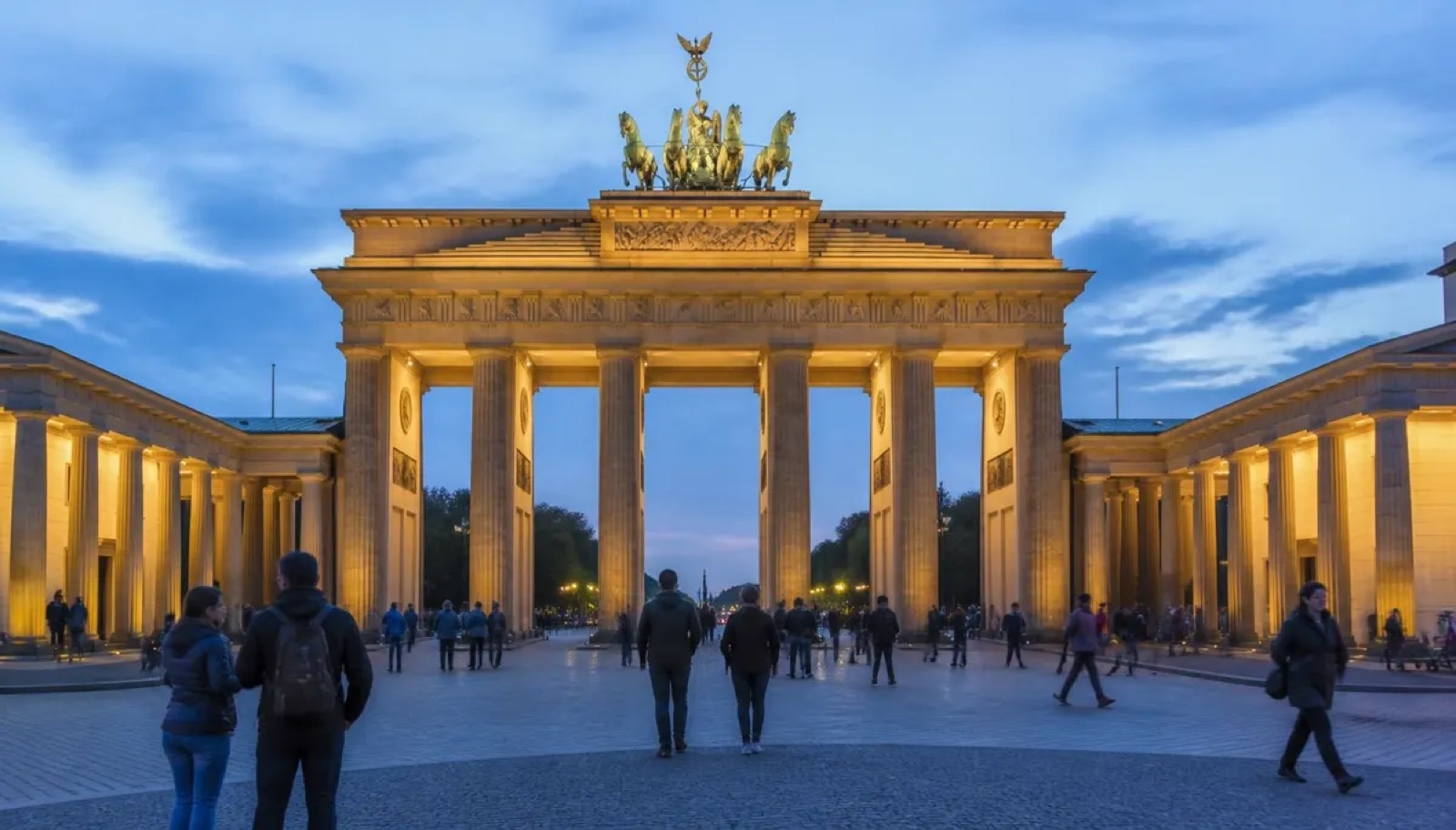
Berlin Travel Guide: History, Neighbourhoods and Food
Berlin on foot and by U-Bahn: the history sites that matter, how the neighbourhoods differ, museum planning, food markets and how many…
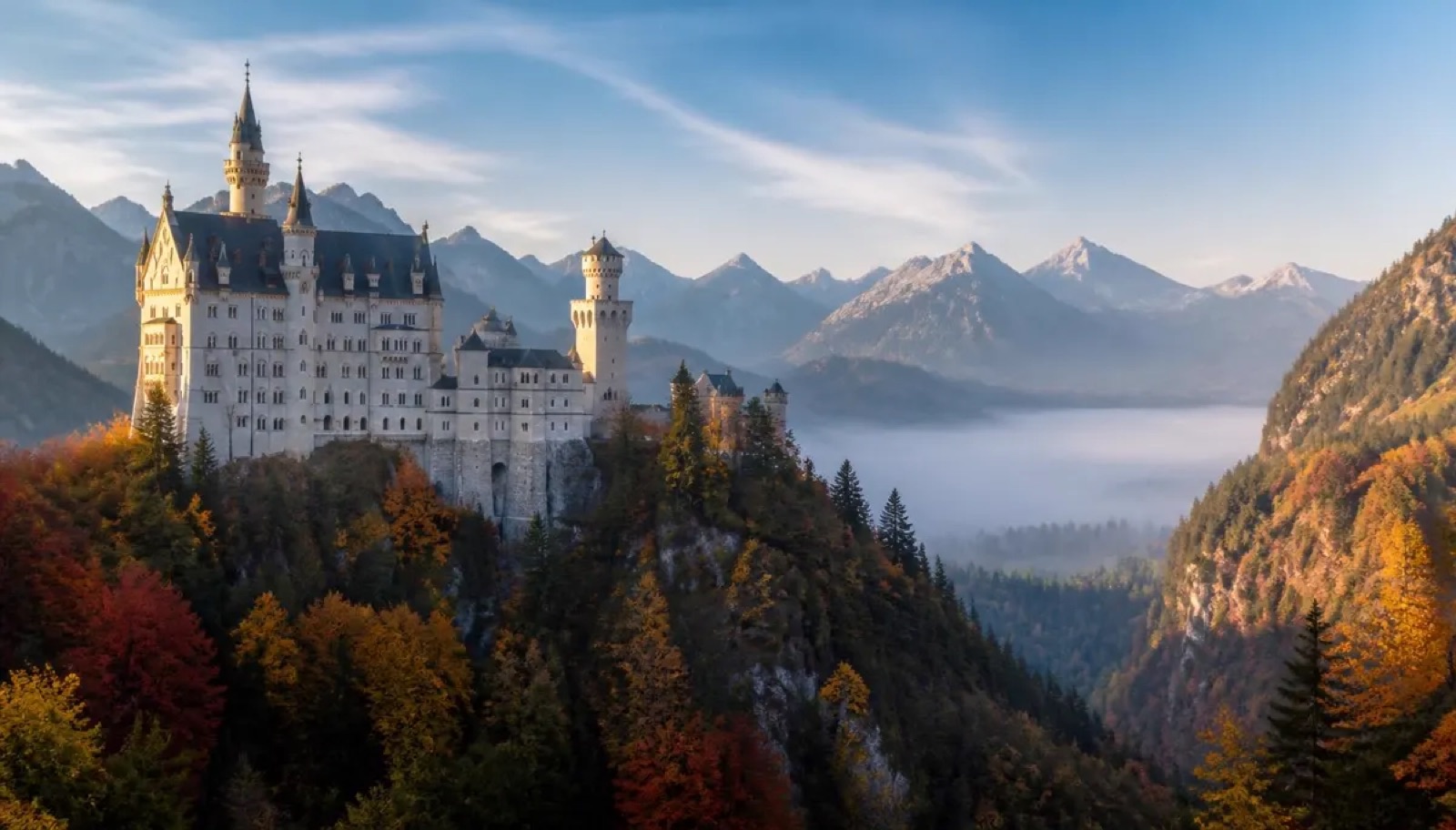
Germany Travel Guide: Cities, Castles and Regions
Germany's regions and major cities, castles, scenic roads and the Alps, festivals, food and beer, trains and the autobahn, seasons and…
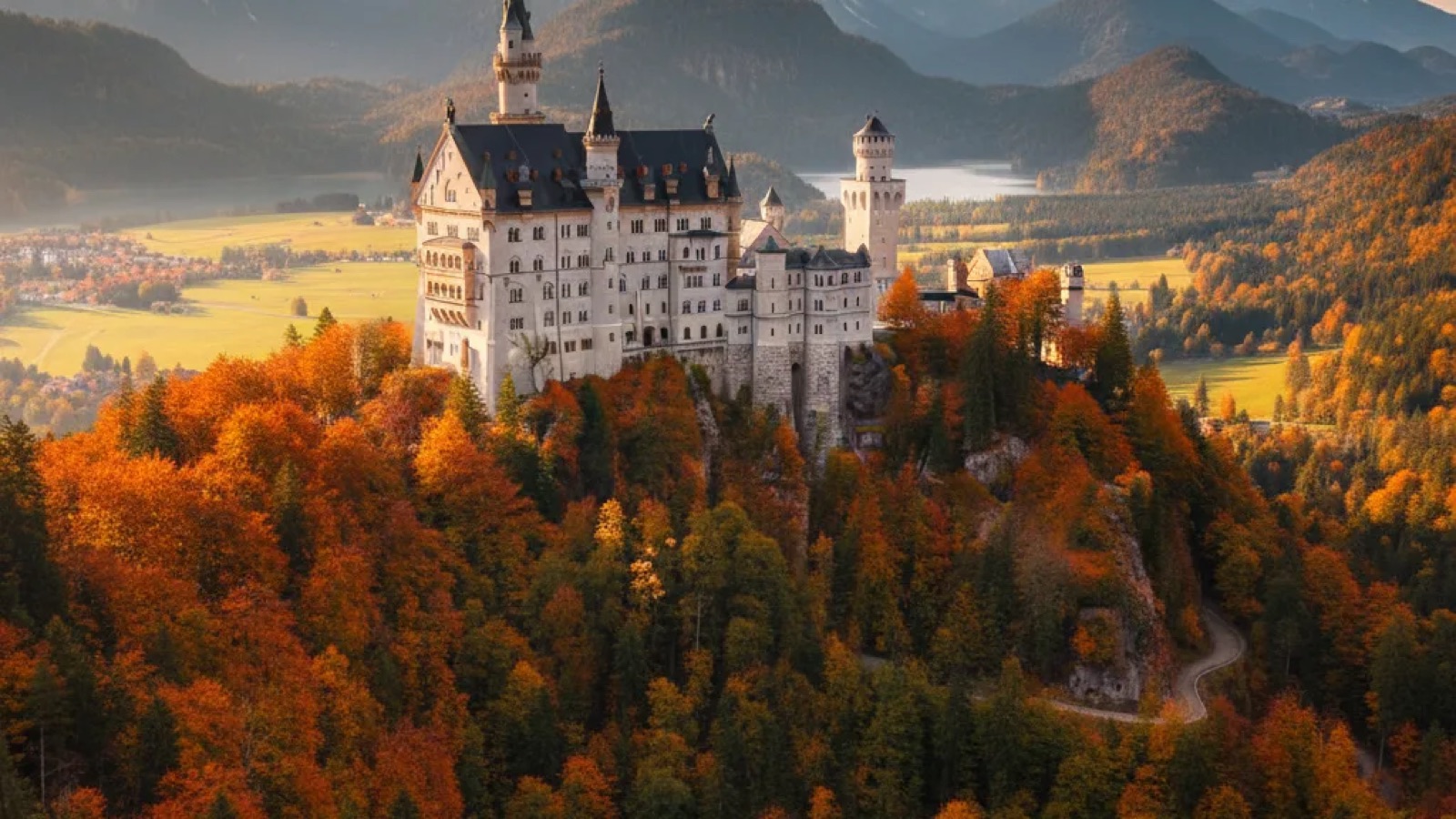
Neuschwanstein and the Bavarian Alps: A Guide
Visiting Neuschwanstein without the chaos, plus the Bavarian Alps around it: Fussen, Garmisch, the Zugspitze and alpine lakes.