New Zealand North Island Itinerary: Two Weeks
A two-week North Island road trip: Coromandel, Rotorua, Tongariro, Napier, Wellington and Northland, with realistic driving times and seasons.
In this guide
This guide is part of our New Zealand South Island Itinerary: Two Weeks — start there for the overview, when to go and how to get around.
The air on the Coromandel Peninsula tastes of salt and damp earth. From its lookouts, the Pacific Ocean churns a deep, intimidating blue below, and a camera feels impossibly small against the scale of the landscape. That is the spirit of the North Island: wild, breathtakingly beautiful, and full of wonderfully unexpected encounters.
Some places just embed themselves in your memory, and New Zealand’s North Island, or Te Ika-a-Māui, is one of them. It’s a land of incredible contrasts, where you can stand on a steaming volcanic vent in the morning and be sipping world-class wine by the afternoon. It’s a road-tripper's dream, a canvas of winding roads that unspool through landscapes that feel both ancient and intensely alive. This two-week itinerary is a route designed to show you its highlights, but more importantly, to let you feel its pulse.
Quick Facts for Your North Island Journey
Before you pack your bags and hit the road, here are a few essential things to realise about travelling through the North Island.
- Driving: New Zealanders drive on the left-hand side of the road. Roads are generally well-maintained but can be narrow, hilly, and winding, especially in rural areas. Always allow more time for your journey than online maps suggest.
- Currency: The official currency is the New Zealand Dollar (NZD). Major credit and debit cards are widely accepted, but it's wise to carry some cash for smaller purchases at local markets.
- Language: English is the primary language spoken. Te Reo Māori and New Zealand Sign Language are also official languages. You'll see Māori place names everywhere, a beautiful reflection of the country's heritage.
- Power Plugs: New Zealand uses the Type I electrical plug, the same as Australia. The standard voltage is 230 V.
- Mobile & Wi-Fi: Mobile reception is excellent in cities and towns but can be patchy or non-existent in remote areas like national parks. Most accommodation and cafes offer Wi-Fi, though sometimes for a fee.
- Biosecurity: New Zealand has very strict biosecurity laws. Declare or dispose of any risk items at the border, including food, plant material, and used hiking equipment. Clean your hiking boots thoroughly before arrival.
Planning Your Two-Week Road Trip
Let's be direct: the North Island is bigger and more packed with incredible sights than you might think. A two-week itinerary requires making some choices. Trying to see everything from Cape Reinga to Wellington will leave you exhausted and spending more time in the car than out of it.
Therefore, this guide is structured around a 'Central Loop'—a classic and highly achievable route that captures the island’s volcanic heartland, geothermal wonders, and unique coastlines. There are then two detailed variations: one for those drawn to the subtropical Far North, and another for lovers of wine, art, and city culture in the south. You can’t do them all in two weeks, so read through and decide which adventure calls to you the loudest.
The Aotearoa Driving Experience
Driving is, without question, the best way to experience the North Island. It gives you the freedom to stop at that deserted beach, pull over for that incredible photo, and travel at your own pace. But there are a few things to keep in mind.
The Roads Less Travelled: Outside of the main state highways connecting major cities, roads become noticeably narrower and more winding. A 100-kilometre journey on a map might look like an hour, but on a twisting road through the Coromandel Hills, it will almost certainly take longer. Embrace the journey, don’t rush, and pull over in designated areas to let faster local traffic pass.
One-Lane Bridges: You will encounter many one-lane bridges, especially on the West Coast and in the Coromandel. A large blue sign will show you the bridge layout. A smaller sign with a large black arrow and a smaller red arrow indicates who has the right of way. If you have the red arrow, you must yield to oncoming traffic.
Freedom Camping: The idea of 'freedom camping' (camping in a public place that isn’t a designated campground) is a cherished part of Kiwi travel culture, but it is strictly regulated. You can’t just pull over anywhere. You must have a certified self-contained vehicle (with a toilet, grey water tank, and rubbish bin) and can only park in designated freedom camping areas. Local councils have different rules, and fines for illegal camping are substantial. For most travellers, staying in the excellent network of commercial holiday parks and Department of Conservation (DOC) campsites is a much easier option.
A Land of Four Seasons
Your experience of the North Island will be shaped significantly by when you choose to visit.
- Summer (December - February): The peak season. Expect long, warm days, bustling towns, and the best weather for swimming and beach activities. It's the most popular time to travel, so you must book accommodation, vehicle rentals, and major activities well in advance.
- Autumn (March - May): An ideal time to travel. The weather is still generally stable and warm, the summer crowds have thinned, and the landscape is painted in beautiful autumn colours, especially in Hawke's Bay.
- Winter (June - August): A time for dramatic, moody landscapes. Expect cooler temperatures and more rain. While coastal areas remain mild, the central plateau around Tongariro National Park receives significant snowfall, making it a hub for skiing but often closing high-altitude hikes like the Alpine Crossing.
- Spring (September - November): The island comes alive with blooming flowers and gushing waterfalls. The weather can be unpredictable—you might experience all four seasons in one day—but it’s a beautiful, vibrant time to visit with fewer crowds than summer.
The Core Itinerary: A 14-Day Central Loop
This itinerary is a perfectly paced, 14-day loop beginning and ending in Auckland. It's an immersion in the volcanic, geothermal, and cultural heartland of the North Island.
Days 1-2: Arrival in Auckland and Waiheke Island
Welcome to Tāmaki Makaurau Auckland! Collect your rental vehicle and settle into the 'City of Sails'. Spend your first day acclimatising. Stroll along the Viaduct Harbour, feel the black sand between your toes at a West Coast beach like Piha, or get a panoramic view of the city's unique geography—an isthmus dotted with dozens of volcanic cones.
On day two, leave the car behind and take a ferry to Waiheke Island. Known as the 'Island of Wine', it’s a stunning enclave of vineyards, olive groves, and beautiful beaches just a short ride from the city centre. You can explore via the island’s bus service or by joining a guided tour that takes you to several cellar doors for tastings. It’s a wonderfully relaxed introduction to the Kiwi lifestyle.
Day 3: Auckland to the Coromandel Peninsula
The real road trip begins! The drive from Auckland to the Coromandel is a spectacular one, taking you from motorway to winding coastal roads. The journey itself is an experience. As you leave the city's southern suburbs, the landscape transforms into the rolling green hills New Zealand is famous for.
Your destination is one of the towns on the peninsula's eastern coast, like Hahei, which serves as a perfect base. The drive, roughly 175 kilometres, will take about three hours without stops, but it’s worth taking your time. Stop in the historic town of Thames, once a bustling gold-mining hub, and feel the change of pace as you enter this laid-back coastal paradise.
Day 4: Exploring the Coromandel: Cathedral Cove & Hot Water Beach
Today is a showcase of the Coromandel’s world-famous coastline. First, Hot Water Beach. This is a true geological marvel. For a two-hour window on either side of low tide, you can dig a hole in the sand, and naturally heated mineral water will bubble up, creating your own personal hot tub. Check the tide times before you go; timing is everything here. It’s a surreal experience to be sitting in warm bliss while the cool Pacific waves crash just metres away.
Next, visit the iconic Cathedral Cove. It's important to know that the main walking track to the cove, closed after Cyclone Gabrielle, reopened in December 2024, although sections can close again after heavy rain, so check DOC updates before you go. The magnificent rock archway can also be seen from the water: you can take a scenic boat tour or join a guided sea kayaking excursion from Hahei Beach. Paddling into the cove, with its white cliffs and crystal-clear water, is a memory that will stay with you forever.
Day 5: Coromandel to Rotorua via Middle-earth
It’s time to head inland. The drive from the Coromandel to Rotorua takes you through the lush, emerald hills of the Waikato region. For many, this journey has one unmissable stop: the rolling green pastures near the town of Matamata, which were famously transformed into Hobbiton for the filming of The Lord of the Rings and The Hobbit trilogies.
You must book a guided tour to enter the meticulously maintained film set. Walking through the Shire, past the colourful round doors of Hobbit Holes and having a drink at the Green Dragon Inn, is a magical experience, even for those not deeply familiar with the films. It’s a testament to incredible craftsmanship. After your journey to Middle-earth, continue the drive south to Rotorua, where your nose will be the first to tell you that you've arrived in a geothermal wonderland.
Days 6-7: The Sulphur City: Rotorua's Geothermal Wonders & Māori Culture
Rotorua sits squarely on the Pacific Ring of Fire, and the entire city hisses, steams, and bubbles with geothermal energy. Spend two days immersed in its unique offerings. There are multiple geothermal parks to explore, each offering a different perspective on this volcanic power. You can see erupting geysers, pools of boiling mud, and surreal, brilliantly coloured silica terraces.
Rotorua is also a major centre of Māori culture. For a deep and moving experience, attend a cultural evening. These are typically hosted at a reconstructed traditional village (marae). You'll be formally welcomed, witness powerful song and dance (including the haka), and share a hāngī—a feast cooked for hours in an underground earth oven. It’s a fantastic opportunity to learn about the history, traditions, and living culture of the Māori people from the people themselves.
Day 8: Rotorua to Lake Taupō and the Mighty Huka Falls
A short and scenic drive south brings you to Lake Taupō, a vast crater lake formed mainly by a supervolcanic eruption about 25,600 years ago. It's the largest freshwater lake in Australasia, and its scale is truly humbling. Before you reach the town of Taupō, make a stop at Huka Falls. This isn't a high waterfall, but the power is staggering. Here, the entire Waikato River is forced through a narrow 15-metre-wide chasm, erupting out with incredible force. The volume of bright turquoise water thundering past is a phenomenal sight and sound.
The town of Taupō itself has a relaxed, holiday vibe. Walk the lakefront, admire the views across to the volcanic peaks of Tongariro National Park on a clear day, and perhaps take a boat trip out on the lake to see the impressive Māori rock carvings at Mine Bay, which are only accessible by water.
Day 9: Adventure in Taupō or the Tongariro Alpine Crossing
Today presents a choice, dictated by your fitness, preparation, and the weather. Option one is to embrace the adventure activities Taupō is famous for, such as jet boating or skydiving.
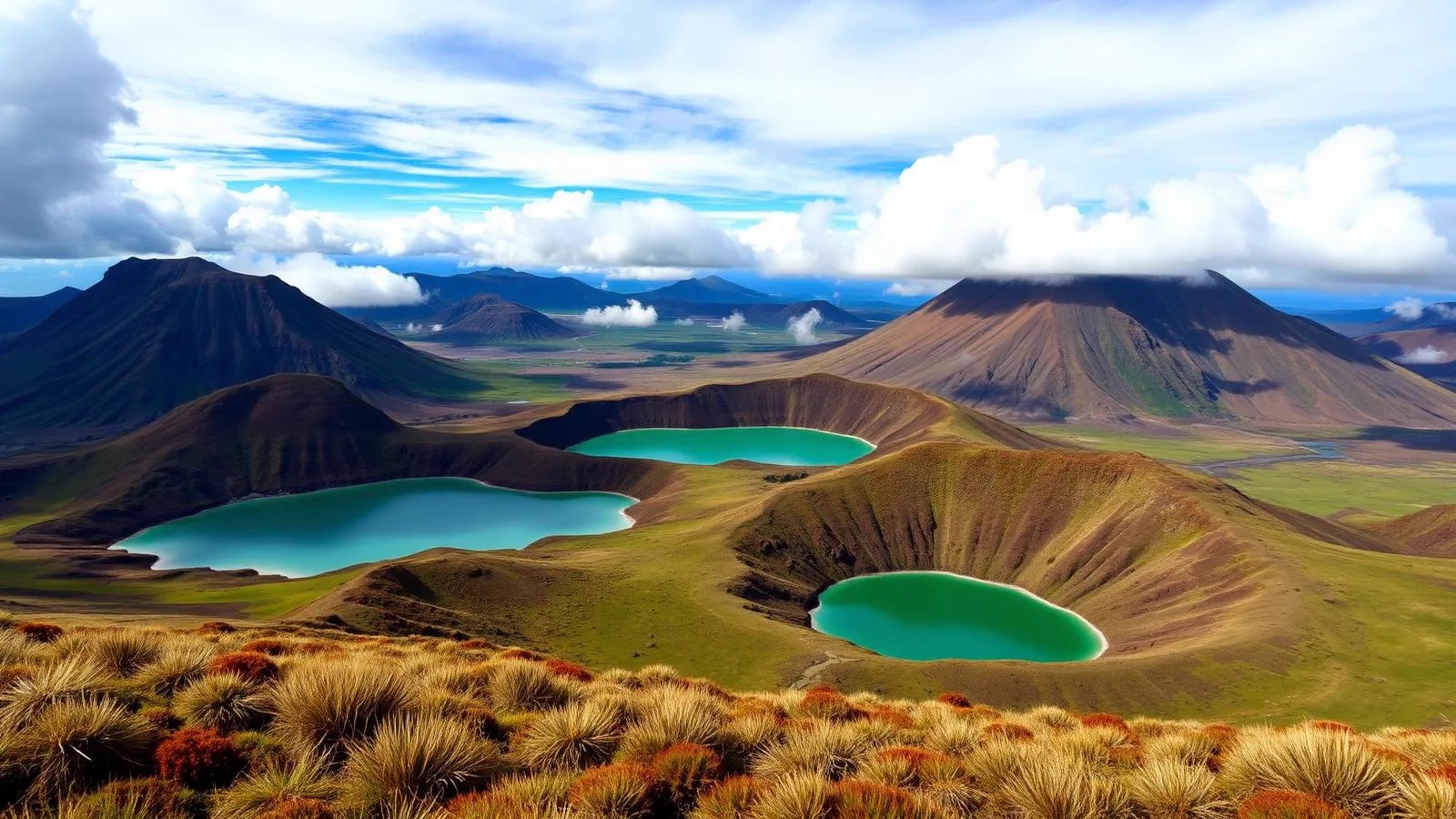
Option two is to undertake what is often called New Zealand's greatest day hike: the Tongariro Alpine Crossing. This is a 19.4-kilometre, 7-9 hour trek across a dramatic volcanic landscape of craters, alpine meadows, and startlingly vibrant Emerald Lakes. This is not a casual walk. The weather is extremely changeable and can be dangerous. You must be well-prepared with sturdy hiking boots, waterproof layers, food, and water. Because of parking restrictions, you must book a shuttle service from Taupō or a nearby village to drop you at the start and pick you up at the end. In winter (and often in the shoulder seasons), the track is covered in snow and ice and should only be attempted with a qualified guide and alpine equipment.
Day 10: A Deeper Dive into Tongariro or a Relaxed Day in Taupō
If you tackled the Crossing yesterday, today is for recovery. A soak in a thermal hot pool or a gentle walk along the lake is a well-deserved reward. If you opted not to do the full crossing, you can still experience Tongariro National Park by driving to Whakapapa Village. From here, you can do shorter walks to waterfalls and enjoy stunning views of the volcanoes. For photographers, the contrast between the tussock grass, dark volcanic rock, and often snow-capped peaks is incredible. This is the raw, elemental landscape that defines the central North Island.
Day 11: Taupō to the Waitomo Glowworm Caves
From Taupō, you'll drive northwest towards Waitomo. The landscape shifts again, from volcanic plateau to the rolling limestone country known as King Country. The Waitomo region is famous for one thing: its extensive network of subterranean caves, lit by the bioluminescence of thousands of tiny glowworms.
There are several ways to experience the caves, depending on your comfort level. You can take a gentle guided walk and a silent boat ride through a grotto filled with what looks like a starry night sky. Or, for the more adventurous, you can join a black-water rafting tour, where you'll float on a rubber tube through the underground rivers, jumping off small waterfalls and getting up close to the glowworms. It’s a truly unique New Zealand experience.
Day 12: Beneath the Earth in Waitomo and the Journey North
Perhaps you'll want to explore another of Waitomo's caves this morning—some focus more on geological formations like stalactites and stalagmites. Afterwards, it's time to begin the journey back towards Auckland. A great option is to head west to the coast and visit Raglan, a world-famous surf town with a wonderfully bohemian vibe. Even if you don't surf, the dramatic black-sand beaches and laid-back cafes make it a worthwhile detour. It offers a completely different coastal feel to the Coromandel.
Days 13-14: Return to Auckland and Departure
Enjoy a final Kiwi breakfast in Raglan or your last stopover town before making the final two-hour drive back to Auckland. Depending on your flight schedule, you might have time for some last-minute souvenir shopping or a final walk along the waterfront. Drop off your rental car and head to the airport, filled with memories of an incredible journey through the heart of the North Island.
Itinerary Variation 1: The Far North
If you're drawn to history, spirituality, and vast, untouched beaches, you might choose to head north from Auckland instead of south. To do this in two weeks, you would likely sacrifice the Coromandel, Rotorua, and Taupō loop entirely.
A Northland itinerary would see you drive north to the Bay of Islands, a stunning region of 144 islands. It's a paradise for sailing, kayaking, and spotting dolphins. Here you'll also find the Waitangi Treaty Grounds, a profoundly important historic site where the founding document of New Zealand was signed. Further north still is the Aupōuri Peninsula, a narrow finger of land stretching towards Cape Reinga (Te Rerenga Wairua). This is where the Tasman Sea and the Pacific Ocean collide in a swirl of currents. For Māori, it is the sacred place where spirits of the deceased depart the world. The journey often includes driving along the vast expanse of Ninety Mile Beach (which is actually about 88 kilometres long).
On your way, you must stop in the Waipoua Forest to stand in the presence of Tāne Mahuta, the 'Lord of the Forest'. This is the largest known living kauri tree, a giant that has stood for an estimated 2,000 years. It’s a humbling, spiritual experience. When visiting kauri forests, it is absolutely essential to use the hygiene stations at the start of every track. Clean and disinfect your footwear to prevent the spread of kauri dieback disease, a microscopic pathogen that is killing these ancient treasures.
Itinerary Variation 2: The Classic Wine and Art Deco Trail
If your passions are wine, food, and architecture, you could adapt the Central Loop to head further south after Taupō. Instead of turning west to Waitomo, you would drive east to the Hawke's Bay region and its main city, Napier.
In 1931, a massive earthquake devastated Napier. The city was rebuilt in the architectural style of the time: Art Deco. Today, it’s one of the most complete and authentic Art Deco cities in the world. Walking through its city centre is like stepping onto a 1930s film set. Beyond the city, Hawke's Bay is one of New Zealand's premier food and wine regions, particularly famous for its red wines. You can spend days cycling between vineyards and long-lunching at winery restaurants.
From Napier, you can continue south through the rolling hills of the Wairarapa region to Wellington, the nation's capital. Wellington is a compact, vibrant city with a fantastic creative and culinary scene, all nestled between a sparkling harbour and steep green hills. The main attraction here for any visitor is Te Papa Tongarewa, the magnificent national museum of New Zealand. Its innovative and interactive exhibits tell the story of New Zealand’s geology, rich biology, and human history in an incredibly engaging way. From Wellington, you would then face a long drive day or a short domestic flight back to Auckland for your departure.
A Photographer's Perspective
From a photographer's point of view, the North Island is a gift. The light is often soft and clear, and the landscapes are diverse. Always plan to be out during the 'golden hours'—the hour after sunrise and before sunset—when the light is warm and casts beautiful long shadows. A polarising filter is your best friend here; it will deepen the blues of the sky and water and cut the glare from an afternoon sea, making the colours truly pop. Be mindful of your gear in geothermal areas—the sulphur-rich steam can be corrosive. Similarly, sea spray on the coast requires a good lens cloth and regular cleaning. But the images you'll capture—from the otherworldly steam of Rotorua to the epic vistas of Tongariro—will be more than worth the effort.
Frequently Asked Questions
Do I really need to book shuttle transport for the Tongariro Alpine Crossing?
Yes, it is practically essential. Parking at the start and end points of the trail is severely restricted, especially during the main hiking season. Booking a return shuttle from a nearby town like Taupō, Turangi, or National Park Village is the standard, organised, and stress-free way to undertake the one-way trek. This system ensures you don't have to worry about car security or transport logistics, allowing you to focus on the challenging and rewarding hike itself.
Is it possible to follow this itinerary during the New Zealand winter?
Yes, with some important modifications. The Central Loop is largely accessible, and sights like Rotorua and Waitomo are open year-round. However, winter in Tongariro National Park brings snow and ice, meaning the Alpine Crossing is often closed or requires a specialist guide and alpine equipment. Driving conditions can be more challenging with a higher chance of rain and, in the Central Plateau, ice. You’ll be rewarded with dramatic landscapes, fewer crowds, and the chance to enjoy cosy evenings and hot pools.
How long does it really take to drive between places?
You should always allow more time than mapping software suggests. While New Zealand’s state highways are in excellent condition, many roads on this itinerary are narrow, very winding, and pass through hilly terrain. A journey of 150 kilometres could easily take two to three hours. Add in stops for photos, short walks, and navigating one-lane bridges, and it's best to plan for a leisurely pace. Rushing is the surest way to miss the magic of the journey.
I've heard about kauri dieback disease. What do I need to know?
Kauri dieback is a serious disease threatening New Zealand's majestic kauri trees. It is spread through microscopic spores in the soil. To help protect these ancient giants, you must always use the hygiene stations found at the entrance and exit of forest tracks. These stations have brushes to scrub all soil from your footwear and a disinfectant spray. Following this simple process is a crucial act of conservation that every visitor is responsible for, ensuring the forests can be enjoyed for generations to come.
Can I realistically see everything mentioned in this article in two weeks?
No, this guide is designed to help you choose your ideal trip. It presents a comprehensive 14-day 'Central Loop' as the main itinerary. It then offers two major variations—the Far North and the Hawke's Bay/Wellington route—as alternatives that would require you to swap out large portions of the central route. Trying to combine all three regions into two weeks would result in a rushed and stressful trip. The best approach is to pick the itinerary that best suits your interests.
Final Thoughts
A two-week road trip around the North Island is more than a holiday; it's an immersion. It’s the feeling of digging your toes into geothermally heated sand, the sound of the haka echoing in the twilight, the taste of salt spray on a wild west coast beach, and the humbling silence of an ancient kauri forest. The route you choose will shape your journey, but the underlying spirit of Aotearoa remains the same: a land of raw power, deep culture, and boundless adventure. It’s a place that invites you to slow down, to look closer, and to carry a piece of its wild heart with you long after you've departed.
Explore in Depth
More New Zealand guides
New Zealand South Island Itinerary: Two Weeks
A two-week South Island road trip: Christchurch, Aoraki, Fiordland and the West Coast glaciers, with realistic driving times and seasons.
Things to Do in Rotorua: Geothermal New Zealand
Geothermal parks, Maori cultural experiences, forest trails and lake history in Rotorua, plus safety notes for thermal areas and hot pools.