Things to Do in Rotorua: Geothermal New Zealand
Geothermal parks, Maori cultural experiences, forest trails and lake history in Rotorua, plus safety notes for thermal areas and hot pools.
In this guide
- Quick Facts & Orientation
- The Scent of the Earth: Understanding Rotorua's Geothermal Heart
- Geothermal Wonderland: The Big Three Parks
- A Living Culture: Maori Heritage in Rotorua
- Beyond the Steam: Forests, Lakes, and Waterfalls
- Relax and Rejuvenate: Rotorua's Spa Culture
- Exploring the Surrounds: Day Trips from Rotorua
- When to Visit Rotorua
- Frequently Asked Questions
- Final Thoughts
This guide is part of our New Zealand North Island Itinerary: Two Weeks — start there for the overview, when to go and how to get around.
The first thing that hits you when you arrive in Rotorua isn't a sight, but a smell. It's an unforgettable, primal scent of sulphur, like a billion eggs have just been cracked on a hot stove. Some visitors wrinkle their noses, but this isn't the smell of decay; it's the smell of life. It's the Earth's inner workings venting directly into the air, a constant reminder that you're standing on something raw, powerful and very much alive. Steam coils from grates in the pavement, and it's clear you've arrived somewhere truly special on this planet.
That assertive aroma is the city’s signature perfume, a calling card for one of the world's most active geothermal regions. But Rotorua is so much more than its distinctive scent. It's a place of profound duality. It’s where the untamed energy of the planet meets the deep-rooted culture of the Te Arawa people, who have called this volatile landscape home for centuries. It's where you can spend your morning walking through a forest of giant Californian redwoods and your afternoon watching a geyser erupt 30 metres into the sky. It's a destination that engages every single one of your senses, from the heat on your skin near a bubbling mud pool to the taste of a meal cooked by the Earth itself.
Quick Facts & Orientation
Before you dive into the steam and adventure, here are a few key things to help you get your bearings in this unique corner of New Zealand's North Island.
- Location: Rotorua is situated in the Bay of Plenty region of the North Island, roughly a three-hour drive south-east of Auckland and about an hour north of Taupo.
- The Famous Smell: That sulphur scent is caused by hydrogen sulphide gas released from the geothermal activity. It’s a signature of the region, completely harmless in these concentrations, and you’ll find you get used to it surprisingly quickly. Think of it as Rotorua’s version of sea air.
- Getting There & Around: Most visitors arrive by car, which provides the most flexibility for exploring the spread-out attractions. Rotorua also has a domestic airport with connections to major New Zealand cities. Once in town, a network of local buses and numerous tour operators can get you to the main sites if you don't have your own vehicle.
- Climate: Rotorua experiences four distinct seasons. Summers are warm and can be busy, while winters are crisp and cool, arguably the best time to appreciate the steam and soak in a thermal pool. Autumn and spring offer mild temperatures and fewer crowds.
The Scent of the Earth: Understanding Rotorua's Geothermal Heart
You can’t talk about Rotorua without addressing the geothermal activity that defines it. The city sits squarely within the Taupo Volcanic Zone, a massive, highly active volcanic area stretching across the North Island. Beneath your feet, magma heats a vast reservoir of underground water, which then forces its way to the surface through cracks and fissures in the Earth's crust.
This process creates the incredible phenomena you’ve come to see: erupting geysers, bubbling mud pools, steaming fumaroles, and vast, colourful silica terraces. The sulphur smell is simply a gaseous by-product of this immense subterranean plumbing system. You’ll see steam rising not just in the designated parks, but from roadside drains, backyard vents, and the shores of Lake Rotorua itself. This isn't a performance put on for tourists; it's the very essence of the land, a constant, visceral connection to the geological forces that shaped New Zealand.
Geothermal Wonderland: The Big Three Parks
While geothermal activity is everywhere, the most spectacular and accessible displays are concentrated in several managed parks. Each offers a distinct experience, and choosing between them can be tough. Here’s how the three undisputed heavyweights compare.
Wai-O-Tapu Thermal Wonderland
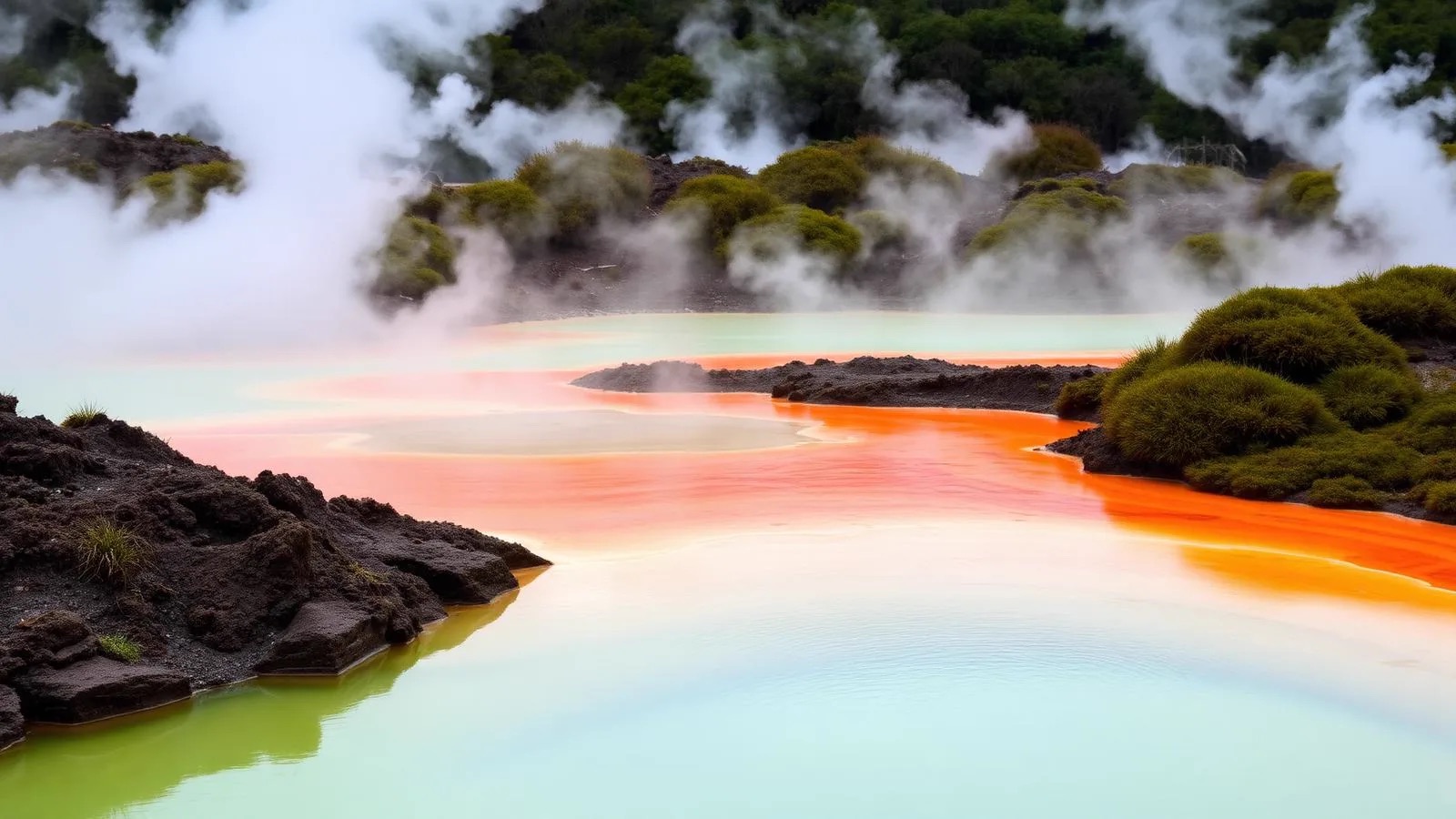
If you’ve seen a photo of an otherworldly, vividly coloured hot pool from New Zealand, it was probably taken here. Wai-O-Tapu, which translates to "Sacred Waters," is a realm of surreal colours and textures. The park is organised around a series of well-maintained walking tracks that take you past its most famous features. The star is the Champagne Pool, a vast, steaming basin fringed with a brilliant orange ledge, courtesy of arsenic and antimony deposits. Its surface constantly fizzes like a glass of champagne due to the release of carbon dioxide.
Nearby, the Artist's Palette is a sweeping silica flat painted with swirls of yellow, orange, and green by the mineral-rich water flowing from the Champagne Pool. And then there’s the Devil’s Bath, a sunken crater filled with water of an almost cartoonish, fluorescent green colour, the result of sulphur mixing with ferrous salts. The park is also home to the Lady Knox Geyser, which is induced to erupt once a day at a set time. While it's an impressive sight, the real magic of Wai-O-Tapu lies in the sheer, unbelievable colour palette of its pools.
Waimangu Volcanic Valley
Where Wai-O-Tapu is about vibrant colour, Waimangu is about raw power and scale. This is the world's youngest geothermal valley, blasted into existence by the cataclysmic eruption of Mount Tarawera in 1886. The landscape here feels more rugged, a place of regeneration and immense natural force. Walking through the valley feels like stepping back in time to witness the Earth healing its own wounds.
You'll walk alongside steaming streams and past the colossal Frying Pan Lake, which holds the title of the world's largest hot water spring. Its surface simmers, releasing plumes of steam that drift through the native bush. The trail culminates at the incredible Inferno Crater Lake. The water here is a mesmerising, milky turquoise-blue and, in a fascinating display of geothermal hydraulics, its level rhythmically rises and falls over a 38-day cycle. From the lake, you can take a boat cruise onto Lake Rotomahana, the final resting place of the legendary Pink and White Terraces, which were destroyed in the 1886 eruption. The cruise provides a stunning perspective on the eruption's impact, with steam still rising from the scarred cliffsides.
Te Puia and the Whakarewarewa Valley
Located right on the edge of Rotorua city, Te Puia offers a powerful combination of spectacular geothermal wonders and a deep dive into Maori culture. It is home to the Southern Hemisphere's largest active geyser, the magnificent Pōhutu Geyser. This isn't a once-a-day-by-appointment affair; Pōhutu erupts naturally up to 20 times a day, shooting superheated water up to 30 metres into the air. Feeling the ground tremble slightly as it builds power and watching it explode skyward is a truly awesome experience.
Beyond Pōhutu, the valley is filled with bubbling mud pools that plop and gurgle with satisfying thickness, intricate silica formations, and dozens of other geothermal features. But what sets Te Puia apart is its role as a centre for Maori culture. It is the home of the New Zealand Maori Arts and Crafts Institute, established to preserve traditional skills. Here, you can watch master carvers and weavers at work, transforming wood, flax, and stone into intricate works of art. It’s a living workshop, not just a museum, giving you a direct insight into a culture intrinsically linked to this land.
| Park | Key Feature | Atmosphere | Best For |
|---|---|---|---|
| Wai-O-Tapu | Surreal, vibrant colours (Champagne Pool, Devil's Bath) | Otherworldly, like a painter's palette | Photographers and those seeking unbelievable natural colours |
| Waimangu | Raw scale and volcanic history (Frying Pan Lake, Inferno Crater) | Rugged, natural, and powerful | Nature lovers and those interested in geology and history |
| Te Puia | Pōhutu Geyser and integrated Maori cultural centre | Dynamic, cultural, and accessible | Seeing a major geyser and experiencing living Maori arts |
A Living Culture: Maori Heritage in Rotorua
Rotorua is a heartland for Maori culture, specifically for the Te Arawa people who settled here over 600 years ago. They learned to live in harmony with this turbulent landscape, harnessing its geothermal energy for cooking, heating, and bathing. This connection is not a relic of the past; it is a vibrant, living part of the city today, and engaging with it respectfully is one of the most rewarding things you can do here.
Whakarewarewa – The Living Maori Village
While Te Puia sits at one end of the Whakarewarewa geothermal valley, the other end is home to a remarkable community: a village where people live and have lived for generations, utilising the geothermal environment in their daily lives. A visit here, often guided by a village resident, is a fascinating look at this unique way of life. You’ll see homes with steam vents in their front yards, outdoor kitchens where corn on the cob is cooked in natural boiling pools, and communal bathhouses fed by thermal springs. The centrepiece is often the demonstration of a hangi, where food is cooked in a pit oven using geothermal steam. It’s an authentic, down-to-earth experience that shows how the geothermal landscape is not just a spectacle, but a resource and a home.
Cultural Evenings and Hangi Feasts
Many visitors choose to attend an evening cultural experience, which typically includes a traditional performance and a hangi dinner. These can be incredibly powerful and moving experiences when approached with an open mind. They are a genuine invitation to learn, a sharing of culture through storytelling, song, and food.
The evening often begins with a pōwhiri, a formal welcome ceremony that is a cornerstone of Maori protocol. This is followed by performances of powerful song (waiata), traditional dances, and, of course, the electrifying haka, a postural dance made famous by New Zealand’s rugby team but with much deeper cultural roots. The culmination is the unveiling of the hangi. Baskets of chicken, lamb, potatoes, and sweet potato (kumara) are lifted from the steaming earth oven, having been slow-cooked for hours. The result is incredibly tender, subtly smoky, and utterly delicious. It's more than a meal; it's a taste of tradition.
Beyond the Steam: Forests, Lakes, and Waterfalls
It's easy to get mesmerised by the geothermal wonders, but you’d be missing out if you didn't explore the stunning natural landscapes that cradle Rotorua. The region is a haven for adventure, with pristine lakes, towering forests, and rushing rivers.
The Redwoods – Whakarewarewa Forest
Just five minutes from the city centre lies a place of serene grandeur: a 6-hectare stand of magnificent Californian coastal redwoods. Planted in the early 1900s as part of an experiment in exotic forestry, these giants now form the heart of the larger Whakarewarewa Forest. Walking beneath their canopy is a humbling experience. The forest floor is a quiet, shaded world of immense trunks and a lush undergrowth of native New Zealand ferns, creating a beautiful blend of native and exotic.
An extensive network of walking and hiking tracks caters to every fitness level, from short, gentle strolls to challenging all-day treks. For a different perspective, the Redwoods Treewalk provides a stunning walkway suspended high amongst the tree trunks. It’s particularly magical at night when the forest is illuminated with beautifully designed lanterns. The forest is also, without exaggeration, a world-class mountain biking destination, with over 200 kilometres of purpose-built trails ranging from easy, flowing tracks for beginners to extreme downhill challenges for experts.
Lake Tarawera and the Buried Village
Lake Tarawera is a lake with a dramatic story. This large, beautiful body of water lies in the shadow of the imposing Mount Tarawera. In the early hours of 10 June 1886, the mountain violently erupted, splitting open and burying the surrounding area in mud and ash. The eruption destroyed several villages and completely obliterated the world-famous Pink and White Terraces, once considered the "Eighth Wonder of the Natural World".
To understand the human cost of this event, a visit to the Buried Village of Te Wairoa is essential. This archaeological site was once a bustling village that catered to visitors wanting to see the terraces. Today, you can walk among the excavated foundations of homes and see everyday objects unearthed from the ash, providing a poignant snapshot of life frozen in time. The lake itself is now a place of tranquility and recreation. Taking a boat out on its deep waters or visiting a hot water beach, where you can dig your own thermal pool in the sand, is a fantastic way to appreciate its serene beauty while contemplating its violent past.
The Blue and Green Lakes (Tikitapu and Rotokakahi)
A short drive from the city centre brings you to one of Rotorua's most striking photo opportunities: the viewpoint overlooking the Blue and Green Lakes. Sitting side-by-side, their colour contrast is astonishing. Lake Tikitapu, the Blue Lake, gets its brilliant sapphire hue from the reflection of the sky on its clear water, which has a white rhyolite and pumice bottom. It’s a popular spot for swimming, kayaking, and walking, with a lovely 5.5-kilometre trail circling its shore.
Right next to it, Lake Rotokakahi, the Green Lake, has a rich emerald colour, a result of its shallower depth and the presence of sediment and aquatic plant life. This lake is privately owned by the Te Arawa iwi and is considered sacred (tapu). Access is restricted, and activities like swimming and boating are not permitted. It's a vital reminder to respect local customs and the deep spiritual connection the Maori people have with the land.
Okere Falls and Kerosene Creek
For a dose of adrenaline, head to Okere Falls, where the Kaituna River squeezes through a narrow gorge, creating a series of powerful rapids and waterfalls. This is a globally renowned spot for whitewater rafting and kayaking, famous for being home to the highest commercially rafted waterfall in the world. Even if you're not getting in the water, a well-formed walking track offers spectacular views of the river's power and the rafters navigating the churning water.
For a more relaxed water experience, Kerosene Creek is a local favourite. It's a stream flowing through native bush, naturally heated by a hot spring that joins it. You can sit in the warm water and enjoy a small, hot waterfall massaging your shoulders. Because it’s a natural, unmanaged spot, a few safety notes are critical. Firstly, and this applies to any natural thermal water in New Zealand, never put your head underwater. There is a rare but very serious risk of contracting amoebic meningitis. Secondly, as it's a popular and somewhat remote spot, don't leave valuables visible in your car.
Relax and Rejuvenate: Rotorua's Spa Culture
With an endless supply of naturally heated mineral water, it's no surprise that Rotorua has a long history as a spa destination. People have been "taking the waters" here for their therapeutic benefits for over a century. The historic Government Gardens and the magnificent Bath House building (home to Rotorua Museum, closed since 2016 for earthquake strengthening and due to reopen around 2027) are a testament to this heritage.
Today, you can indulge in this tradition in a variety of ways. There are luxurious spa complexes offering private mineral pools with stunning views over Lake Rotorua, where you can soak in the silky, alkaline waters of the Rachel Spring or the restorative, acidic waters of the Priest Spring. You'll also find more casual, family-friendly public pools and water parks. Soaking in a hot pool after a day of hiking or biking is a quintessential Rotorua ritual. It's the perfect way to soothe tired muscles and let the unique energy of the region seep into your bones. Just remember to stay hydrated and not to overdo it, as the heat can be intense.
Exploring the Surrounds: Day Trips from Rotorua
Rotorua's central location makes it an excellent base for exploring more of the North Island's highlights.
Lake Taupo
About an hour's drive south lies Lake Taupo, New Zealand's largest lake. This vast expanse of water is actually the flooded caldera of a supervolcano. The drive itself is scenic, but the destination is spectacular. A must-see is Huka Falls, where the mighty Waikato River is funnelled through a narrow chasm, exploding out with incredible force and a brilliant blue colour. You can also take a boat or kayak trip on the lake to see the impressive contemporary Maori rock carvings at Mine Bay, which are only accessible from the water.
Hobbiton Movie Set
For fans of The Lord of the Rings and The Hobbit trilogies, this is a pilgrimage site. Located about an hour's drive from Rotorua through rolling green farmland, the Hobbiton Movie Set is an incredibly immersive experience. This isn’t a collection of facades; it’s a living, breathing corner of Middle-earth. You can wander past dozens of unique hobbit holes, see the Mill, cross the double-arched bridge, and finish with a specially brewed beverage at the Green Dragon Inn. The level of detail is astonishing, from the tiny vegetable patches to the washing lines. Even if you're not a die-hard fan, the sheer craftsmanship and beauty of the location are captivating.
When to Visit Rotorua
There is genuinely no bad time to visit Rotorua, as each season offers a different experience.
- Summer (December – February): The weather is warm and perfect for enjoying the lakes and a wide range of adventure activities. This is also peak season, so expect larger crowds and be sure to book accommodation and tours well in advance.
- Autumn (March – May): A great time to visit. The days are still warm and sunny, but the crowds have thinned out. The changing leaves in the forests and parks add a beautiful splash of colour to the landscape.
- Winter (June – August): The crisp, cold air makes the geothermal attractions even more dramatic, with steam billowing thickly into the sky. It's the absolute best season for long, guilt-free soaks in the thermal hot pools.
- Spring (September – November): A beautiful season of renewal. The forests come to life, flowers are in bloom, and the waterfalls are often at their most powerful thanks to spring rains. It’s a great time for hiking before the summer heat arrives.
Frequently Asked Questions
Is the smell in Rotorua harmful?
No, the distinctive sulphur smell is not harmful. It’s caused by low concentrations of hydrogen sulphide gas released by the region's geothermal activity. While it can be strong upon arrival, it is a natural part of the environment, and most people find they adjust to it very quickly. Think of it as the city’s unique natural perfume.
What is the best geothermal park to visit?
This really depends on your interest. For otherworldly, vibrant colours and incredible photography, Wai-O-Tapu is unmatched. If you are fascinated by raw geology, volcanic history, and immense natural scale, Waimangu Volcanic Valley is your best choice. For a combination of the powerful Pōhutu Geyser and an amazing insight into living Maori arts and crafts, Te Puia is ideal and very close to the city.
Can I swim in the hot rivers and lakes?
You can only swim in specifically designated natural thermal areas like Kerosene Creek or at hot water beaches on some lakes. It is critically important to never put your head underwater in any natural thermal pool or stream due to the rare but serious risk of amoebic meningitis. For regular swimming, the beautiful, clear Blue Lake (Tikitapu) is a fantastic and safe option.
How much time do I need in Rotorua?
To do Rotorua justice, allow a minimum of three full days. This allows you to visit one or two major geothermal parks, participate in a Maori cultural experience, explore the Redwoods Forest, and see some of the beautiful lakes. With four or five days, you can explore at a more relaxed pace and potentially include a day trip to Taupo or Hobbiton without feeling rushed.
Is Rotorua suitable for families?
Absolutely. Rotorua is an exceptional destination for families with children. The geothermal parks are like giant science lessons, the treetop walks in the Redwoods are a huge hit, and many Maori cultural experiences are engaging for all ages. With a wide variety of activities from adventure sports to relaxing pools and farm-themed parks, there is more than enough to keep kids entertained, educated, and excited.
Final Thoughts
After a dozen years of travelling the globe, Rotorua remains one of the places that feels most elemental. It's a destination that commands your attention through every sense, from the constant, eggy perfume in the air to the sight of the earth breathing steam all around you. You feel the heat, hear the gurgle of mud, and taste the food it cooks. It's impossible to be a passive observer here; the landscape pulls you in.
But the true power of Rotorua lies in the synergy between this potent land and its people. This isn't just a geological curiosity; it is a cultural heartland. The stories of the Te Arawa iwi are woven into every lake, mountain, and steaming fissure. To visit Rotorua is to witness a centuries-old conversation between humanity and a volatile, generous earth. It’s a place that reminds you that magic isn't just in fairy tales; sometimes, it’s bubbling right up from the ground beneath your feet.
More New Zealand guides
New Zealand South Island Itinerary: Two Weeks
A two-week South Island road trip: Christchurch, Aoraki, Fiordland and the West Coast glaciers, with realistic driving times and seasons.
New Zealand North Island Itinerary: Two Weeks
A two-week North Island road trip: Coromandel, Rotorua, Tongariro, Napier, Wellington and Northland, with realistic driving times and…