Patagonia Guide: El Chalten to Torres del Paine
Planning Patagonia: El Calafate, El Chalten and Torres del Paine, the wind, the season window and how to link it all up.
In this guide
- Quick Facts
- Understanding Patagonia's Spine
- The Hiking Window: When to Visit
- Getting There: Your Gateway Airports
- El Calafate and The Mighty Perito Moreno
- El Chaltén: Argentina's Trekking Mecca
- Photographing the Fitz Roy Massif
- Crossing the Border: El Calafate to Puerto Natales
- Chile's Crown Jewel: Torres del Paine National Park
- The Infamous Patagonian Wind
- Packing Smart: Layers, Gear, and Essentials
- Respecting the Wild: Park Rules and Wildlife
- Explore in Depth
- Frequently Asked Questions
- Final Thoughts
This guide is part of our Argentina Travel Guide: Routes, Seasons, Distances — start there for the overview, when to go and how to get around.
The final kilometre to Laguna de los Tres is a scramble up a near-vertical moraine of loose scree. Every step forward feels like half a step back. The Patagonian wind, a physical force, tries its best to push you back down the mountain, and your lungs burn in the thin, cold air. Then, cresting the ridge, it all falls away. There it is: the granite massif of Fitz Roy, a jagged crown of rock tearing at the sky, reflected perfectly in the impossible turquoise of Laguna de los Tres. After hours of walking, silence falls, broken only by the wind and the quiet clicks of camera shutters. It’s a moment that captures the raw, staggering scale of nature that defines Patagonia.
This is the heart of the Patagonian experience for many travellers: a journey through the epic landscapes of southern Argentina and Chile. This guide focuses on that classic route, from the trekking capital of El Chaltén and the colossal Perito Moreno Glacier in Argentina, across the border to Chile’s iconic Torres del Paine National Park. It walks you through the logistics of getting there, the must-do treks, how to tackle the notoriously tricky booking systems, and hard-won lessons about packing, planning, and respecting this wild corner of the world. This is a region that demands preparation, but the rewards are immeasurable.
Quick Facts
- Location: Southern Cone of South America, shared by Argentina and Chile. This guide focuses on the Santa Cruz province in Argentina and the Magallanes region in Chile.
- Getting There: Fly into El Calafate (FTE) in Argentina or Punta Arenas (PUQ) in Chile. Both have connections from their respective capital cities, Buenos Aires and Santiago.
- Getting Around: Long-distance buses are the primary mode of transport between towns like El Calafate, El Chaltén, and Puerto Natales. Within the national parks, it's all about your own two feet.
- Language & Currency: Spanish is the official language. Argentina uses the Argentine Peso, and Chile uses the Chilean Peso. Credit cards are widely accepted in towns, but having cash is essential for smaller purchases and on the trails.
- Best Time to Visit: The main trekking season runs from November to March. The peak months of December, January, and February offer the best chance of good weather but also the biggest crowds and highest demand for accommodation.
Understanding Patagonia's Spine
First, it helps to understand the lay of the land. Patagonia isn’t a country; it’s a vast, sparsely populated region covering the southern tip of South America. The Andes mountains run down its centre like a spine, forming a natural and political border between Argentina and Chile. The landscapes on either side are dramatically different.
Argentine Patagonia, to the east, is largely arid, windswept steppe. It’s a land of immense, open skies and vast distances, punctuated by jaw-dropping natural wonders like the Fitz Roy massif and the Perito Moreno Glacier. The towns, like El Calafate and El Chaltén, feel like frontier outposts huddled against the elements.
Chilean Patagonia, to the west of the Andes, is a fractured coastline of fjords, islands, and temperate rainforest, carved out by glaciers. It’s greener, wetter, and feels more compressed. Its crown jewel, Torres del Paine National Park, showcases this drama with its granite towers, glacial lakes, and sprawling ice fields. A classic trip involves experiencing both sides, which means a border crossing is part of the adventure.
The Hiking Window: When to Visit
Timing is everything in Patagonia. The region is accessible year-round, but the window for comfortable and safe trekking is narrow. The prime season runs from late spring to early autumn in the Southern Hemisphere, roughly November through to the end of March.
November (Spring): The landscape is green, wildflowers are blooming, and the crowds haven't yet reached their peak. However, the weather can be particularly volatile, and some higher-altitude trails may still have snow or ice. It’s a great month for photographers who want dramatic skies.
December to February (Summer): This is peak season. You'll get the longest daylight hours—up to 17 hours a day—and the highest probability of clear, sunny days. This is also when the famous Patagonian wind is at its most ferocious. Every trail, bus, and bed will be at maximum capacity. If you plan to travel during this period, you must book everything—flights, buses, and especially park accommodation—many, many months in advance.
March (Autumn): Arguably the best time to visit. The crowds begin to thin, the wind can sometimes abate (no guarantees!), and the forests of Lenga Beech trees turn spectacular shades of red and gold. The days are shorter and colder, but the light for photography is sublime. By April, services start shutting down, and winter conditions begin to set in.
Getting There: Your Gateway Airports
You can't fly directly into the heart of the parks. Your journey will begin at one of two key gateway airports.
In Argentina, the main hub is Comandante Armando Tola International Airport (FTE) in El Calafate. There are regular flights from Buenos Aires (both from the domestic airport, AEP, and the international, EZE). From El Calafate, it’s a scenic three-hour bus ride north to El Chaltén.
In Chile, the primary entry point is Presidente Carlos Ibáñez del Campo International Airport (PUQ) in Punta Arenas. It’s a major hub with flights from Santiago. From Punta Arenas, it's a three-hour bus journey north to Puerto Natales, the town that serves as the base for Torres del Paine.
Many travellers fly into one and out of the other to create a one-way journey, avoiding backtracking. For example, fly into El Calafate, explore the Argentine side, take the bus across the border to Puerto Natales, explore Torres del Paine, and then fly out of Punta Arenas. This is an efficient and popular route.
El Calafate and The Mighty Perito Moreno
The town of El Calafate itself is a functional, tourist-focused hub on the shore of the vast Lago Argentino. Its main purpose is to serve as the base for visiting the spectacular Perito Moreno Glacier, about 80 kilometres away inside Los Glaciares National Park.
Perito Moreno was long one of the few glaciers in the world that was stable, but a 2025 study found it has been retreating and thinning rapidly since 2019. It’s a true river of ice, 30 kilometres long and, at its terminus, over 60 metres high. What makes it so accessible is the incredible network of metal walkways and viewing platforms built on the peninsula directly opposite its face. You can spend hours wandering these balconies, watching and listening.
The sounds are what stay with you most vividly. A constant series of creaks, groans, and cracks echoes across the water. Then, with a sound like a cannon shot, a massive shard of ice will calve off the face and crash into the lake, sending a huge wave rolling outwards. It’s a visceral, unforgettable display of nature's power. Besides the walkways, operators offer boat trips to get a different perspective from the water level, and even guided glacier trekking on the ice itself, which is an incredible experience if you have the time and budget.
El Chaltén: Argentina's Trekking Mecca
A few hours north of El Calafate by bus lies the village of El Chaltén. It's a much smaller, younger town with a scruffy, windswept charm and one single purpose: hiking. Declared Argentina's "National Capital of Trekking," the trailheads for world-class hikes start right at the edge of town. You don't need a guide or a tour; you just pick a path and start walking. The two most famous day hikes are unmissable.
The Hike to Laguna de los Tres (Fitz Roy)
This is the big one. It's a challenging 20-kilometre round-trip hike that takes a full day (8-9 hours). The trail winds through beautiful forests and open valleys with constant, teasing views of the Fitz Roy massif. The final hour is the infamous steep scramble mentioned earlier, but the reward is one of the greatest mountain viewpoints on the planet. You’re right at the base of the granite spires, looking down at the milky blue glacial lake. Pack a lunch, plenty of water, and layers for all weather—it's possible to get sunburnt and snowed on during the same hike here.
The Hike to Laguna Torre
Slightly less strenuous than the Fitz Roy hike but no less spectacular, this walk leads you to a glacial lake at the base of the needle-like Cerro Torre. It’s around 18 kilometres return and generally flatter until the final section. On a windy day (which is most days), you can watch small icebergs, calved from the Torre Glacier, get blown across the lake's surface. It’s a mesmerizing sight. Both trails are exceptionally well-marked and maintained.
Photographing the Fitz Roy Massif
As a photographer, Patagonia presents a constant, beautiful challenge. The light changes by the second, and the weather is the ultimate director. For that iconic shot of the Fitz Roy peaks glowing red at sunrise—the 'alpenglow'—you have two main options.
The hardcore option is to camp at Campamento Poincenot, a basic campsite about an hour's steep climb below the final Fitz Roy viewpoint (since the 2024–25 season it charges a fee and must be booked online in advance). This allows you to wake up in the dark and make the final, steep ascent to Laguna de los Tres to be in position for sunrise. It's an unforgettable experience, but be prepared for freezing temperatures.
The easier, and still stunning, option is to stay in El Chaltén and walk to the Mirador de los Condores viewpoint just outside of town. It’s a short, steep walk up, but it provides a full panoramic view of the entire massif. On a clear morning, you can watch the first rays of sun hit the peaks, turning them a brilliant pink and orange. Check the weather forecast obsessively and be prepared for disappointment; clouds often obscure the view, but when they part, it's pure magic.
Crossing the Border: El Calafate to Puerto Natales
The bus journey connecting the Argentine and Chilean hubs is a rite of passage. Several companies run daily services between El Calafate and Puerto Natales. The trip takes around five to six hours, but this is highly dependent on the time it takes to cross the border.
The process is straightforward but can be slow. The bus will stop at the Argentine border post, where everyone gets off to get an exit stamp. You’ll then get back on the bus, drive a few kilometres through a desolate no-man's-land, and repeat the process at the Chilean border post. Here, you'll get an entry stamp, and all your luggage will be scanned or inspected. Chile has very strict agricultural customs. You cannot bring any fresh fruit, vegetables, meat, or dairy products across the border. Be sure to eat or dispose of any snacks before you get there to avoid fines.
Book this bus journey well in advance, especially in peak season, as seats sell out. It’s a surprisingly beautiful drive across the vast, empty steppe, and you’ll almost certainly see herds of guanacos (a wild relative of the llama) and maybe even a soaring condor along the way.
Chile's Crown Jewel: Torres del Paine National Park
After arriving in the pleasant town of Puerto Natales and stocking up on supplies, you'll head into Torres del Paine National Park. Where El Chaltén's trails are mostly 'out and back' day hikes, Torres del Paine is famous for its multi-day trekking circuits.
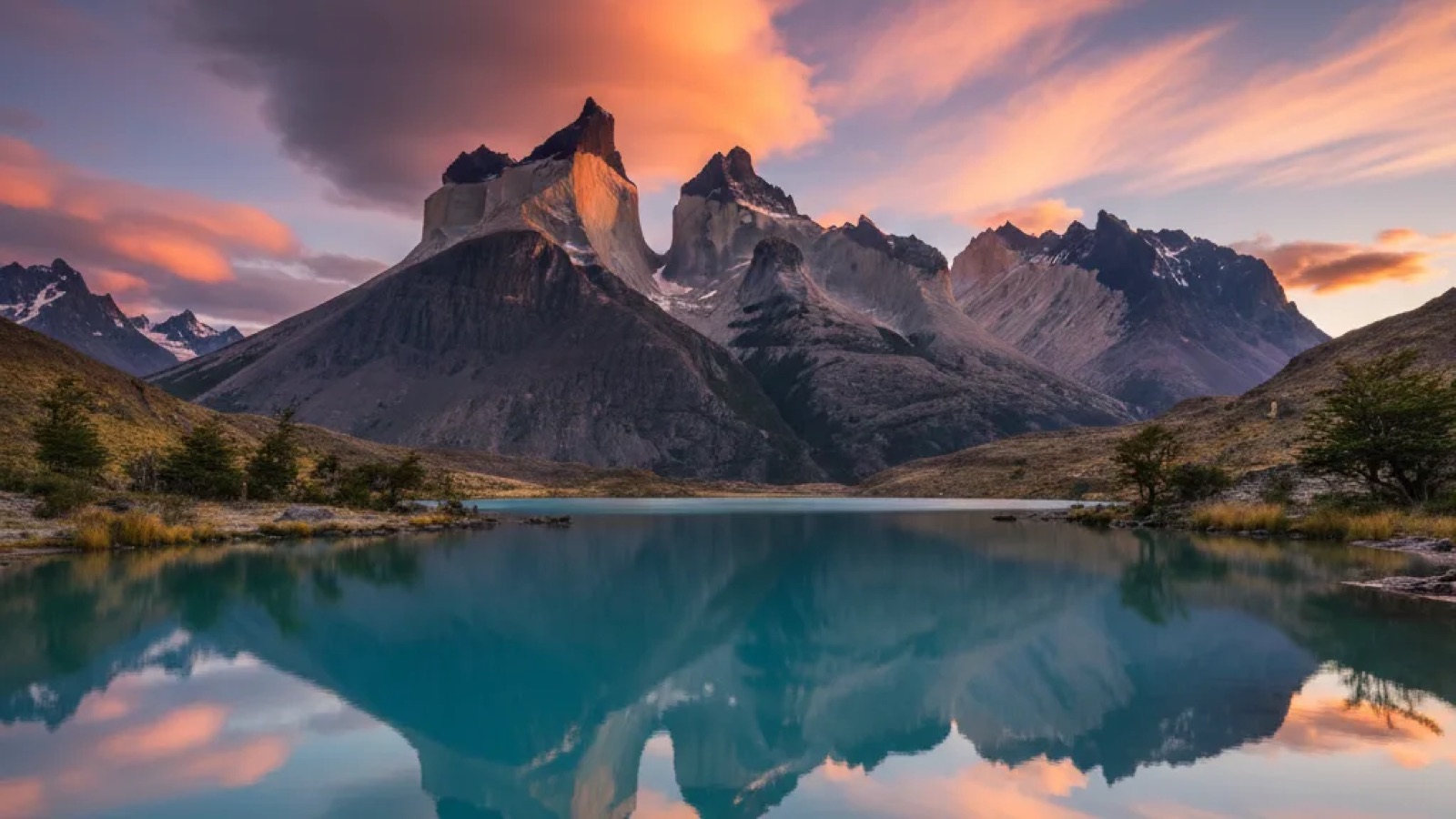
The landscapes here feel different—more condensed and dramatic, with turquoise lakes, churning rivers, and the iconic horns (Cuernos) and towers (Torres) of the Paine massif at its centre.
The W Trek and the O Circuit
The two main trekking routes are the W Trek and the O Circuit. The 'W' is the most popular, taking 4-5 days to cover the highlights of the park, including the Grey Glacier, the French Valley, and the base of the famous towers. The 'O' is a longer, more demanding loop of 8-10 days that includes the W but also takes you around the remote backside of the massif. It’s quieter, wilder, and a true immersion in the wilderness.
The Booking Challenge: Refugios and Camping
Herein lies the biggest logistical hurdle of any Patagonia trip. Unlike in El Chaltén, you cannot just show up and hike a multi-day circuit in Torres del Paine. You must have pre-booked accommodation for every single night you are on the trail. This is a strict park rule.
Accommodation consists of a network of catered lodges (refugios) and campsites, run by two different private companies as well as the national park authority (CONAF). The booking systems are separate, notoriously confusing, and they change frequently. Reservations for the peak season (Dec-Feb) open many months in advance—often around May or June—and the most popular spots on the W Trek can sell out within hours or days.
There is no way around this. You must plan your exact itinerary and book your spots a long time before your trip. The best advice is to check the official park websites and the sites of the two main concessionaires (a quick search will find them) for the latest booking information, opening dates, and regulations. It takes patience and organisation, but it's the only way to secure a spot on these world-famous trails.
The Infamous Patagonian Wind
You will read about the wind, but you cannot truly appreciate it until you experience it. It is not just a breeze; it is a relentless, physical presence. Gusts can knock you off your feet and feel like they're coming from a jet engine. It sculpts the trees into gnarled, permanent sideways shapes (called 'flag trees') and can whip up dust storms on the steppe or massive waves on the lakes.
It adds a significant layer of challenge to any hike. It drains your energy, makes it hard to hear, and can turn a cool day into a brutally cold one through wind chill. Your gear must be able to handle it. A good windproof and waterproof jacket is not optional; it’s the single most important piece of clothing you will bring. Always be prepared for trails or viewpoints to be closed due to extreme wind—park rangers make these calls for safety, and you must respect their instructions.
Packing Smart: Layers, Gear, and Essentials
The key to comfort in Patagonia is layering. The weather can change from calm and sunny to a freezing, horizontal blizzard and back again in the space of an hour. You need to be able to adapt quickly.
- Base Layer: Merino wool or synthetic tops that wick away sweat. Avoid cotton at all costs.
- Mid Layer: A fleece or a lightweight insulated jacket. This is your primary warmth layer.
- Outer Layer: A high-quality waterproof and windproof shell jacket. This is your shield against the elements. Make sure it has a good hood.
- Trousers: A comfortable pair of hiking trousers. Pack waterproof over-trousers as well, as they can be a lifesaver in a sudden downpour.
- Footwear: Broken-in, waterproof hiking boots with good ankle support are essential. The terrain is rocky and uneven.
- Other Essentials: A warm hat (beanie), gloves, a buff or neck gaiter, sunglasses, and high-SPF sunscreen. The sun is incredibly strong here due to the thin ozone layer. Trekking poles are also highly recommended, especially for the steep ascents and descents, and for bracing against the wind.
Respecting the Wild: Park Rules and Wildlife
The ecosystems in Patagonia are incredibly fragile. It is a privilege to visit them, and we have a responsibility to leave no trace. The two most important rules are simple.
First, fires are strictly forbidden everywhere in the national parks outside of designated cooking shelters in official campsites. A huge portion of Torres del Paine was destroyed by a fire started by a careless trekker. The consequences are devastating and the enforcement is absolute. Use only a camping stove in permitted areas.
Second, pack it in, pack it out. Everything you bring into the park, including all rubbish, food wrappers, and toilet paper, must be carried out with you. There are no bins on the trails.
Your respect will be rewarded with incredible wildlife sightings. Guanacos are everywhere on the plains. Keep an eye on the sky for the majestic Andean Condor, using the thermal updrafts to soar effortlessly. If you’re exceptionally lucky, you might even spot the elusive puma, especially in the quieter areas of Torres del Paine. Always keep a respectful distance and never, ever feed the wildlife.
Explore in Depth
This guide zeroes in on the classic trekking corridor, but Argentina is a massive and diverse country. Once you've had your fill of mountain air, the energy and culture of the capital is a fantastic contrast. My guide to Buenos Aires can help you navigate its beautiful neighbourhoods, find the best steak, and get a feel for the city's soul.
Frequently Asked Questions
Do I need to be an expert hiker to enjoy Patagonia?
Not at all. While the multi-day circuits like the W Trek require good fitness, there are incredible options for all levels. In El Chaltén, there are shorter hikes like the one to Chorillo del Salto waterfall (less than an hour) or Mirador de los Condores. In Torres del Paine, you can stay in a hotel and take day tours to viewpoints, go on scenic boat trips on Lake Grey, or do shorter, less demanding walks. The key is to be honest about your fitness level and plan accordingly. The scenery is spectacular even from the road.
Can I see Patagonia without doing multi-day treks?
Absolutely. You can base yourself in El Calafate and El Chaltén and do a series of spectacular day hikes, returning to the comfort of a hotel or guesthouse each night. The hikes to Laguna de los Tres (Fitz Roy) and Laguna Torre are both done as single-day trips from El Chaltén. The Perito Moreno Glacier is accessed via walkways and boat trips. In Chile, you can stay in Puerto Natales or at one of the hotels inside or near Torres del Paine and explore the park via day trips and shorter walks, which is a very popular option.
How far in advance do I really need to book everything?
This is crucial. For travel in peak season (December to February), you should book flights 6-9 months in advance for the best availability. Long-distance buses can be booked a few weeks ahead, but booking a month or more out is safer. The most critical part is the Torres del Paine refugios and campsites for the W or O treks. These must be booked the moment they are released, which is often 6-8 months before the season starts. This can't be stressed enough: for peak season, popular dates can sell out in a matter of hours.
Is it better to start my trip in Argentina or Chile?
There's no single "better" way; it depends on your overall travel plans. The route of flying into El Calafate (Argentina) and out of Punta Arenas (Chile) is very popular because it creates a logical, one-way progression from the arid steppes to the dramatic Chilean peaks. This also saves you from a long backtracking bus journey. However, the reverse is just as feasible. It's worth checking flight availability and schedules from your home country, as this might make the decision for you based on convenience and connections.
What is the currency and payment situation on the trails?
In towns like El Calafate, El Chaltén and Puerto Natales, credit cards are widely accepted in hotels, restaurants, and supermarkets. However, you absolutely need cash. In Argentina, you'll need Argentine Pesos, and in Chile, Chilean Pesos. You'll need cash for smaller cafes, taxis, and tips. Once you are on the hiking trails, especially in Torres del Paine, cash is king. While some larger refugios might have card facilities, they are often unreliable due to the remote location. Always carry enough local cash to cover snacks, drinks, or any small expenses at the campsites and refugios.
Final Thoughts
Patagonia is not an easy destination. It requires more planning, more resilience, and more layers of clothing than almost anywhere else. It’s a place that will test you with its wind, humble you with its scale, and frustrate you with its logistics. But the effort is returned a thousand times over. The feeling of standing small beneath those granite spires, of watching a glacier calve into a turquoise lake, of walking for hours through a silent, ancient forest—these are the moments that travelling is all about.
It’s a journey that cleanses the palate and recalibrates your sense of wonder. Pack for the worst, hope for the best, and go with a spirit of patience and respect. Patagonia will take care of the rest.