Petra Guide: The Siq, Treasury and Monastery
How to see Petra properly: the walk through the Siq, the Monastery climb, the back trails, ticket days and beating the heat.
In this guide
- Quick Facts
- The Rose-Red City and the Nabataeans
- Understanding the Scale: Why One Day Isn’t Enough
- The Entrance Walk: Through the Siq
- Al-Khazneh: The Treasury and the Crowds
- The City Unfurls: Street of Facades to Qasr al-Bint
- The Monastery Climb: A Heavenly Reward
- Petra’s Best Hikes: From Sacrifice to Sanctuary
- Little Petra and the Back-Door Trail
- Practicalities: Tickets, Timings, and Animal Welfare
- What to Wear and When to Go
- Petra by Night
- Explore in Depth
- Frequently Asked Questions
- Final Thoughts
This guide is part of our Jordan Travel Guide: Petra, Wadi Rum, Dead Sea — start there for the overview, when to go and how to get around.
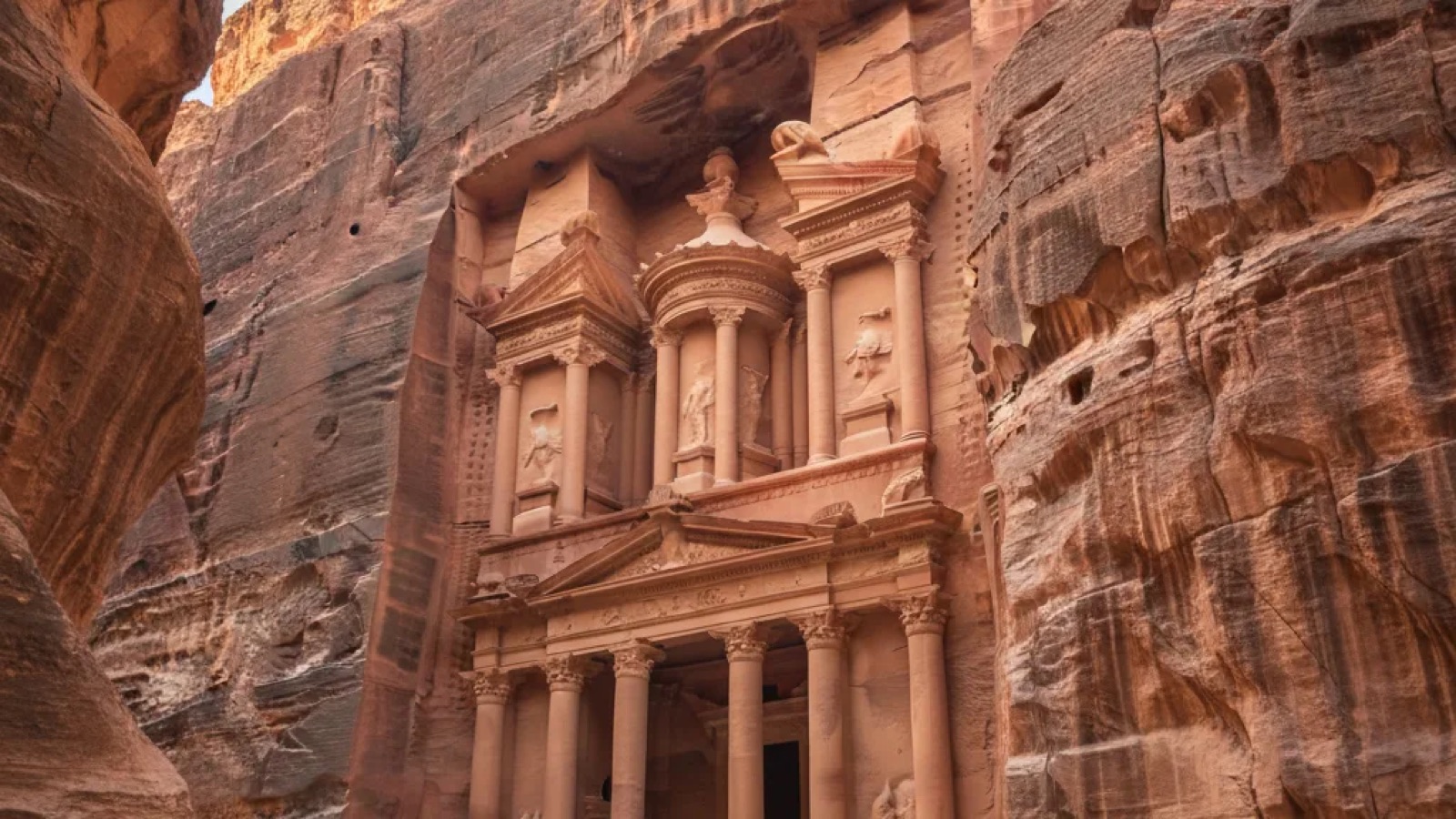
The air cools the moment you step into the canyon. Above, just a sliver of impossible-blue sky. The wind whispers along the sandstone, a sound that has echoed here for millennia. For more than a kilometre, this is your world: a winding gallery of rock, sculpted by water and time into blushing pinks, deep reds, and swirling ochres. It’s called the Siq, the gateway to Petra. Anticipation builds with every step. And then the dark walls finally part and that first, perfect sliver of Al-Khazneh—the Treasury—materialises in the sunlight. It’s a moment that’s been photographed a million times, but nothing prepares you for the real thing.
Petra is so much more than a single photograph. It’s a sprawling, ancient city that demands exploration on foot and rewards you with wonders at every turn. We’ll walk the main trail from the legendary Siq to the Treasury and beyond, but we won’t stop there. We’ll climb the lung-busting steps to the magnificent Monastery, seek out the hidden viewpoints for that iconic photo from above, and discuss the best hiking trails. You’ll also find practical advice on how to plan your days, beat the heat and the crowds, and understand the sheer, breathtaking scale of the Lost City of the Nabataeans.
Quick Facts
- Location: The archaeological park is located in the town of Wadi Musa in southern Jordan, approximately 3 hours' drive from the capital, Amman.
- Getting There: Most travellers arrive by private car, taxi, or on a tour. Public and private bus services run daily from major hubs like Amman and Aqaba.
- Getting Around: Your own two feet. Petra is an enormous site best explored by walking and hiking. Animal rides are available but come with considerations.
- Language & Currency: The official language is Arabic, but English is widely spoken in all tourist areas. The currency is the Jordanian Dinar.
- Best Time to Visit: The shoulder seasons of Spring (March-May) and Autumn (September-November) offer the most pleasant weather for walking.
The Rose-Red City and the Nabataeans
Before it was ‘lost’ to the Western world for centuries, Petra was a vibrant, thrumming metropolis. Its architects were the Nabataeans, a formidable Arab tribe who evolved from nomads to masters of trade and engineering. Their genius was realising that this near-impenetrable fortress of sandstone canyons was the perfect place to control the lucrative trade routes crisscrossing the desert, carrying frankincense, myrrh, and spices from Arabia to the Mediterranean.
They didn't just carve magnificent tombs; they engineered a complex system of dams, cisterns, and water channels to harvest the scarce rainfall, allowing a major city to flourish in the desert. Petra’s wealth was legendary, and its unique tomb architecture—a mesmerising blend of Nabataean, Egyptian, Assyrian, and Hellenistic styles—was a testament to its cosmopolitan status. After being absorbed into the Roman Empire and later damaged by earthquakes and shifting trade routes, the city slowly emptied, its secrets kept by the local Bedouin tribes.
It wasn't until 1812 that a Swiss explorer, Johann Ludwig Burckhardt, disguised himself as an Arab scholar and persuaded a local guide to lead him to the fabled lost city. His journey opened the floodgates, and Petra has been captivating travellers, archaeologists, and dreamers ever since.
Understanding the Scale: Why One Day Isn’t Enough
The first thing you must realise about Petra is its immense scale. The classic postcard view of the Treasury is, quite literally, just the beginning. The walk from the main visitor centre through the Siq to the Treasury is about 2 kilometres. The main, relatively flat trail continues for another 2 kilometres past the Theatre and Colonnaded Street to the heart of the old city. That’s an 8-kilometre round trip on its own, before you've even considered a single side trail or climb.
A single day allows you to do that main trail, perhaps with a quick look at the Royal Tombs. But you’ll be rushed, walking with the peak crowds, and you will completely miss the site's most rewarding experiences. The epic hike to the Monastery, the stunning views from the High Place of Sacrifice, or the iconic photo spot above the Treasury all require significant extra time and energy. Plan for at least two full days. Three days is even better if you're a keen hiker and photographer. This transforms the visit from a box-ticking exercise into a true immersion in one of the world's greatest wonders.
The Entrance Walk: Through the Siq
Your journey begins at the modern visitor centre in Wadi Musa. After you pass through the gates, the path descends into a wide, open valley known as the Bab as-Siq, or ‘gateway to the Siq’. The first monuments you'll encounter are the Djinn Blocks, three imposing, square-cut tombs standing like silent sentinels. A little further on, carved into the cliff face, is the Obelisk Tomb and the Bab as-Siq Triclinium, our first real taste of the Nabataeans’ love for carving their lives—and afterlives—into the rock.
Soon, the valley walls converge dramatically and you enter the Siq proper. This 1.2-kilometre-long natural canyon is an experience in itself. The temperature drops, and the sun becomes a memory high above the towering, 100-metre-high walls of sandstone. Look closely at the sides, and you’ll see the remnants of Nabataean water channels that once carried fresh water into the city centre, a marvel of ancient hydro-engineering. The colours of the rock are mesmerising, shifting from pale rose to deep crimson with the changing light. Let the anticipation build; this is one of the most magnificent entrances to any ancient site on earth.
Al-Khazneh: The Treasury and the Crowds
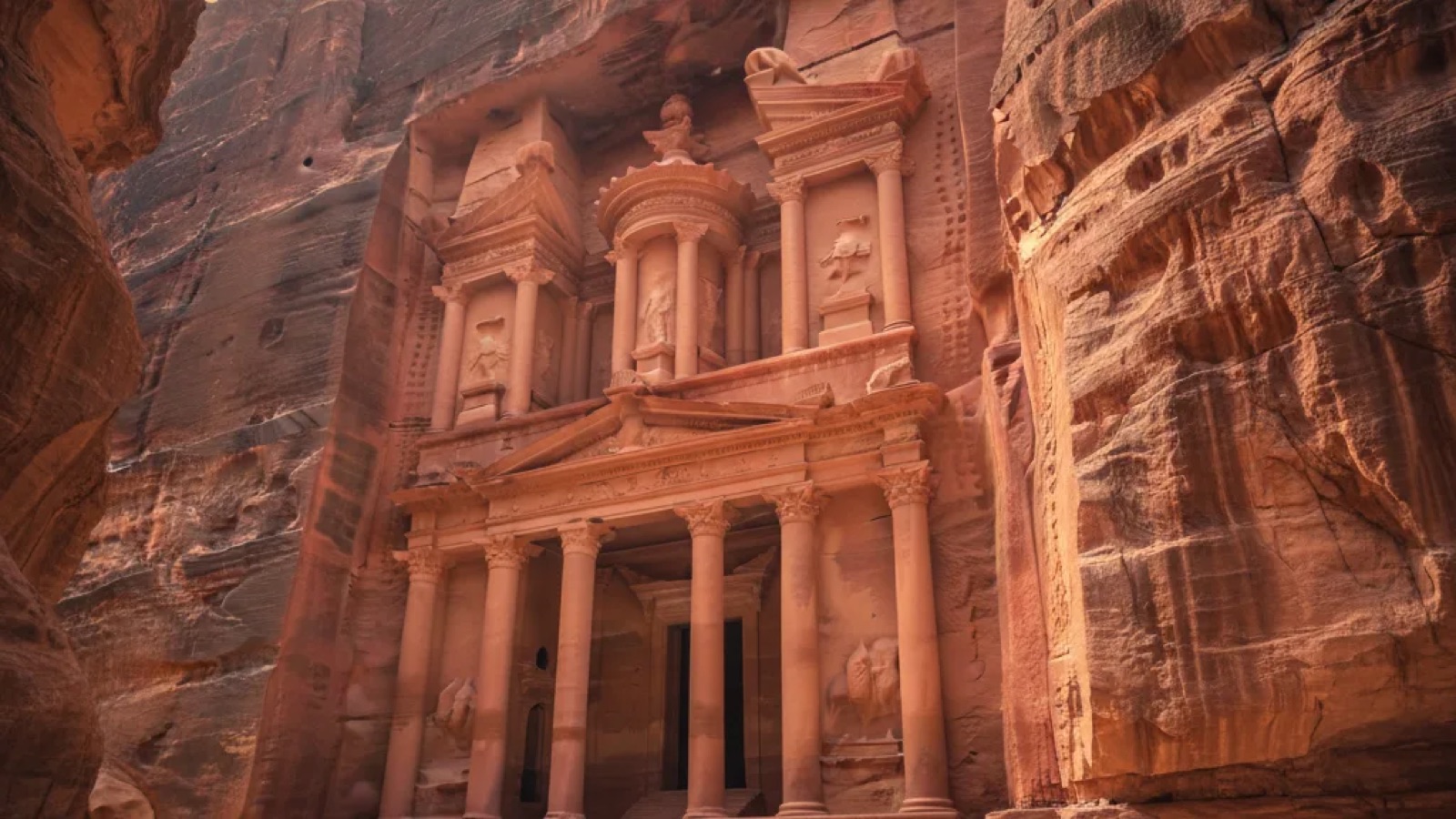
You hear it before you see it: the familiar echo of voices, the grumble of a camel. The final bends of the Siq are dark and narrow, framing a sliver of what’s to come. Then, you step out of the shadows and into the light. Before you stands Al-Khazneh, the Treasury. It’s breathtaking. The sheer perfection of its facade, improbably carved from the top down nearly two thousand years ago, is staggering. Its name comes from a Bedouin legend that a pharaoh’s treasure was hidden in the urn at its peak, and the bullet holes pocking its surface are from locals in past centuries trying to shoot the treasure out.
Now for the reality check. You will not be here alone. This small plaza is the busiest spot in Petra. It’s a crush of people taking selfies, guides corralling their groups, and camels and their handlers vying for business. My advice? Take a moment to simply stand back and absorb the view. Marvel at it. Then, once you have your photos, move on. The rest of Petra awaits, and the crowds thin out considerably the further you walk. You can always see the Treasury again on your way back, perhaps in the softer afternoon light.
Photography Tip: For the best light on the facade, plan to be at the Treasury between 9 AM and 11 AM when the sun illuminates it directly. An early start gets you there before the biggest crowds arrive.
The City Unfurls: Street of Facades to Qasr al-Bint
As you reluctantly turn your back on the Treasury, the canyon widens into the main city area. You are now on the Street of Facades, a broad thoroughfare lined with dozens of smaller, yet still impressive, Nabataean tombs carved into the cliff face. It gives you a sense of this place as not just a ceremonial centre, but a vast necropolis.
A short walk brings you to the spectacular Theatre. Though its design looks Roman, it was actually carved out of the solid rock by the Nabataeans to seat thousands, and only later expanded by the Romans. On the cliffs opposite the Theatre rise the Royal Tombs. These are some of the most impressive carvings in Petra, and you can get up close to admire the Urn Tomb, easily identified by the giant urn crowning its top, the intricate Silk Tomb with its stunning swirls of coloured sandstone, and the grand Palace Tomb. It's a short but steep climb up to them, and well worth it for the views back across the valley.
Continuing down the main path, it becomes the Colonnaded Street, a classic paved Roman road that marked the heart of the civic centre. Here you'll see the ruins of markets, nymphaeums, and the Great Temple complex. The trail ends at Qasr al-Bint, one of the only freestanding structures left in Petra and the main temple of the Nabataean city, dedicated to their primary deity, Dushara.
The Monastery Climb: A Heavenly Reward
Beyond Qasr al-Bint, at the end of the main trail, a sign points the way to Ad-Deir, the Monastery. This is where your visit truly becomes an adventure. The path transforms into a staircase of over 800 steps, winding its way up the mountain. It’s a strenuous, 45-to-60-minute climb, but don’t be daunted. The path is well-trodden, with plenty of places to rest in the shade and Bedouin stalls selling water and tea along the way.
The reward for your effort is nothing short of spectacular. As you round the final corner, the Monastery reveals itself. Even larger than the Treasury, this colossal monument has a raw, powerful beauty, and its position high on the mountain means you'll share it with far fewer people. It feels like you’ve discovered a second, hidden Petra.
But don't stop there. Several small, hand-painted signs point the way to various "best view" viewpoints. Take the 10-minute scramble up the rocks opposite the Monastery. From here, you’ll be rewarded with one of the most incredible panoramas in all of Jordan, looking out over the Monastery and the vast, mountainous expanse of the Wadi Araba desert stretching towards Israel and Palestine. It’s a truly humbling sight.
Photography Tip: The Monastery facade faces west, making it absolutely perfect for photography in the late afternoon. The golden hour light makes the sandstone glow with an intense orange colour.
Petra’s Best Hikes: From Sacrifice to Sanctuary
For those with the time and energy, Petra’s hiking trails unlock a whole other level of wonder, taking you away from the crowds and into the silent heart of the mountains.
The High Place of Sacrifice Trail
This is a standout hike in Petra. The trailhead, a steep set of stairs, begins just past the Theatre. It’s a tough 30-40 minute climb up to a flattened mountain summit where the Nabataeans carved out a sacred platform, complete with altars and drainage channels for the blood of their sacrificial animals. The 360-degree views over the entire Petra basin are phenomenal. But the best part is the descent. Instead of going back the way you came, follow the signs for the trail down through Wadi Farasa. This quiet, beautiful route takes you past a series of lesser-seen tombs, including the Garden Tomb and the Roman Soldier's Tomb, and eventually rejoins the main trail near Qasr al-Bint. The whole loop takes 2-3 hours and feels like a journey through Petra’s backcountry.
The Al-Khubtha Trail (Treasury from Above)
That iconic photo looking down on the Treasury? This is the way to get it legitimately and safely. The trail starts near the Royal Tombs and climbs steadily up the mountain opposite the Treasury. It takes about 30-40 minutes of climbing. At the top, you’ll find a small Bedouin tent perched on the cliff edge. For the price of a cup of tea, you can sit on the rugs and enjoy the jaw-dropping view straight down onto Al-Khazneh as tour groups ebb and flow like ants below. It provides a profound sense of scale that you just don't get from the ground. Avoid any unofficial "guides" near the Treasury offering a dangerous shortcut climb; this official trail is the only safe way.
Little Petra and the Back-Door Trail
A few kilometres north of the main Petra site lies Siq al-Barid, affectionately known as Little Petra. It’s a much smaller, more intimate canyon featuring tombs, temples, and dining halls (tricliniums) carved into the rock. One of its highlights is the Painted House, which contains one of the only surviving examples of Nabataean interior frescoes, depicting birds, vines, and cherubs. It’s a fantastic, peaceful introduction or add-on to your main Petra visit.
For the more adventurous, Little Petra is also the starting point for the "back-door" trail. This is a spectacular 6-kilometre hike across the mountains that finishes at the Monastery inside the main Petra site. It's a wonderful way to spend the morning of your second day, arriving at a major monument while avoiding the main entrance and the Siq completely. The trail isn't difficult but it is not always clearly marked, so hiring a local guide is highly recommended. You'll also need a taxi or 4WD to drop you at the Little Petra starting point.
Practicalities: Tickets, Timings, and Animal Welfare
Tickets and the Jordan Pass
Entry tickets to Petra are sold for one, two, or three consecutive days, with the multi-day options offering significantly better value. However, most travellers find that the Jordan Pass is the most cost-effective option. It is a single package that combines the fee for your Jordanian tourist visa with prepaid entry to dozens of sites across the country, including Petra. You must purchase it before you arrive in Jordan. There are different tiers of the pass that include one, two, or three days at Petra. Visit the official Jordan Pass website to verify the current inclusions, visa regulations, and pricing tiers before you buy.
Opening Hours and an Early Start
Petra opens early in the morning and closes around sunset. The exact hours vary slightly between summer and winter, so always check the official Petra Development and Tourism Region Authority (PDTRA) website for up-to-date timings. My single most important piece of advice is this: be at the main gate when it opens. The first hour or two offers a magical experience. You can walk through the Siq in near silence and see the Treasury with only a handful of other early risers, long before the first tour buses arrive.
A Note on Animal Rides
You will be offered rides on horses, donkeys, and camels throughout the site. The standard Petra ticket includes a horse ride for the first 800 metres (from the main gate to the Siq entrance), though a substantial tip is aggressively expected. Donkeys are often marketed for the steep climbs to the Monastery and High Place of Sacrifice. Animal welfare is worth mentioning. Working conditions for these animals can be incredibly tough, especially in the summer heat. While many handlers care for their animals, some do not. For this reason, walking on your own two feet is the better choice. If you do choose to ride, please take a moment to select an animal that appears healthy, strong, and well-cared for. Your choice as a traveller has an impact.
What to Wear and When to Go
Your choice of footwear can make or break your Petra experience. Sturdy, comfortable, and well broken-in walking shoes are essential. Hiking boots with ankle support are even better, especially if you plan on tackling the trails. Do not attempt to explore Petra in flip-flops or flimsy sandals.
The sun is relentless year-round. A wide-brimmed hat, sunglasses, and high-SPF sunscreen are non-negotiable. Wear light, loose-fitting clothing to stay cool; long sleeves and trousers are also wise for sun protection.
The seasons dictate your experience. Summer (June-August) is scorching hot, and you'll need to carry and drink several litres of water. Hiking in the middle of the day can be dangerous. Winter (December-February) can be surprisingly cold and rainy. Importantly, heavy winter rains can cause flash floods in the Siq, leading to the authorities closing the site for safety. Always check the weather forecast. The spring and autumn months provide the perfect balance of warm, sunny days and comfortable temperatures for walking.
Petra by Night
On select evenings, the path from the visitor centre all the way through the Siq to the Treasury is lit by thousands of candles. It’s a completely different and highly atmospheric way to experience the approach to the city. Visitors gather in front of the candlelit facade of the Treasury for a short performance of traditional Bedouin music and storytelling.
It can be a beautiful experience, but it’s wise to manage your expectations. It gets very crowded, and the quiet, contemplative atmosphere can sometimes be broken by the noise of the large group. It requires a separate ticket from daytime entry and doesn't grant you access to the rest of the site. It runs on specific nights of the week, so you must check the official schedule in advance to see if it aligns with your visit.
Explore in Depth
This Petra guide is just one part of a broader series on travelling through Jordan. After you've walked the canyons of the Nabataeans, the next logical stop on your adventure is the vast desert landscapes further south.
Frequently Asked Questions
How many days do I really need to see Petra?
Two full days is the ideal minimum. This allows you to walk the main trail and climb to the Monastery on day one, then tackle a major hike like the High Place of Sacrifice or the Al-Khubtha trail on day two. One day is extremely rushed and you'll miss out on the best parts. Three days is perfect for keen hikers who want to explore multiple trails, see Little Petra, and truly soak it all in without rushing.
Is the climb to the Monastery difficult?
It's challenging but very achievable for anyone with average fitness. It consists of over 800 stone steps and is more a test of stamina than technical skill. The key is to take your time, wear good shoes, carry plenty of water, and take short rests in the shade when you need to. The path is busy and there are stalls along the way. The phenomenal view at the end is more than worth the effort you put in.
Is Petra by Night worth it?
It depends what you're looking for. Seeing the Siq and Treasury by candlelight is incredibly atmospheric and visually stunning. However, it can be very crowded, and the event itself is quite simple. If you're hoping for a quiet, spiritual experience, you might be disappointed. If you love the spectacle and the photo opportunities, you will probably enjoy it. It's a nice addition to a multi-day trip, but it's not worth prioritising over a full day of exploration.
Where is that famous photo of the Treasury taken from above?
That iconic viewpoint is at the end of the Al-Khubtha Trail. This is an official, signposted hike that starts near the Royal Tombs, on the right-hand side of the main valley as you face away from the Treasury. The trail climbs up the mountain and leads to a cliff edge directly opposite the Treasury. You'll find a Bedouin tent there where you can enjoy the view. Be wary of anyone offering a dangerous "shortcut" scramble up the cliffs near the Treasury itself.
Is Petra safe for solo travellers?
Yes, Petra is generally very safe for solo travellers, including women. The main trails are well-trodden and there are always other tourists, guides, and tourism police around. As with travelling anywhere, it's wise to be aware of your surroundings. For the more remote hiking trails, if you're not an experienced hiker or are feeling unsure, hiring a local Bedouin guide is a great way to ensure your safety and learn more about the area.
Final Thoughts
Some world-famous sites just don’t live up to the weight of expectation. Petra is not one of them. It is every bit as wondrous as you’ve imagined, and then some. The magic isn't just in that first view of the Treasury, as unforgettable as it is. It's in the cumulative effect of the days spent walking its ancient pathways, climbing its sacred mountains, and feeling dwarfed by the sheer ambition of a civilisation that carved a city from the living rock.
My best advice is to give it the time it deserves. Slow down. Look closer at the water channels in the Siq. Take the trail less travelled. Sit with a glass of sweet Bedouin tea and watch the sunset light up the Royal Tombs. Petra rewards effort. The more you put in, the more it gives back, leaving you with memories etched not just in your camera, but in your soul.
More Jordan guides
Jordan Travel Guide: Petra, Wadi Rum, Dead Sea
A week in Jordan: the classic route from Amman to Petra and Wadi Rum, driving, the Jordan Pass, seasons and cultural basics.
Wadi Rum Guide: Desert Camps and the Landscape
What a night in Wadi Rum is really like: jeep tours, camps, sandstone arches, star photography and choosing the right season.