Sahara Desert Tour From Marrakech: What to Expect
What a Sahara trip from Marrakech really involves: Erg Chebbi versus Erg Chigaga, long driving days, desert camps and picking the right route.
In this guide
- Quick Facts
- Erg Chebbi vs. Erg Chigaga: Which Dunes to Choose?
- The Classic 3-Day Marrakech to Merzouga Tour
- The Reality of the Drive: Managing Expectations
- The Camel Trek: An Iconic Experience
- Desert Camps: Your Home Amongst the Dunes
- Sahara Night Sky: A Photographer's Dream
- Weather in the Desert: Sandstorms and Seasons
- Practicalities: Packing, Altitude, and Road Conditions
- Organised Tour vs. Self-Drive
- Short on Time: The 2-Day Trip Dilemma
- Frequently Asked Questions
- Final Thoughts
This guide is part of our Morocco Itinerary: Marrakech, Atlas and Sahara — start there for the overview, when to go and how to get around.
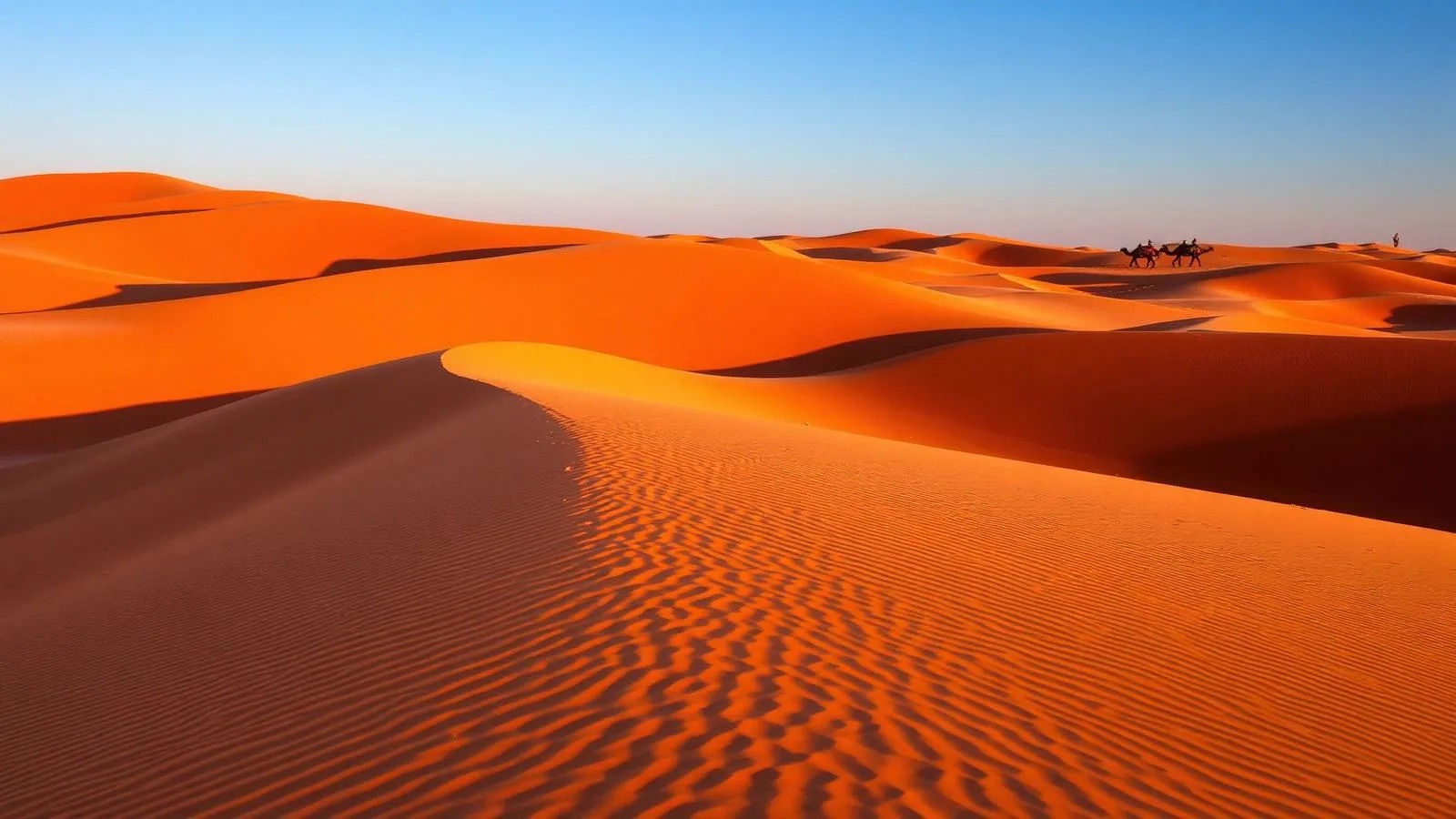
The Sahara has a way of silencing you. After hours of driving through a landscape of rock and dust that seems to stretch into eternity, the world suddenly softens. The horizon dissolves into waves of apricot-coloured sand, sculpted by the wind into mesmerising curves: Erg Chebbi. No grand pronouncements are needed; the dunes speak for themselves.
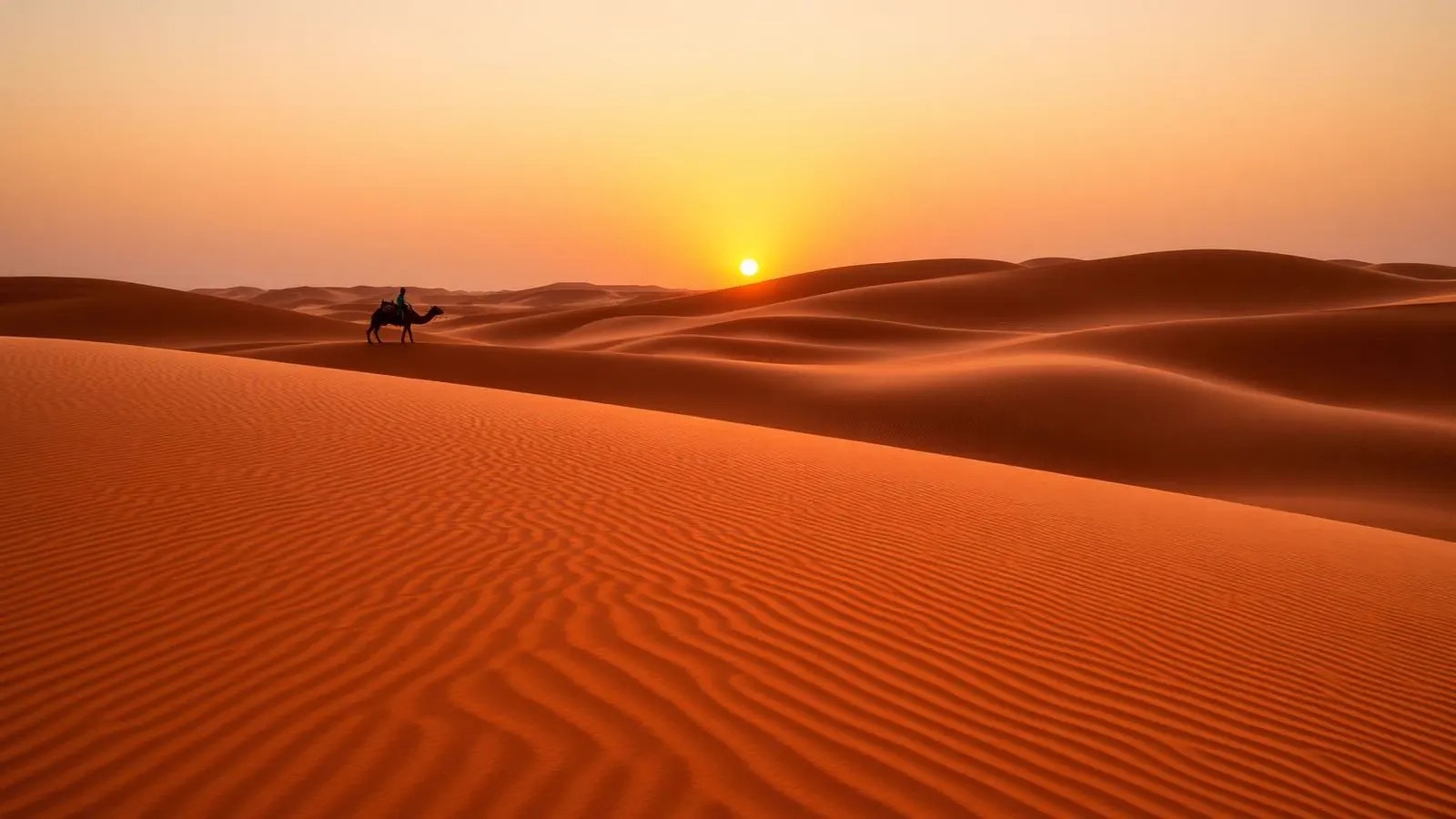
In the evening, swaying rhythmically atop a camel, you watch the sun dip below the dunes, painting the sky in fiery shades of orange, pink, and purple. The silence is profound, broken only by the soft padding of camel feet and the whisper of the wind. Later, huddled around a campfire under a blanket of stars so dense it feels like you could reach out and touch them, it becomes clear this isn't just a trip. It's a pilgrimage to a place that rearranges your sense of scale and time. A journey from Marrakech to the Sahara is long, and at times demanding, but it’s an experience that imprints itself on your soul.
Quick Facts
Before we dive into the details of the journey, here are a few key things to help you get your bearings for a trip into the Moroccan Sahara.
- Starting Point: Most classic Sahara tours begin and end in Marrakech.
- Main Destination: The vast majority of 3-day tours head to the sand dunes of Erg Chebbi, near the town of Merzouga.
- Language: The primary languages are Moroccan Arabic (Darija) and various Berber languages (Tamazight). French is very widely spoken, especially in tourism. English is common with guides and in hotels, but less so in rural villages.
- Currency: The Moroccan Dirham (MAD). It’s best to carry cash, especially for small purchases in villages along the route. ATMs are available in larger towns like Ouarzazate, but can be unreliable.
- Travel Time: Be prepared for significant driving. The journey from Marrakech to the Erg Chebbi dunes is roughly 560 kilometres and takes about 9-10 hours of driving each way, spread over multiple days.
Erg Chebbi vs. Erg Chigaga: Which Dunes to Choose?
When you picture the Sahara, you're likely imagining vast, rolling sand dunes. In Morocco, these are found in two main areas accessible from Marrakech: Erg Chebbi and Erg Chigaga. Understanding the difference is key to choosing the right trip.
Erg Chebbi (Merzouga) is the destination for the classic 3-day and 4-day tours. It's a stunning, accessible expanse of iconic Saharan dunes, some reaching up to 150 metres high. The accessibility is its main advantage; you can reach the edge of the dunes by a paved road, making it the logistically simpler and more popular choice. From the small frontier town of Merzouga, you hop on a camel or into a 4x4 for the final leg to your desert camp nestled among the dunes.
Erg Chigaga (M'Hamid/Foum Zguid) is the wilder, more remote cousin. Reaching these dunes requires a longer journey and a dedicated 4x4 for the final two hours across a stark, flat, rocky desert (hamada). The dunes themselves are less concentrated but spread over a larger area, giving a powerful sense of isolation and immense scale. A trip to Erg Chigaga is less about a checklist of sights and more about deep immersion in the desert. It typically requires a minimum of 4 days, or is incorporated into a longer circuit, and feels more like a genuine expedition.
For most first-time visitors, especially those on a tighter schedule, the journey to Erg Chebbi provides the quintessential Sahara experience you're looking for.
| Feature | Erg Chebbi (Merzouga) | Erg Chigaga (M'Hamid) |
|---|---|---|
| Accessibility | Higher. Reachable by paved road to Merzouga. | Lower. Requires a 4x4 for the final 60km off-road journey. |
| Minimum Trip Duration | 3 days / 2 nights from Marrakech. | 4 days / 3 nights from Marrakech. |
| Atmosphere | More popular and developed, with a wider range of camps. Iconic, tall dunes. | More remote, wild, and isolated. A vaster, more sprawling dune sea. |
| Typical Experience | Part of a circuit including High Atlas, Ait Benhaddou, and Todra Gorge. | Focuses more on the off-road desert expedition itself. |
The Classic 3-Day Marrakech to Merzouga Tour
This is the most popular way to experience the Sahara from Marrakech. It’s a whirlwind tour that packs in an incredible amount of Morocco’s diverse and dramatic scenery. While the destination is the desert, the journey itself is a huge part of the adventure.
Day 1: Across the High Atlas to the Valley of a Thousand Kasbahs
Your journey begins early, with a pre-dawn pickup in Marrakech. The hustle of the medina quickly gives way to the foothills of the High Atlas Mountains. The road begins to climb, snaking its way up the Tizi n'Tichka pass. At 2,260 metres, this is the highest major mountain pass in North Africa. The views are breathtaking, with switchbacks revealing terraced valleys and traditional Berber villages clinging to the mountainsides. The air grows cooler and crisper. There are numerous viewpoints for photos, and your driver will likely make a stop at an Argan oil cooperative, a fascinating insight into this local industry.
After descending from the pass, the landscape transforms dramatically. The lush greens are replaced by the ochre and reds of the semi-arid pre-desert. The main stop of the day is the magnificent Ait Benhaddou. This UNESCO World Heritage site is a fortified village, or ksar, a striking example of southern Moroccan earthen architecture. You'll have time to cross the (often dry) riverbed and wander through its labyrinthine alleys, climbing to the granary at the top for panoramic views. You'll immediately recognise it from countless films and TV shows; it has a timeless, cinematic quality.
The journey continues to Ouarzazate (pronounced 'War-za-zat'), known as the "Gateway to the Desert" and the centre of Morocco's film industry. Many tours include a brief stop here, perhaps to see the exterior of the film studios or the impressive Taourirt Kasbah. From Ouarzazate, you’ll drive along the "Road of a Thousand Kasbahs," through the Skoura palm oasis, before finally arriving in the Dades Valley for the night. You'll typically stay in a small hotel or guesthouse perched with views over the valley or right within the dramatic Dades Gorge, its rock formations glowing red in the late afternoon sun.
Day 2: Gorges, Oases, and Your First Sahara Sunset
After breakfast with a view, the day often starts with a drive further into the Dades Gorge to see the famous "monkey fingers" rock formations and hairpin bends. The scenery is spectacular. From there, you'll backtrack slightly and head towards the town of Tinerhir, the jumping-off point for the Todra Gorge (sometimes called Todgha Gorge).
A short drive through a lush palmeraie leads you to the mouth of the gorge, and it’s a truly awe-inspiring sight. Here, the river has carved a sheer canyon through the mountains, with cliffs soaring up to 300 metres on either side. At its narrowest point, the canyon is only about 10 metres wide. You'll have time to walk along the crystal-clear river, dwarfed by the immense rock walls. It’s a cool, shaded respite from the sun and a popular spot for local families to picnic.
Leaving the gorge behind, the journey east continues. The landscape becomes progressively drier and flatter. You'll pass through several towns like Erfoud, known for its fossils, before the anticipation really begins to build. In the distance, you may catch your first glimpse of the golden band of the Erg Chebbi dunes. You’ll arrive at a kasbah or hotel on the edge of the desert near Merzouga, where you'll leave your main luggage. With a small overnight bag, you’ll meet your camel and your guide for the final, iconic leg of the journey. The trek into the dunes takes about 60 to 90 minutes, timed perfectly to watch the sunset from a high dune before arriving at your desert camp for the night.
Day 3: Sunrise and the Long Road Home
You’ll be woken before dawn. It’s always worth it. Climbing a nearby dune in the cool, pre-dawn air and watching the sun slowly rise over the endless sea of sand is a core memory in the making. The way the light catches the ridges and the colours shift from deep purple to soft pink and brilliant orange is pure magic. After sunrise, you’ll enjoy a simple Berber breakfast at the camp before making your way back to the edge of the dunes, either by camel or 4x4, depending on your tour's arrangements.
And then, the long drive begins. This is the part that tests your endurance. It’s the same road back, a journey of approximately 9-10 hours of driving, plus a stop for lunch. You’ll re-cross the High Atlas Mountains, arriving back in Marrakech in the early evening. It’s an exhausting day, but you’ll be buzzing with the otherworldly beauty of the past 48 hours. You’ll be dropped off at your hotel or a central point, dusty, tired, but utterly transformed.
The Reality of the Drive: Managing Expectations
It's impossible to overstate this: a 3-day Sahara tour from Marrakech involves a lot of time in a vehicle. The total round-trip distance is over 1,100 kilometres. You will spend the better part of Day 1 and almost all of Day 3 driving. While the scenery is consistently spectacular and the numerous stops break up the journey, it’s crucial to be mentally prepared for long hours on the road. This is not a relaxing, leisurely holiday; it's an adventure road trip.
If you suffer from motion sickness, the winding roads of the Tizi n'Tichka pass can be challenging, so come prepared. Think of the minibus or 4x4 as your moving theatre, where the incredible, ever-changing landscape of Morocco is the main event. Bring a good playlist or podcast, a neck pillow, and a sense of patience. The reward at the end is more than worth the long haul.
The Camel Trek: An Iconic Experience
For many, the camel trek is the defining image of a Sahara trip. As you mount your dromedary (they are single-humped camels) and your guide leads the caravan into the dunes, you really feel like you’ve stepped into a different world. The rocking, swaying motion takes a few minutes to get used to. It's not the most comfortable mode of transport—expect some sore legs the next day—but its gentle pace allows you to fully absorb the landscape's grandeur and silence.
Your Berber guides are masters of the desert. They navigate the seemingly featureless terrain with ease and are often brilliant photographers, knowing all the best angles for those classic silhouette shots against the setting sun. The trek usually lasts between 60 and 90 minutes, which is just the right amount of time to feel immersive without becoming overly strenuous. It’s a truly memorable experience that connects you to the ancient traditions of desert travel.
Desert Camps: Your Home Amongst the Dunes
Spending a night under the Saharan stars is the highlight of the trip. The camps, run by local Berber families, are nestled in hollows between the dunes for protection from the wind. After sunset, you’ll gather for a traditional dinner—often a hearty tagine—followed by Berber music and drumming around a crackling campfire. The choice between a "standard" and a "comfort" or "luxury" camp is one of the main decisions you'll make when booking.
Standard Camps
These offer a more rustic and traditional experience. You’ll sleep in a private tent, which is typically a sturdy Berber-style tent made of wool or canvas, with mattresses and blankets on the floor or a simple bed frame. The key distinction is that toilet and washing facilities are communal, located in a separate block, and are usually quite basic. It's authentic, budget-friendly, and a wonderful way to experience the desert if you're not fussed about creature comforts.
Comfort or 'Luxury' Camps
For those who want a bit more comfort, these camps are a fantastic option. The tents are larger, often with proper beds, comfortable mattresses, and better quality linens. The game-changer is the private, en-suite bathroom inside your tent, complete with a Western-style flushing toilet and often a hot shower (though water pressure can be variable). These camps also tend to have more elaborate dining tents and relaxation areas. While less rustic, they allow you to enjoy the raw beauty of the desert without sacrificing modern comforts.
Sahara Night Sky: A Photographer's Dream
Once the generator at the camp is turned off for the night, the true show begins. Far from any significant city lights, the Sahara Desert boasts some of the darkest skies on the planet. The sheer number of visible stars is staggering. On a clear, moonless night, the Milky Way arches across the sky in breathtaking detail.
For photographers, this is paradise. If you're keen on astrophotography, you absolutely must bring a tripod. A wide-angle lens (e.g., 14-24mm) with a fast aperture (f/2.8 or lower if possible) is ideal. Key settings to start with are a high ISO (around 3200-6400), a wide-open aperture, and a shutter speed of 15-25 seconds. Use a remote shutter or the camera's two-second timer to avoid camera shake. Even if you just have a modern smartphone, you can get surprisingly good results using its night mode feature, especially if you can prop it securely on something. Standing out there in the cool, silent darkness, capturing the cosmos, is an unforgettable experience.
Weather in the Desert: Sandstorms and Seasons
The desert is a land of extremes, and choosing when to go can have a huge impact on your experience.
Best Time to Go
The ideal times to visit the Moroccan Sahara are during the shoulder seasons: spring (March to May) and autumn (September to November). During these months, daytime temperatures are pleasantly warm and sunny, perfect for sightseeing, while the nights are cool but not frigid. The light is beautiful, and the weather is generally stable.
The Extremes: Summer Heat and Winter Cold
Summer (June to August) is brutally hot. Daytime temperatures in the dunes can soar well above 45°C (113°F). While tours still run, the intense heat can be draining and uncomfortable for many people, making daytime activities difficult. If you must travel in summer, be prepared with ample water, sun protection, and a tolerance for extreme heat.
Winter (December to February) offers crisp, clear, sunny days that are perfect for driving and exploring. However, as soon as the sun sets, the temperature plummets. Nights in the desert can be freezing, sometimes dropping to 0°C (32°F) or slightly below. Camps provide plenty of blankets, but you must pack warm layers, including thermals, a beanie, and gloves, to be comfortable around the campfire and in your tent.
The Possibility of Sandstorms
Sandstorms are a natural part of desert life. They are most common in the spring, as strong winds can whip across the landscape. Most are minor, creating a hazy atmosphere for a few hours. A major sandstorm, however, can reduce visibility to near zero and force all activities indoors. If you're caught in one, your guide will know exactly what to do. The best advice is to stay inside your tent or a building, cover your face with a scarf (a cheche or turban is perfect for this), and protect your camera and electronic gear by sealing it in a bag.
Practicalities: Packing, Altitude, and Road Conditions
A little preparation goes a long way in ensuring your Sahara adventure is comfortable and enjoyable.
What to Pack for Your Sahara Trip
Packing smart is about layers and practicality. Your main luggage will usually be stored in the van or at the kasbah on the edge of the desert, so you'll only take a small overnight bag to the camp.
- Layers of Clothing: Pack lightweight tops, long-sleeved shirts, and a pair of comfortable trousers. In the evening, you'll need a fleece, a warm jacket, and even a beanie and gloves, especially in winter.
- Sun Protection: This is non-negotiable. Bring a wide-brimmed hat, sunglasses, and high-SPF sunscreen.
- Scarf or Headwrap: A Moroccan cheche is perfect. It protects you from the sun, wind, and sand, and your guide can show you how to wrap it properly. You can buy one easily along the way.
- Footwear: Closed, sturdy shoes like trainers or walking shoes are best for the journey and exploring kasbahs. You can go barefoot or wear sandals around the camp in the soft sand.
- Personal Items: A power bank is essential for charging your phone/camera as electricity at camps can be limited. Pack any personal medications, basic first-aid supplies like plasters and pain relief, and some wet wipes.
- Camera Gear: Your camera, extra batteries, memory cards, and a tripod if you're serious about night photography.
- Cash: For lunches, drinks, souvenirs, and tips for your driver and guides.
Altitude and Winding Roads
The drive over the Tizi n'Tichka pass is stunning but can be challenging for some. At 2,260 metres, the altitude is high enough that some people may feel a bit light-headed, though serious altitude sickness is very rare on this short crossing. The more common issue is motion sickness due to the constant hairpin bends. If you are prone to it, take medication before you set off and try to sit near the front of the vehicle. The roads are paved and generally well-maintained, but the driving style is assertive, so it's best to relax and trust your experienced local driver.
Organised Tour vs. Self-Drive
The vast majority of travellers opt for an organised tour, and for good reason. It’s the easiest, safest, and most cost-effective way to do this trip. Tours come in two main flavours: small group tours (typically 8-17 people in a minibus) or private tours (just your party in a 4x4). Both handle all the logistics: transport, driver, accommodation, desert camp, and camel trek. This leaves you free to simply enjoy the incredible scenery.
Self-driving is an option for the truly adventurous and confident driver. It offers ultimate flexibility to stop where you want, for as long as you want. However, you need to be comfortable navigating, dealing with police checkpoints, and handling the sometimes chaotic traffic in towns. You also need to be prepared for the possibility of breakdowns in remote areas. While the main route to Merzouga is paved, you would still need to arrange your camel trek and desert camp separately. For a first visit, an organised tour is highly recommended.
Short on Time: The 2-Day Trip Dilemma
You will see 2-day/1-night "Sahara" trips advertised from Marrakech. It is crucial to understand what these are. It is physically impossible to drive to the great dunes of Erg Chebbi and back in only two days. Instead, these shorter trips go to the Zagora Desert.
While still a desert experience, the landscape around Zagora is much flatter and rockier (hamada), with only very small, low dunes. It doesn't offer the iconic, towering sand seas of Erg Chebbi. The drive is still very long (around 7-8 hours each way), meaning you spend a huge proportion of your short trip in a vehicle. If you absolutely cannot spare more than two days, it can give you a taste of the desert, but if your heart is set on the classic Saharan dunes you see in photos, you must allocate at least 3 days for the trip to Merzouga.
Frequently Asked Questions
Is a 2-day Sahara tour from Marrakech possible?
It is not possible to visit the famous large dunes of Erg Chebbi (Merzouga) in only two days due to the extreme driving distance. Two-day tours go to closer desert areas like Zagora, which are much rockier and have significantly smaller dunes. To see the iconic, towering sand seas of the Sahara that you see in photographs, you must plan for a minimum of three days.
What is the main difference between a standard and a comfort desert camp?
The primary difference is the bathroom facilities. Standard camps have basic, shared toilets and washrooms located in a separate block away from the sleeping tents. Comfort or 'luxury' camps feature a private, en-suite bathroom inside your larger tent, which usually includes a flushing toilet and sometimes a hot shower. Comfort camps also typically offer proper beds and higher quality furnishings.
Is the drive to the desert long?
Yes, the drive is very long and this is a crucial point to understand. On a typical 3-day tour to Erg Chebbi, you should expect to be in a vehicle for approximately 9 to 10 hours on both the first day and the third day. Although the journey is broken up with many scenic stops at places like Ait Benhaddou and the Todra Gorge, a significant portion of the trip is spent on the road.
What's the best time of year to visit the Sahara?
The most pleasant and popular times to visit are the shoulder seasons of spring, from March to May, and autumn, from September to November. During these periods, the daytime temperatures are warm and comfortable, and the nights are cool but manageable. The summer months are extremely hot, while winter nights can be freezing cold, requiring very warm clothing.
Do I need to be an expert to ride a camel?
Not at all. The camel treks included in Sahara tours are designed for complete beginners. The camels are docile and very accustomed to carrying travellers. The treks are always led by experienced Berber guides who will help you mount and dismount, and will lead the camel caravan at a slow, steady pace, ensuring a safe and enjoyable experience for everyone.
Final Thoughts
A journey from the vibrant chaos of Marrakech to the profound stillness of the Sahara is one of the world's great road trips. It’s a sensory overload in the best possible way: a kaleidoscope of changing colours, landscapes, and cultures. Yes, the drives are long, but they are an integral part of the experience, allowing you to witness the gradual and dramatic transformation of Morocco from its mountain heart to its desert soul. The destination is the dunes, but the real magic lies in the entire journey. To see the sun rise over Erg Chebbi, to hear nothing but the wind, and to gaze upon a sky littered with stars is to experience something timeless and deeply moving. It’s an adventure that will tire you out, fill your camera’s memory card, and leave an indelible mark on your heart.
More Morocco guides
Morocco Itinerary: Marrakech, Atlas and Sahara
Medinas, mountain passes and Sahara dunes — how to structure a first Morocco trip, plus etiquette, transport and what to pack.
Things to Do in Marrakech: A First-Timer's Guide
The medina and Jemaa el-Fnaa, Marrakech's historic buildings, sights outside the walls, riads versus hotels, day trips, cultural tips and…