Sak Yant Tattoos in Thailand: The Complete Cultural Guide
What a Sak Yant is, common designs and meanings, temples versus ajarns in Chiang Mai and Bangkok, the ceremony, hygiene, costs and the precepts involved.
In this guide
- What Is a Sak Yant Tattoo?
- A Brief History and Spiritual Significance
- Popular Sak Yant Designs and Their Meanings
- Where to Get a Sak Yant: Temples vs Ajarns
- Getting a Sak Yant in Chiang Mai
- Getting a Sak Yant in Bangkok and Wat Bang Phra
- What to Expect During the Ceremony
- Safety, Hygiene and Choosing a Reputable Ajarn
- Approximate Costs
- Etiquette and Cultural Respect
- The Precepts You Agree to Follow
- Aftercare
- Common Mistakes to Avoid
- Is a Sak Yant Right for You?
This guide is part of our Thailand Travel Guide — start there for the overview, itineraries and costs.
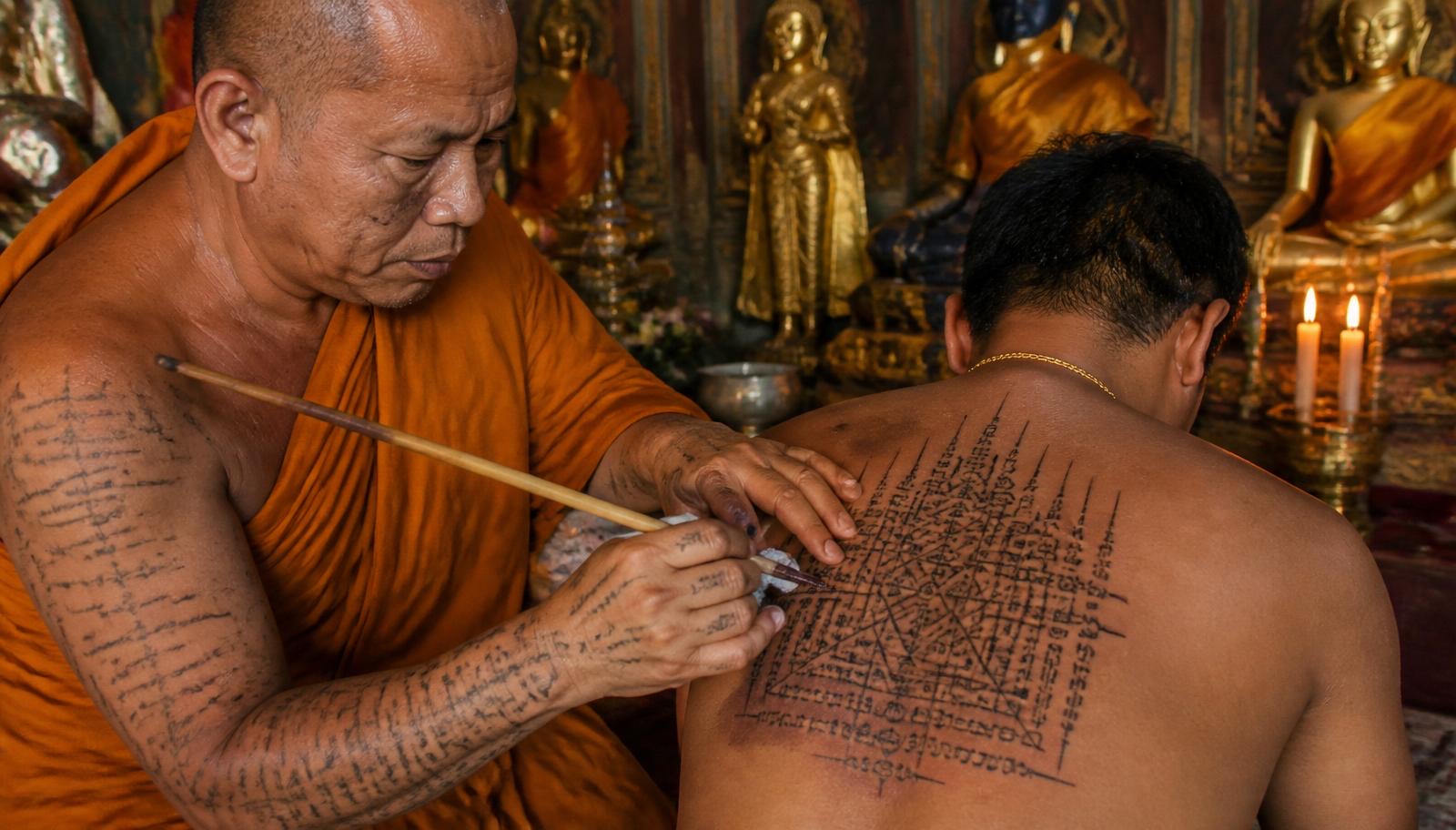
A Sak Yant is not a tattoo you get — it's a tattoo you receive. A session with an ajarn, such as in a small studio outside Chiang Mai, involves chanting, smoke and a long tapered rod tapping ink into your skin one point at a time, and the finished tattoo is blessed. This guide answers the questions most people have before their first one.
This is not a promotion of Sak Yant as souvenir ink. It is a cultural, spiritual and living tradition, and getting one comes with real responsibilities. If you approach it with respect — and choose the right ajarn or temple — it can be one of the most meaningful things you do in Thailand.
What Is a Sak Yant Tattoo?
Sak Yant (สักยันต์) literally means "to tap a yantra". A yant (or yantra) is a sacred geometric diagram combining ancient Khmer script, Pali Buddhist mantras and symbolic imagery — animals, deities, protective grids and lines of text. Traditionally, the design is hand-tapped into the skin using a long metal rod called a khem sak, or, in some lineages, a sharpened bamboo stylus. The ajarn dips the tip into ink, then taps it repeatedly through the skin while an assistant stretches the area taut.
Every yant is believed to carry a specific blessing — protection from harm, charisma, business success, invulnerability, luck in love, spiritual clarity. The blessing is only fully "activated" when the ajarn chants a personal mantra (kata) over the finished piece, and the wearer commits to a set of precepts.
A Brief History and Spiritual Significance
Sak Yant's roots stretch back centuries, blending pre-Buddhist animist practices with Theravada Buddhism, Hinduism and Khmer occult traditions. Historically, soldiers and Muay Thai fighters wore yants as spiritual armour before battle — the belief being that a properly consecrated yant made the wearer harder to wound, harder to defeat and harder to deceive.
Today, you'll still see full-body yants on senior monks, taxi drivers in Bangkok, Muay Thai champions and market vendors. It's a living tradition, not a museum piece. That's worth remembering: you are stepping into a practice that Thai people take seriously, not commissioning decorative art.
Popular Sak Yant Designs and Their Meanings
There are hundreds of traditional yants. A good ajarn will often choose one for you based on a short conversation about what you're seeking in your life. These are the designs foreign visitors most commonly ask about:
- Hah Taew (Five Lines): Five vertical rows of Khmer script running down the upper back or shoulder blade. Each line offers a different blessing — protection, luck in love and career, charisma, resilience, and protection from bad influences. This is the most popular first Sak Yant for foreign visitors.
- Gao Yord (Nine Spires): Nine pointed peaks representing the nine sacred peaks of Mount Meru and the nine attributes of the Buddha. Considered a master yant offering all-around protection.
- Paet Tidt (Eight Directions): Eight radiating lines of mantra offering protection whichever way you travel — a favourite of frequent travellers and drivers.
- Suea (Twin Tigers): Two tigers facing each other. Associated with power, authority and the ability to command respect. Popular with business owners and Muay Thai fighters.
- Hanuman: The monkey god from the Ramakien, symbolising strength, courage and loyalty. Widely worn by warriors and athletes.
Where to Get a Sak Yant: Temples vs Ajarns
Broadly, you have two authentic routes:
1. Temple Sak Yant (from a monk)
At certain temples — most famously Wat Bang Phra in Nakhon Pathom province, about 90 minutes west of Bangkok — ordained monks tattoo devotees who arrive with the traditional offering set. The experience is bare-bones, spiritual and communal: you queue on the floor of a large hall, you receive the yant the monk chooses for you, and you receive it fast. There are no design menus, no consultations and, at some temples, no private rooms.
2. Lay Ajarn (Master)
An ajarn is a lay master — often a former monk — who has trained in the yant tradition and now works from a private studio. Sessions are longer, more conversational, and the ajarn will discuss which yant suits your life circumstances. This is the route most first-time foreign visitors take, and it's the best choice if you want to fully understand what's happening.
Neither is more "real" than the other. A temple Sak Yant carries powerful spiritual weight; a Sak Yant from an established ajarn carries the same tradition in a setting easier for outsiders to navigate.
Getting a Sak Yant in Chiang Mai
Chiang Mai is the most accessible city in Thailand for a first Sak Yant. Several long-established ajarns work here, English is more commonly spoken than at rural temples, and you can usually book a session in advance.
Finding an Ajarn in Chiang Mai
- Tour-facilitated sessions: Some Chiang Mai tour operators arrange Sak Yant experiences that include hotel pickup, offerings, and translation. Fine as long as the underlying ajarn is genuine — ask for their name and check independent reviews.
How to Book
Message the studio ahead — most respond via Facebook, Instagram or LINE — with your rough dates and what you're seeking (protection, luck, career, safe travel). The ajarn selects the yant; you can request placement (upper back, chest, shoulder blade, forearm).
Getting a Sak Yant in Bangkok and Wat Bang Phra
Bangkok has plenty of reputable ajarns working out of studios in areas like On Nut and Ratchada. If you want the temple experience, though, the pilgrimage is to Wat Bang Phra.
Wat Bang Phra
- Location: Nakhon Chai Si district, Nakhon Pathom — roughly 50 km west of Bangkok, about 90 minutes by taxi or private driver.
- How to get there: The easiest option is to hire a driver for the day (around 2,000–3,000 THB round trip). Some travellers also join a Sak Yant day tour that handles offerings, transport and a translator.
- What to bring: A traditional offering set — usually flowers, incense sticks, candles and, at Wat Bang Phra, a pack of cigarettes. These are sold on-site for a small donation.
- Dress code: Cover shoulders and knees. Wear something you can partially remove for the tattoo placement without exposing more than necessary.
At Wat Bang Phra, be prepared: the environment is spiritual, not spa-like. You sit or lie on the floor, the monk works quickly, and you don't choose the yant — he does.
What to Expect During the Ceremony
A typical private ajarn session looks like this:
- Arrival and offerings. You present the offering tray, wai (bow with palms pressed together) three times, and sit before the ajarn's shrine.
- Consultation. The ajarn asks about your life, your intentions and any struggles. Based on that, he chooses the yant.
- The tapping. The design is applied by hand with a long rod. Expect a sharp but very consistent tapping sensation — most people describe it as more meditative than painful. A small yant might take 20 minutes; a large Gao Yord or full back piece can take two hours or more.
- The blessing (kata). Once finished, the ajarn chants a personal mantra over the yant, sometimes blowing gently onto it. This is the moment the yant is "activated".
- Precepts. The ajarn shares the rules you commit to living by. Take them seriously.
Safety, Hygiene and Choosing a Reputable Ajarn
This is the section people rarely talk about — and the most important. A Sak Yant is a needle puncturing your skin repeatedly. Non-negotiable checks:
- Fresh, single-use needle. The needle tip should be opened from sealed packaging in front of you, or removed from a sterilising unit and never reused. If you cannot clearly see a new needle, leave — no exceptions.
- Clean gloves. The ajarn or assistant should wear disposable gloves and change them if interrupted.
- Sealed ink. Ink should come from a fresh, single-use cap, not a shared communal pot.
- Clean environment. The studio or ceremonial area should be visibly tidy, with disinfectant, gauze and a proper sharps bin.
- English-language communication. If you don't share a language with the ajarn, make sure there's a translator so you understand the precepts and any aftercare instructions.
Vet the ajarn before you go. Read recent independent reviews, look for photos of past work, and be wary of studios that push massive designs on first-time clients or refuse to answer hygiene questions.
Approximate Costs
| Type | Approximate Cost (THB) | Approximate Cost (USD) | What It Includes |
|---|---|---|---|
| Temple Sak Yant (Wat Bang Phra) | 100–500 THB donation + offerings | ~$3–$15 | Yant chosen by the monk, quick session, no consultation |
| Small ajarn Sak Yant (e.g. Hah Taew) | 2,000–4,000 THB | ~$55–$115 | Consultation, private studio, blessing, precepts |
| Larger ajarn Sak Yant (Gao Yord, Paet Tidt) | 4,000–6,000 THB | ~$115–$170 | Longer session (1–2 hours), detailed blessing |
| Full back piece or master-level design | 8,000–20,000+ THB | ~$230–$570+ | Multiple sessions, senior ajarn |
| Tour-facilitated Sak Yant day tour from Bangkok | 3,500–6,500 THB | ~$100–$185 | Transport, offerings, translator, small–medium yant |
Etiquette and Cultural Respect
- Dress modestly. No singlets or short shorts at temples. In studios, wear something you're comfortable partially undressing in.
- Never point your feet at the ajarn or the shrine. Sit with your legs tucked to one side or cross-legged. Feet are considered the lowest part of the body in Thai culture.
- Head placement. Try to keep your head lower than the ajarn's during the ceremony — it signals respect.
- Women and monks. Ordained monks cannot make direct physical contact with women. At temples, women are often tattooed via a cloth or by a lay master. With a private ajarn (who is not an ordained monk), this restriction doesn't apply.
- Placement matters. Traditionally, more powerful and spiritual yants are placed on the upper body — back, chest, shoulders. Placing a sacred yant below the waist is considered disrespectful.
- Don't haggle. This is not a market. Pay the offering or fee the ajarn asks for.
The Precepts You Agree to Follow
Almost every ajarn will hand you a set of precepts once your yant is complete. These are typically rooted in the five core Buddhist precepts, plus any additional rules the ajarn specifies. A common set:
- Do not kill or intentionally harm living beings.
- Do not steal.
- Do not lie.
- Do not commit adultery.
- Do not consume intoxicants to the point of losing awareness.
- Never speak ill of your mother (or, in some traditions, your parents).
These are not decorative rules. Culturally, the power of the yant is believed to depend on the wearer honouring them. If you don't intend to try, honestly, that's a signal you may not be ready for a Sak Yant.
Aftercare
- First 24 hours: Keep the area clean and dry. Most ajarns apply a light coat of ointment; leave it alone.
- Days 2–7: Wash gently with clean water and mild soap once or twice a day. Pat dry — don't rub.
- Avoid: Swimming pools, the sea, hot springs, saunas and direct sun on the fresh tattoo for at least two weeks. Chlorine and salt water can cause infections and ink loss.
- Healing look: Bamboo/rod work tends to heal cleaner and with less scabbing than machine tattoos, but everyone's skin reacts differently. Some ink lightening in the first two weeks is normal.
- See a doctor immediately if you develop spreading redness, fever or unusual discharge — Thai clinics and hospitals are widely accessible and inexpensive.
Common Mistakes to Avoid
- Treating it as a souvenir. A Sak Yant is a spiritual commitment. If you just want ink from Thailand, get a regular tattoo — it's less loaded.
- Skipping the hygiene check. The single biggest cause of bad Sak Yant experiences is dodgy needles. Verify.
- Choosing based on Instagram alone. A studio might look beautiful but be run by a self-styled "ajarn" with no lineage. Cross-check reviews and ask about their teacher.
- Ignoring placement rules. Getting a sacred yant on your ankle or calf will insult many Thai people who see it.
- Getting one drunk. Most reputable ajarns refuse to work on anyone who has been drinking. Alcohol thins the blood and shows disrespect to the ceremony.
- Assuming the precepts are optional. They aren't, culturally. Read them before you commit, not after.
Is a Sak Yant Right for You?
A Sak Yant is one of the most meaningful things you can bring home from a trip to Thailand — but only if you approach it as more than a tattoo. Ask yourself honestly: do you connect with the spiritual side? Are you willing to live by the precepts? Are you comfortable letting an ajarn choose the design based on what he reads in your energy, rather than picking a Pinterest reference?
If yes, you're in for something quietly extraordinary. You may walk out of the ajarn's studio into the Chiang Mai heat, the fresh yant tight across your skin, knowing that somewhere between the chanting and the tapping something in your trip — and in you — has shifted. That's the part no guidebook prepares you for. And it's the part you'll remember long after the plane home.
Planning a broader trip? Combine your Sak Yant experience with a full itinerary of temples, islands and street food in the Thailand Travel Guide: Bangkok, Islands and Itineraries.
More Thailand guides

Best Time to Visit Thailand: Seasons by Region
Thailand's cool, hot and rainy seasons, month-by-month weather, how the north and the east and west coasts differ, shoulder-season value…
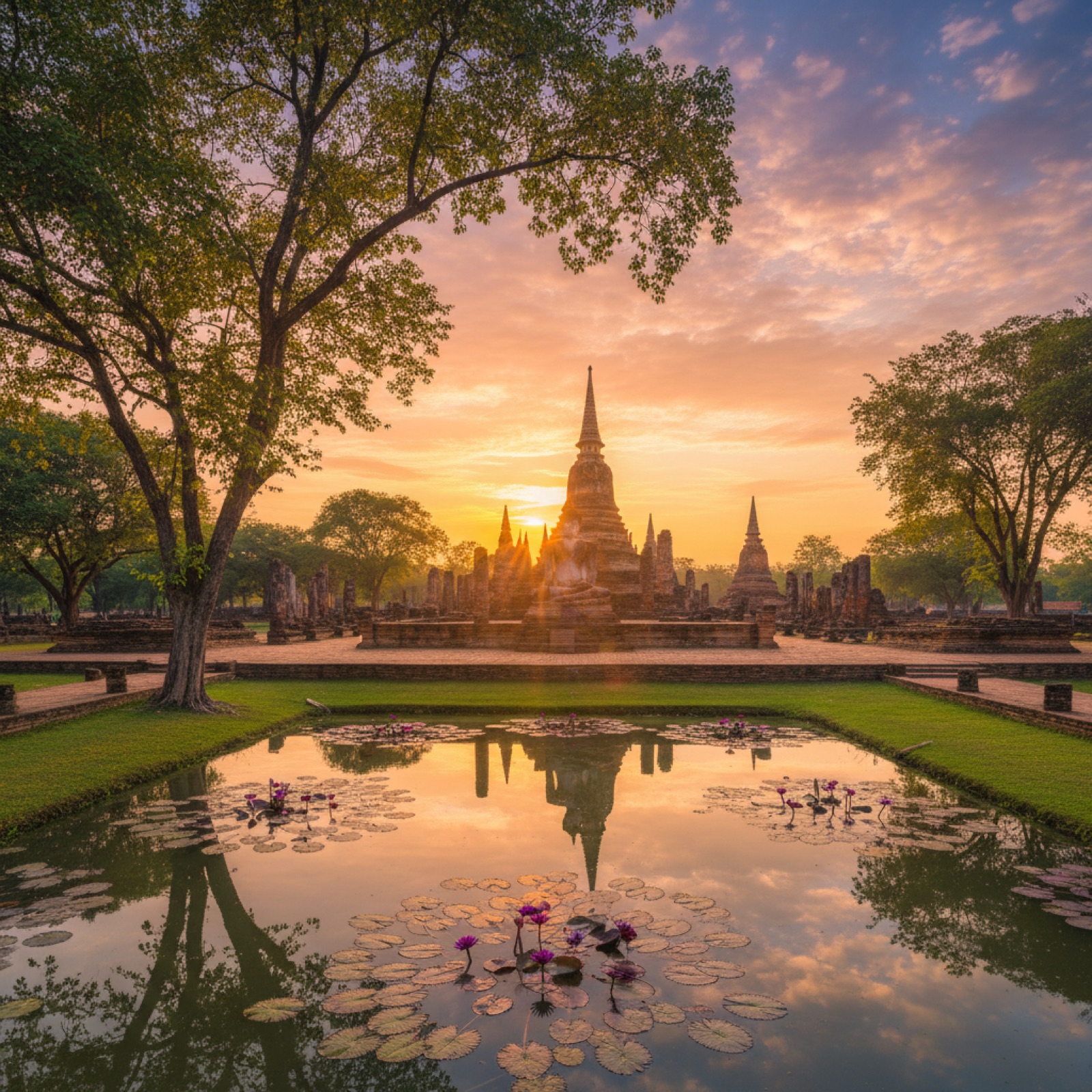
Sukhothai Travel Guide: Visiting Thailand's Ancient Capital
How to visit Sukhothai, Thailand's first capital — the Historical Park's ruins, getting there from Bangkok or Chiang Mai, and the best…
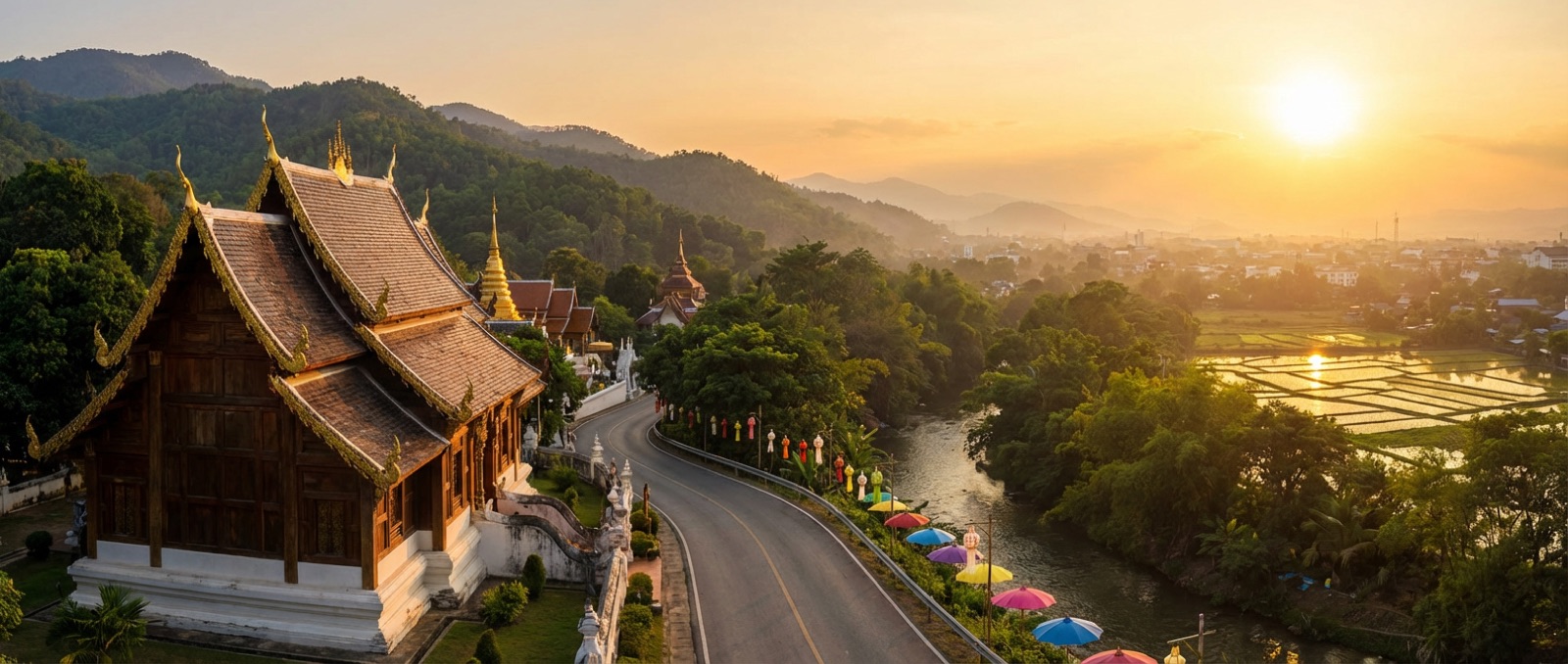
Chiang Mai Travel Guide: Temples, Markets and Day Trips
Chiang Mai's best temples, markets and street food, ethical elephant sanctuaries, sample itineraries, day trips out of the city and where…