Taiwan Night Market Food Guide: What to Eat and How to Order
Beef noodle soup, gua bao, lu rou fan, oyster omelette and stinky tofu — what to order at Taiwan's night markets and how ordering works.
In this guide
- Quick Facts: Taiwan Night Market Dining
- Night Market Etiquette: How to Order and Eat Like a Local
- Savoury Street Classics: Meat and Seafood Staples
- Rice, Noodle, and Pancake Staples
- The Bold and Infamous: Stinky Tofu and Tea Eggs
- Sweets, Shaved Ice, and Drinks
- Morning Markets and Breakfast Culture
- Regional Flavour Profiles: Taipei, Taichung, Tainan, and Kaohsiung
- Vegetarian and Vegan Dining (Su-Shi)
- Taiwan's Top Night Markets Compared
- Practical Tips for Planning Your Food Tour
- Final Thoughts: Embracing Taiwan’s Food Culture
This guide is part of our Taiwan Itinerary: 10 Days From Taipei to Taroko Gorge — start there for the overview, when to go and how to get around.
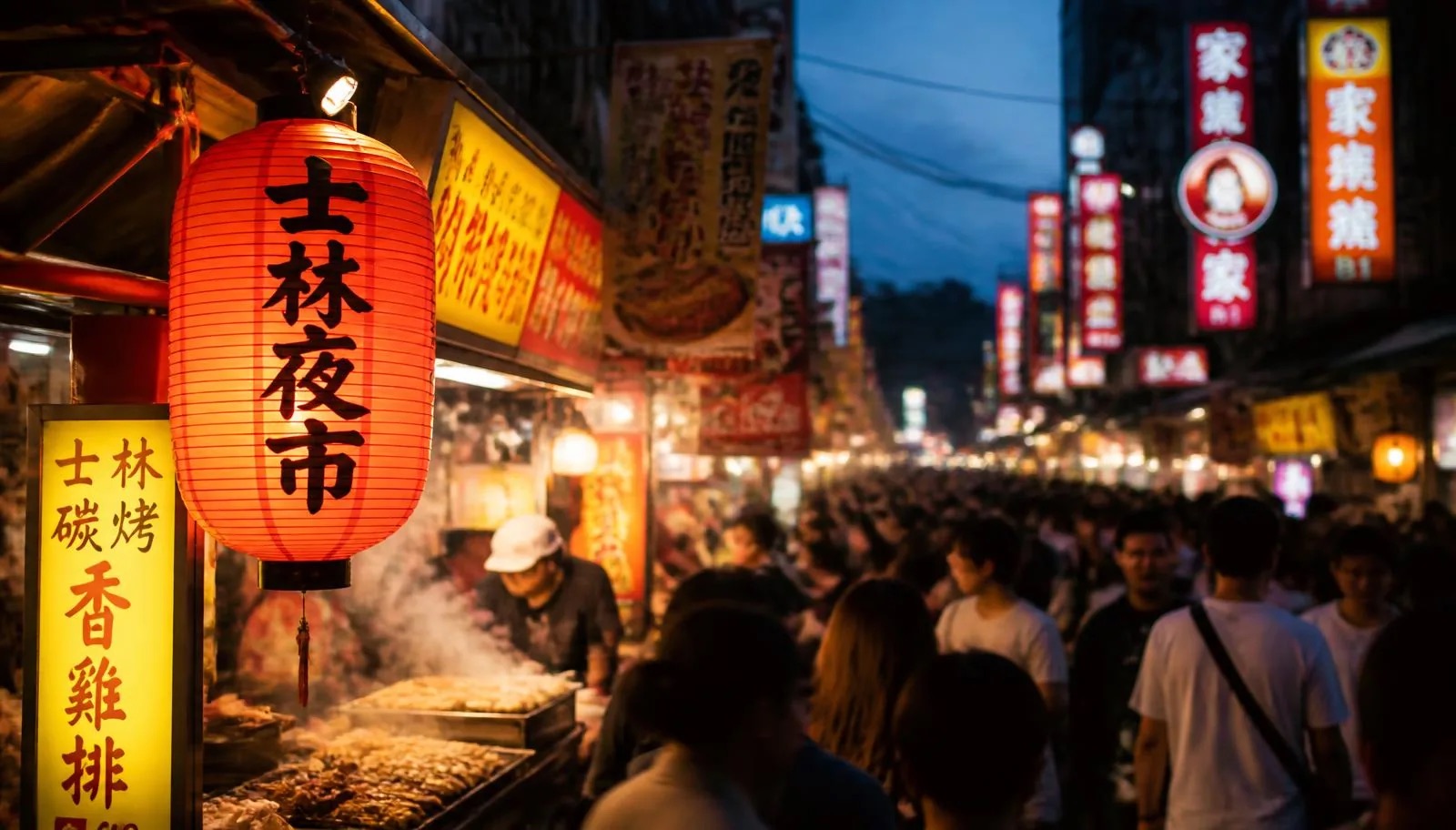
Spend your first evening in Taipei under the glowing crimson arches of Raohe Street Night Market, clutching a paper bag so hot it scorches your fingers. Inside sits a charcoal-baked pepper bun, its blistered crust bursting with rich pork gravy and fresh spring onion. Steam drifts into the humid night air as mopeds hum past the kerb, carrying the aromatic baseline of Taiwan: star anise, toasted sesame oil, and deep-fried basil. That single bite can redefine how you understand street food.
Taiwan does not merely feed you; it immerses you in a sensory landscape where eating is the central pillar of daily life. The island's culinary identity is built around xiaochi—literally 'small eats'—which allows diners to graze continuous micro-meals rather than sitting down to a heavy three-course dinner. From sprawling urban labyrinths in Taipei to atmospheric oceanfront lanes in Kaohsiung, night markets serve as the beating heart of local neighbourhoods.
Navigating these energetic markets can feel overwhelming for first-time visitors. Bright neon signs, long serpentine queues, and unwritten dining customs create a bustling, fast-paced environment. This comprehensive guide details Taiwan's most iconic night market dishes, regional flavours, vegetarian strategies, and practical ordering etiquette to help you eat like a seasoned local.
Quick Facts: Taiwan Night Market Dining
- Primary Dining Style: Street food stalls, family-run carts, and high-turnover casual vendors.
- Payment Method: Cash is essential for stallholders, though transit cards (EasyCard/iPASS) are accepted at select night market stalls.
- Dietary Spotting: Look for the traditional Buddhist swastika symbol (卍) or the characters 素食 (su-shi) for vegetarian food.
- Peak Operating Hours: Most night markets operate daily from sunset (around 5:30 PM) until midnight.
- Key Culinary Hubs: Taipei, Taichung, Tainan, and Kaohsiung each possess distinct regional flavour profiles.
Night Market Etiquette: How to Order and Eat Like a Local
While Taiwanese night markets are vibrant and casual, they operate under smooth, unwritten social rules. Understanding how to queue, order, and handle trash will make your culinary adventures seamless and rewarding.
Mastering the Queue Culture
In Taiwan, a long queue is not an annoyance; it is the ultimate stamp of approval. Taiwanese diners will happily wait forty minutes for a specific scallion pancake or grilled squid stall, trusting that high turnover guarantees fresh ingredients and superior taste. Always look for the end of the line, which often snakes neatly along marked pavements or kerbside paths without blocking neighbouring vendors.
How to Place Your Order
Ordering street food is straightforward, even if you do not speak Mandarin or Taiwanese Hokkien. Many popular stalls feature bilingual menus with photo cards. For stalls with custom options—such as choosing spice levels or extra toppings—simple hand gestures work well. You will often be asked if you want your fried items spicing: answer with a nod for chili powder (la-jiao) or a gentle wave of the hand for non-spicy.
At seated stalls, grab a laminated menu and a grease-pencil from the front counter, find an open table, mark your items and table number, then return the sheet to the cook. You usually pay after eating at seated vendors, whereas takeaway stalls expect payment upon ordering.
Waste Management and Hygiene Rules
Public trash bins are surprisingly rare along Taiwanese streets. To keep markets clean, always carry a small plastic bag in your daypack to hold your used wooden skewers, paper bags, and drink cups. Alternatively, you can return empty containers to the specific stall where you purchased the item—stallholders willingly take back their own packaging.
Hygiene standards in Taiwan are exceptionally high. High inventory turnover means ingredients rarely sit idle. Stallholders consistently wear masks and gloves, and food is almost universally cooked over blazing woks or charcoal grills right before your eyes.
Savoury Street Classics: Meat and Seafood Staples
The foundations of Taiwanese street food rely on deeply savoury marinades, aromatics like garlic and ginger, and distinct texture contrasts—often referred to locally as the coveted 'Q' texture, which describes an enjoyable, bouncy chewiness.
Pepper Buns (Hu Jiao Bing)
Originating from Fuzhou immigrants, pepper buns are a iconic night market staple. Pork belly and minced shoulder are marinated in heavy black pepper, soy sauce, and five-spice, then encased in a layered wheat dough laced with pork lard. Before baking, the cook wraps a generous handful of fresh green scallions around the filling.
The raw buns are slapped directly against the intense brick walls of a cylindrical clay oven, similar to an Indian tandoor. Fueled by glowing charcoal, the oven blisters the exterior crust to a satisfying crunch while locking in the fragrant, peppery juices. Eat them carefully; the inner broth is blisteringly hot.
Taiwanese Fried Chicken Cutlet (Ji Pai)
No trip through a Taiwanese market is complete without tasting a oversized fried chicken cutlet. Whole butterflied chicken breasts are tenderised, marinated in garlic, rice wine, and soy, then coated in coarse coarse sweet potato starch. Deep-fried to order, the crust turns light, rugged, and exceptionally crunchy without rendering the meat dry.
Once lifted from the hot oil, the cutlet is dusted with a choice of seasonings: classic pepper-salt, fiery chili powder, toasted plum powder, or seaweed flakes. Vendors usually hand over the massive cutlet whole in a paper sleeve; asking to have it sliced is often discouraged as it releases the trapped moisture.
Popcorn Chicken and Charcoal-Grilled Squid
Alongside large cutlets, look out for popcorn chicken stalls displaying glass cases filled with raw ingredients. Here, you pick up a plastic bowl and pair bite-sized chicken pieces with green beans, king oyster mushrooms, rice cakes, and tofu skin. The vendor flash-fries everything together, tossing in fresh basil leaves during the final seconds of cooking for an incredible aromatic lift.
Near coastal night markets like those in Kaohsiung and Keelung, whole grilled squid takes centre stage. Skewered on bamboo sticks, fresh squid is brushed with a sticky, sweet-and-savoury glaze of soy, garlic, and toasted sesame seeds while sizzling over open charcoal grills. The texture is tender with a subtle smoky char.
Oyster Omelette (E-A-O-A)
The Taiwanese oyster omelette showcases the island's love for unique textures. Small, flavourful coastal oysters are pan-fried on a flat-top griddle before a slurry of sweet potato starch and water is poured over them, creating a chewy, translucent batter. Whisked eggs and leafy green vegetables (usually chrysanthemum greens or sweet potato leaves) are folded into the mix.
Served piping hot, the omelette is generously drizzled with a distinctive pinkish-orange sweet and savoury sauce made from soy, tomato paste, and miso. The combination of crispy edges, chewy starch, plump oysters, and tangy sauce makes it a definitive Taiwanese classic.
Gua Bao: The Taiwanese Pork Bun
Often dubbed the 'Taiwanese hamburger', gua bao is a fluffy, clamshell-shaped steamed lotus leaf bun stuffed with rich braised pork belly. The meat is slow-cooked in soy sauce, rice wine, and aromatic spices until it melts on the tongue.
To balance the richness of the fatty pork, the bun is layered with tangy pickled mustard greens (suan cai), fresh coriander, and a generous dusting of sweetened ground peanut powder. The contrast between soft bread, savoury meat, sour pickles, and sweet nutty powder creates a perfect harmony of flavours.
Rice, Noodle, and Pancake Staples
While finger foods dominate the walking paths, sit-down stalls offer hearty bowls of noodles and rice that provide comforting, deeply satisfying fuel.
Lu Rou Fan (Braised Pork Rice)
If Taiwan had a national dish, it would likely be lu rou fan. Highly accessible and deeply satisfying, this simple dish features finely chopped or hand-diced pork belly braised slowly in dark soy sauce, rock sugar, rice wine, shallots, and five-spice powder. The rich mixture is ladled over a steaming bowl of short-grain white rice, allowing the savoury oil to penetrate the grains.
It is often accompanied by a hard-boiled soy-braised egg (lu dan) or pickled radish slices to cut through the richness. Down south, particularly in Tainan, you will find a variation called rou zao fan, which utilizes leaner minced pork and a sweeter flavour profile.
Beef Noodle Soup (Niu Rou Mian)
Taiwan's reverence for beef noodle soup is so profound that Taipei hosts an annual festival celebrating it. The dish features tender braised beef shank and gelatinous tendon served over springy wheat noodles in an aromatic broth.
There are two primary broth styles to discover:
- Hong Shao (Braised Style): A deep, complex brown broth simmered with soy sauce, star anise, ginger, garlic, chili bean paste (doubanjiang), and rock sugar. It is robust, slightly spicy, and intensely aromatic.
- Qing Dun (Clear Style): A lighter, refined broth crafted by simmering beef bones, ginger, scallions, and herbs for hours. It highlights the clean, natural flavour of high-quality beef.
Xiao Long Bao (Soup Dumplings)
While made globally famous by high-end restaurant chains, delicate xiao long bao are also crafted with incredible precision at night market stalls. These thin-skinned wheat flour dumplings are filled with seasoned minced pork and a cube of jellified pork stock. When steamed in bamboo baskets, the stock melts into a hot, rich broth inside the wrapper.
To eat without burning yourself, place the dumpling on a ceramic spoon, gently pierce the skin with your chopstick to release the broth, sip the soup first, and then enjoy the dumpling topped with shredded fresh ginger soaked in black vinegar.
Scallion Pancakes (Cong You Bing)
Laminated with pork lard or sesame oil and packed with finely shredded green scallions, scallion pancakes are pan-fried on flat griddles until golden and flaky. Vendors pull and crunch the pancake with tongs as it cooks, separating the inner dough layers into a light, feathery texture.
You can order them plain, but adding a freshly cracked egg, a splash of garlic soy sauce, and a smear of chili paste elevates this simple snack into a warm, satisfying treat.
The Bold and Infamous: Stinky Tofu and Tea Eggs
Some Taiwanese street delicacies require a little culinary bravery, but they reward adventurous eaters with incredible depth of flavour.
Stinky Tofu (Chou Doufu)
You will almost certainly smell stinky tofu long before you see the stall. Tofu is fermented in a brine of milk, vegetables, bamboo shoots, and herbs for weeks or months, developing a pungent aroma akin to aged blue cheese or strong brine. However, the taste is far milder and more nuanced than the smell suggests.
The classic night market preparation involves deep-frying thick cubes of fermented tofu until the exterior turns super-crispy while the centre remains tender and porous. The vendor pokes a hole in the top of each golden cube, pouring in a sweet garlic-soy sauce. It is traditionally served alongside a pile of cold, sweet-and-sour pickled Taiwanese cabbage, which offers a refreshing contrast to the rich fried tofu.
For a different experience, look for ma la (numbing spicy) stinky tofu stalls, where the tofu is slow-steamed in a rich broth packed with Sichuan peppercorns, duck blood curd, and chili oil.
Tea Eggs (Cha Ye Dan)
A ubiquitous aroma across Taiwan—found in every convenience store and traditional night market—is the spiced fragrance of tea eggs. Hard-boiled eggs are gently cracked around their shells and left to simmer for hours in a hot marinade of black tea leaves, soy sauce, star anise, cinnamon sticks, sugar, and Sichuan pepper.
The liquid seeps into the fractures, creating a striking marble pattern across the egg white while infusing the yolk with a warm, savoury, tea-aromatic kick.
Sweets, Shaved Ice, and Drinks
After sampling savoury treats, Taiwan’s dessert vendors offer cool, refreshing balance through tropical fruits, shaved ice, and chewy toppings.
Bubble Tea (Zhen Zhu Nai Cha)
Invented in Taichung during the 1980s, bubble tea has grown into a worldwide phenomenon. The classic version combines rich black tea, milk powder or fresh milk, and chewy black tapioca pearls (boba) simmered in brown sugar syrup.
Ordering tea in Taiwan comes with a high degree of customisation. When ordering, you will be asked to specify your preferences:
| Customisation Category | Options (English) | Options (Mandarin / Pinyin) |
|---|---|---|
| Sweetness Level (甜度) | Extra Sweet (120%) Regular (100%) Less Sweet (70%) Half Sweet (50%) Micro Sweet (30%) Unsweetened (0%) |
Gao Tian (高糖) Zheng Chang (正常) Shao Tian (少糖) Ban Tian (半糖) Wei Tian (微糖) Wu Tian (無糖) |
| Ice Level (冰量) | Regular Ice Easy Ice (Less Ice) Micro Ice No Ice (Room Temp) |
Zheng Chang Bing (正常冰) Shao Bing (少冰) Wei Bing (微冰) Qu Bing (去冰) |
Shaved Ice and Mango Ice (Bao Bing)
To beat Taiwan’s humid climate, locals flock to shaved ice vendors. Traditional bao bing features a base of finely shaved ice crowned with customizable toppings such as sweet red beans, mung beans, cooked peanuts, taro roots, grass jelly, and sweet condensed milk.
During the summer months, mango shaved ice takes top billing. Mountains of snow-textured shaved ice made from frozen milk blocks are smothered with sweet, freshly sliced Irwin mangoes, a drizzle of condensed milk, and a scoop of mango sorbet or panna cotta.
Taro Balls (Yu Yuan)
Hailing from the mountain town of Jiufen, chewy taro balls and sweet potato balls are made by mashing steamed taro and sweet potato with tapioca flour, then cutting the dough into small bite-sized nuggets. Cooked until bouncy, they are served either floating in a warm sweet syrup or scattered over shaved ice with grass jelly.
Morning Markets and Breakfast Culture
Taiwan’s food obsession does not stop when the night markets shut down. Morning food stalls and classic soy milk shops open before dawn to serve incredible breakfast dishes.
Danbing (Taiwanese Egg Crepe)
A morning staple across the island, danbing consists of a thin wheat flour crepe laid over an egg cooked on a flat griddle. The two layers are rolled together around fillings like cheese, bacon, ham, corn, or tuna, then sliced into bite-sized cylinders. Drizzled with a thick, sweet garlic-soy paste, it is warm, soft, and satisfying.
Traditional Soy Milk Shops (Doujiang Dian)
Early risers should head straight to a traditional soy milk shop. Here, giant vats produce fresh hot or cold soy milk (doujiang), available sweet or savoury. Savoury soy milk (xian doujiang) is seasoned with vinegar, soy sauce, pickled radish, dried shrimp, and sesame oil, which gently curdles the milk into a texture resembling soft silken tofu.
Pair your drink with youtiao (crispy, fried golden dough sticks) or a toasted sesame flatbread (shaobing) stuffed with a fried egg and scallions.
Regional Flavour Profiles: Taipei, Taichung, Tainan, and Kaohsiung
Taiwan's food scene is far from homogenous. Moving along the western high-speed rail corridor reveals distinct regional shifts in flavours and specialties.
Taipei: Urban Sophistication and Northern Flavours
As the capital, Taipei offers a refined mix of all regional styles alongside international influences. Northern preferences lean towards wheat-based doughs—dumplings, pepper buns, sesame flatbreads, and scallion pancakes. Flavour profiles are balanced, rich, and moderately seasoned.
Tainan: The Historic Culinary Soul
Ask any Taiwanese traveler where to find the best food, and they will likely say Tainan. As the island’s former historical capital, Tainan boasts a rich culinary heritage influenced by its historical wealth and proximity to early sugar plantations. Consequently, Tainan dishes are famously sweeter and rely heavily on coastal seafood.
Must-try Tainan specialties include milkfish soup, danzai noodles in a light pork-and-shrimp broth, and coffin bread (guan cai ban)—a thick slab of deep-fried white bread hollowed out like a box and filled with rich seafood chowder.
Kaohsiung and Taichung: Seafood Oceanside and Innovation
Taichung, located in central Taiwan, is known for food innovation, wide spacious night market layouts, and creative snacks like deep-fried sweet potato balls and bubble tea evolution. Meanwhile, southern port city Kaohsiung excels in fresh ocean catch—highlighted by giant charcoal-grilled squid, seafood milk porridge, and fresh fruit shaved ice spots.
Hakka and Indigenous Culinary Heritage
Beyond the Han Taiwanese majority, Taiwan's culinary fabric is enriched by Hakka communities and Indigenous nations. Hakka cuisine is celebrated for hearty, preserved flavours designed for rural life, such as leicha (a healthy ground green tea drink mixed with toasted grains and seeds) and stir-fried pork with dried squid and wild ginger.
Taiwan's Indigenous tribes contribute distinct mountain flavours, using native spices like magao (wild mountain pepper with a citrusy, lemongrass scent), millet wine, smoked wild pork, and rice steamed inside fresh bamboo tubes.
Vegetarian and Vegan Dining (Su-Shi)
Taiwan is one of the most vegetarian-friendly destinations in Asia, thanks largely to its devout Buddhist and Taoist populations. Navigating street food as a plant-based diner is surprisingly easy once you know what symbols and terms to spot.
Spotting Vegetarian Stalls
Look for the traditional Buddhist swastika symbol (卍) or the characters 素食 (su-shi) displayed on stall signs and plastic banners. A dedicated su-shi stall guarantees that no meat products, lard, or fish sauce were used in preparation, and separate cooking equipment is utilized.
Dietary Nuances: Onion and Garlic Rules
Traditional Taiwanese Buddhist vegetarianism (Quan Su) avoids not only meat and animal fats, but also the 'five pungent roots': onions, garlic, leeks, chives, and shallots. If you eat egg or dairy, check for labels like Dan Nai Su (蛋奶素).
Recommended Plant-Based Street Eats
- Sweet Potato Balls (Di Gua Qiu): Naturally vegan, chewy hollow balls made of mashed sweet potato and tapioca starch, deep-fried until crisp.
- Mushroom Skewers: King oyster mushrooms brushed with vegetarian glaze and grilled over charcoal.
- Mochi and Taro Desserts: Warm or cold sweet rice mochi coated in crushed peanuts or black sesame powder.
- Vegetarian Stinky Tofu: Stalls clearly marked as su-shi use pure vegetable fermentation brines and plant-based dipping sauces.
Taiwan's Top Night Markets Compared
While almost every town has its own local night market, these landmark public markets stand out as must-visit destinations for food enthusiasts:
| Night Market | City | Atmosphere & Layout | Must-Try Signature Dish |
|---|---|---|---|
| Raohe Street Night Market | Taipei | Linear street market, atmospheric, traditional red lanterns | Charcoal Pepper Buns (Fuzhou Ancestral Pepper Bun) |
| Ningxia Night Market | Taipei | Compact, food-focused, highly efficient street corridor | Taro Balls filled with salted egg yolk, Sesame Oil Chicken |
| Shilin Night Market | Taipei | Massive, subterranean food court plus outdoor shopping streets | Giant Fried Chicken Cutlet, Oyster Omelette |
| Fengjia Night Market | Taichung | Sprawling grid layout near university, trend-setting items | Cheese-stuffed potatoes, Fried Sweet Potato Balls |
| Garden Night Market (Huayuan) | Tainan | Massive open-air lot, vibrant flag banners, open Thursday/Sat/Sun | Braised Duck Blood, Candied Fruits on sticks, Danzai Noodles |
| Liuhe Night Market | Kaohsiung | Wide pedestrian boulevard, spacious, coastal focus | Charcoal-Grilled Giant Squid, Papaya Milk Shake |
Practical Tips for Planning Your Food Tour
To get the most out of your culinary exploration across Taiwan, keep these practical dining strategies in mind:
1. Timing Your Visit wisely
Most night markets open around 5:00 PM, but stalls reach full operation around 6:30 PM. To avoid the thickest crowds and longest lines, aim to arrive right around 6:00 PM. Popular stalls often sell out of signature items by 9:30 PM.
2. Go as a Group to Share Dishes
Because market portions can be deceptively filling, grazing in a group of two or more is ideal. Sharing single portions of chicken cutlets, omelettes, and shaved ice allows you to sample twice as many stalls without getting uncomfortably full early in the evening.
3. Essential Items for Your Bag
Always pack a small travel pack of wet wipes and hand sanitiser, as outdoor handwashing sinks are limited. Carrying a compact folding bag for trash and an umbrella for sudden tropical downpours will also keep your night market stroll comfortable.
4. Stay Hydrated with Local Drinks
Between savoury fried foods and rich broths, keep an eye out for refreshing non-dairy drinks like fresh watermelon juice, sugarcane juice pressed with lemon, or cold winter melon tea (donggua cha) to cleanse your palate.
Final Thoughts: Embracing Taiwan’s Food Culture
Eating your way through Taiwan's night markets is far more than a convenient way to grab dinner; it is an intimate entry point into the island's culture, history, and incredible hospitality. Whether you are leaning over a bowl of rich beef noodle soup on a plastic stool, braving the aroma of deep-fried stinky tofu, or watching sweet mangoes piled high onto ice, Taiwan's street food culture leaves an indelible impression on every traveler.
Arrive hungry, follow the longest lines, embrace unfamiliar textures, and let your curiosity guide your wanderings through these magical neon-lit food lanes.
More Taiwan guides

Things to Do in Taiwan: Taipei, Taroko and Beyond
Taipei 101, Beitou hot springs, Jiufen, Taroko Gorge, Sun Moon Lake and the night markets, with timing and transport for each.

Taiwan Itinerary: 10 Days From Taipei to Taroko Gorge
A 10-day Taiwan itinerary from Taipei to Taroko Gorge, Sun Moon Lake and Kaohsiung — high-speed rail tips, night markets and what it all…