Taiwan Itinerary: 10 Days From Taipei to Taroko Gorge
A 10-day Taiwan itinerary from Taipei to Taroko Gorge, Sun Moon Lake and Kaohsiung — high-speed rail tips, night markets and what it all costs.
In this guide
- Why Taiwan Is Worth the Hype
- Best Time to Visit Taiwan
- Taipei
- Taroko Gorge and the East Coast
- Sun Moon Lake
- Kaohsiung and the South
- Food Culture (and the Night Markets)
- Getting Around: HSR, TRA and Beyond
- Is Taiwan Expensive to Visit? Costs and Daily Budget
- How Many Days Do You Need in Taiwan? A 7 to 10 Day Itinerary
- Final Practical Tips
- Explore Taiwan in Depth: My Detailed Guides
- Nearby Guides
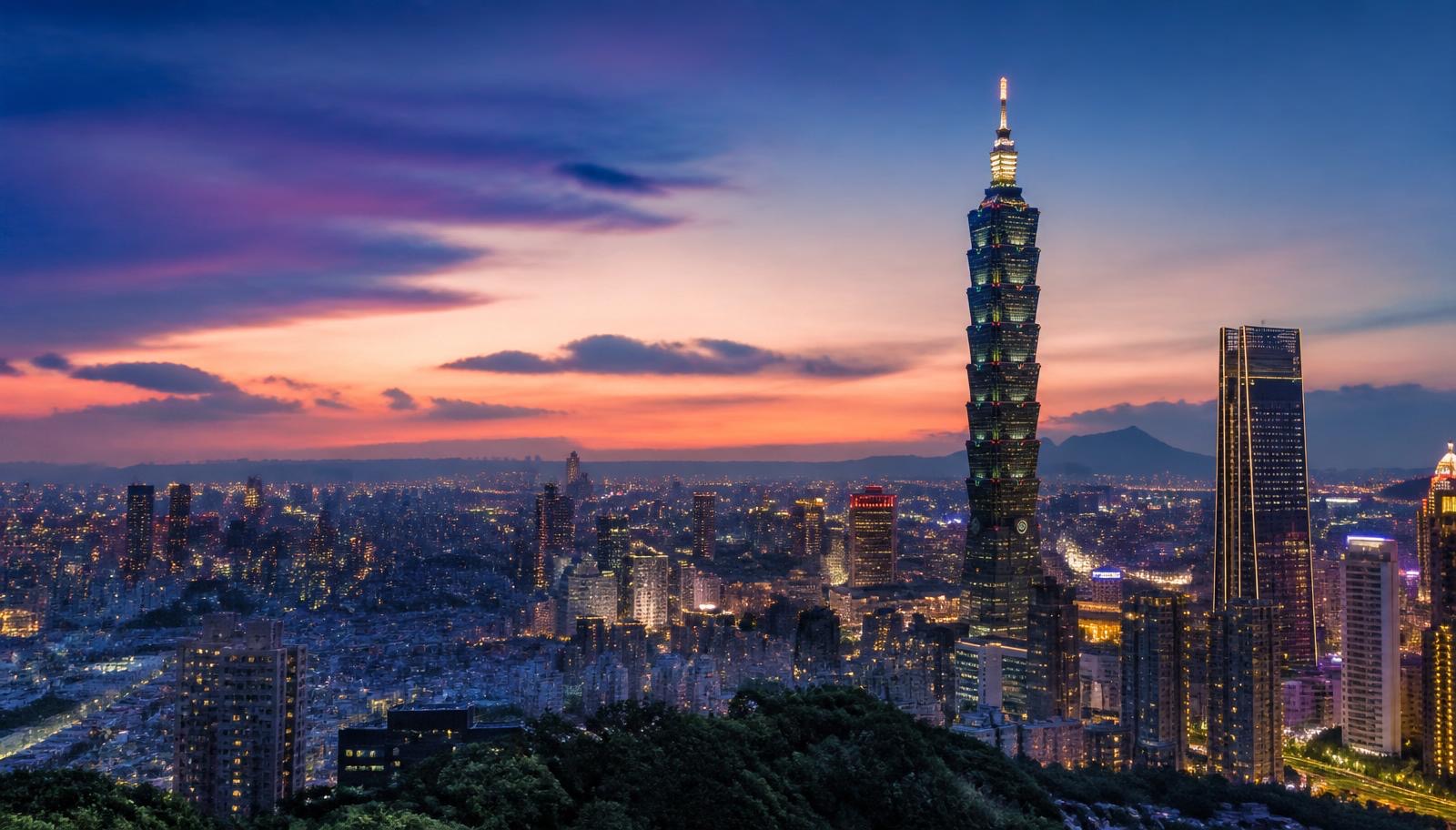
From the 89th-floor observatory of Taipei 101 at dusk, the entire Taipei basin glitters below with the Yangming mountain silhouette rising behind. Few countries in Asia combine dense urban precision, mountain wilderness and street-food fanaticism in such a small footprint. Covering the north, the east coast, Taroko, the highlands and the southern port cities, this is the guide to read before your first flight into Taoyuan.
Taiwan is one of the most rewarding travel destinations in Asia and arguably the most under-visited relative to what it delivers. It's a subtropical island roughly the size of the Netherlands, with a 3,952-metre mountain range down its spine, 200+ peaks over 3,000 metres, functioning high-speed rail, some of the best night-market street food in the world, and — this matters — an unusually warm, curious welcome to independent travellers. This is the guide for the trip that treats it properly.
Why Taiwan Is Worth the Hype
Taiwan is one of the easiest countries in Asia to travel in and one of the most food-obsessed. In a single week you can walk through a modern Taipei with a genuinely world-class metro, take a 90-minute HSR ride south through rice paddies and mountains, eat pan-fried pork buns at a night market at midnight and beef noodle soup for breakfast, hike a marble-walled canyon on the east coast, drink single-origin high-mountain oolong at 1,500 metres, and end up on a subtropical southern beach. Prices are moderate for Asia — cheaper than Japan or Singapore, more expensive than Vietnam or Thailand — and the value for money is exceptional.
What surprises most first-time visitors is how varied Taiwan is for such a small island. The west coast is dense, urban, industrial, connected by the north-south HSR. The east coast is mountainous, wild, subtropical, connected by the slower TRA train through some of the most beautiful railway scenery in Asia. The centre is high mountains, tea country, and Sun Moon Lake. The south is warmer, slower, more Hokkien and Taiwanese-culture-heavy. And the offshore islands (Penghu, Kinmen, Lanyu) are their own thing entirely.
The other underrated thing: English infrastructure is excellent. Metro stations, HSR announcements, museum labels, street signs and tourist offices all bilingual. In Taipei especially, plenty of younger service staff speak English comfortably. This is not a hard country to travel independently.
Best Time to Visit Taiwan
Taiwan is subtropical and its "best time" really depends on where you're going.
- Autumn (October to early December): arguably the sweet spot. Warm without being hot (18–26°C), low humidity for Taiwan, low rain, clear skies. Prices are moderate.
- Spring (March to May): mild and green, but higher chance of rain especially "plum rain" (梅雨) in mid-May to mid-June. Cherry blossoms in the highlands (Alishan, Yangming) in late Feb to March.
- Summer (June to September): hot (30–35°C), extremely humid, and typhoon season. Rain squalls are common, especially in August–September. If you go, plan for altitude escapes (Alishan, Cingjing Farm, Nantou highlands).
- Winter (December to February): mild (10–18°C in Taipei, warmer in the south), rainy in the north especially, dry and pleasant in the south. Hot springs season — this is when Taipei's Beitou district shines.
The best window is late October to early December for a first trip. Second-best is mid-March to late April.
Taipei
Taipei is a city that quietly out-performs its reputation. Not as immediately spectacular as Tokyo or Hong Kong, but denser, cleaner and more liveable than either, with a metro system that ranks among the world's best, an eating culture that would justify visiting on its own, and mountains inside the city limits. Give it three full nights.
The essential districts:
- Xinyi: the modern commercial and shopping district. Taipei 101 is here, plus the department stores (Breeze, Bellavita), plus the Elephant Mountain hiking trailhead (a 20-minute climb straight up city stairs for the classic Taipei 101 sunset photo — every guidebook recommends it, and it deserves it).
- Da'an: mostly residential, home to Da'an Forest Park (Taipei's Central Park equivalent), the Yongkang Street food alley, and the university district.
- Zhongshan: the older shopping area with more character. Wanhua district to the south holds Longshan Temple (Taipei's most active Taoist-Buddhist temple, 1738) and the Bopiliao historic block.
- Ximending: the youth shopping and street-fashion district. Loud, colourful, tourist-heavy — worth an hour, not more.
- Beitou: the hot-spring suburb 30 minutes on the metro to the north. Public bathhouses, private spring hotels, sulfur steam rising off the Beitou creek. Essential winter experience.
- Shilin: home to the famous Shilin Night Market, and the National Palace Museum (see below) on its northern edge.
Non-negotiables:
- Taipei 101. The 508-metre supertall, symbol of the city. Take the observatory to the 89th floor (indoor) and, if the weather allows, up to the 91st (outdoor). Book a sunset slot online 1–2 days ahead.
- National Palace Museum — the world's most complete collection of imperial Chinese art, moved from Beijing's Forbidden City to Taipei with the Nationalist retreat in 1949. Allow 4 hours. The famous Jadeite Cabbage and Meat-Shaped Stone rotate through the display — check ahead if you specifically want to see them.
- A Yangming Mountain National Park half-day, 30 minutes north of the city — sulfur vents, hot springs, calla lily fields (spring), mountain hiking, panoramic views of Taipei.
- Beitou hot springs — public bathhouse (Beitou Public Bath, ~40 TWD entry) or a hotel day-use pass. This is not a tourist gimmick; it's how Taipei has always relaxed.
- At least three different night markets — see the Food Culture section below.
Taroko Gorge and the East Coast
Taroko Gorge, on the east coast three hours from Taipei, is a 19-km ravine of near-vertical marble walls carved by the Liwu River. It's one of the most spectacular geological features in East Asia, protected as Taroko National Park, and completely accessible by day trip or overnight from Taipei. Two nights on the east coast is the right amount — one in Hualien city (the gateway) and one at Taroko itself or on the coast.
Important 2026 access note: Taroko was seriously damaged by the April 2024 Hualien earthquake and later typhoons. As of late August 2026 the park lists the Shakadang Trail, Swallow Grotto, Tunnel of Nine Turns and Eternal Spring Shrine trail as closed; Highway 8 through the gorge opens to cars and bicycles only in controlled time windows, and the Taroko–Tianxiang gorge bus service is suspended. Check the Taroko National Park website (taroko.gov.tw) before travelling; a guided day tour from Hualien is the simplest option.
What remains accessible is still spectacular:
- Shakadang Bridge and the gorge road — the blue-jade river at the mouth of the gorge, and views of the closed Swallow Grotto, Tunnel of Nine Turns and Eternal Spring Shrine from roadside stops.
- Dekalun Trail — a short trail near the Taroko Visitor Center.
- Tianxiang trails — the Xiangde Temple trail and others around Tianxiang, partly reopened.
- Qingshui Cliffs — the Chongde viewpoint over cliffs dropping into the Pacific.
Getting there: TRA train from Taipei to Hualien on the east coast line (2h on the fastest Taroko Express, ~450 TWD, book online at railway.gov.tw), then day-tour transport from Hualien city into the gorge. The east-coast line's inaugural stretch is one of the most beautiful rail rides in Asia. Combine Hualien with a night in Qingshui Cliffs (northern coast, dramatic cliffs above the Pacific) or an east-coast highway drive south towards Taitung.
Sun Moon Lake
Sun Moon Lake, at 748 metres elevation in central Taiwan's Nantou County, is the country's largest lake and its classic mountain-water postcard image. Two connected pools (the round "sun" and crescent "moon") ringed by forested hills, mist over the water in the mornings, thao aboriginal villages, and some of Taiwan's most productive oolong-tea plantations on the surrounding slopes. Give it a night and a morning.
What to do:
- Cycle the west shore. There's a dedicated 30-km bike loop (rated by CNN as one of the world's most beautiful bike routes). The section from Shuishe Village to Xiangshan Visitor Center is the postcard 7 km. Rent from Giant at the pier.
- Take the cable car up to the Formosan Aboriginal Culture Village on the ridge above the lake — decent panoramic view, cultural centre is skippable unless you're specifically interested.
- Boat ferry to Ita Thao village on the east shore — Thao aboriginal food, small night market, temple.
- Visit Wenwu Temple on the north shore for the view and the enormous stone lions.
- Go tea shopping in Yuchi township — Sun Moon Lake black tea (Red Jade #18) is a specific varietal you'll find rarely outside Taiwan.
Getting there: HSR to Taichung (Wuri) station, then Nantou Bus 6670 direct to Shuishe pier (1h 45m). Combine Sun Moon Lake with Alishan (further south, the classic high-mountain sunrise-over-clouds train ride) or with the tea country around Cingjing Farm.
Kaohsiung and the South
Kaohsiung is Taiwan's third-largest city and its industrial-port heart, on the south-west coast, 1h 30m from Taipei on the HSR. It's warmer, slower and more Hokkien-culturally-Taiwanese than Taipei — no imperial museum here, more temples, more traditional food, and a coastline. Give it two nights.
What to do:
- Lotus Pond, a scenic lake ringed by ornate temples in the northern part of the city. The Dragon and Tiger Pagodas — you enter through the dragon's mouth, exit through the tiger's — are the classic photo.
- Pier-2 Art Center, an industrial warehouse district turned street-art-and-design cluster in the old harbour. Cycle through it.
- Cijin Island, a five-minute ferry ride across the harbour. Seafood street, a lighthouse, a bike-around-the-island scale that takes 2 hours.
- Liuhe Night Market for southern-style seafood snacks — squid soup, oyster omelette, grilled milkfish.
- Day trip to Kenting at Taiwan's southern tip (2h by bus) for beaches, or to Tainan (35 minutes north on the TRA) — Taiwan's oldest city and its street-food capital.
Tainan deserves a specific mention. It's the former colonial capital under the Dutch and later the Qing, home to 300+ temples, and considered by many Taiwanese to have the best food in the country. Danzai noodles, milkfish, coffin-toast, shrimp rolls — a full day of eating is a legitimate itinerary. Do it as a day trip from Kaohsiung or an overnight.
Food Culture (and the Night Markets)
Taiwan is arguably the most food-obsessed country in Asia after Japan, and the night market is its defining institution. Every neighbourhood has one; every night; the food is cheap; the variety is enormous. A few things to know:
- The essential Taiwanese dishes: beef noodle soup (niurou mian, the national dish), xiao long bao (soup dumplings — Din Tai Fung is the famous chain but many hole-in-the-wall spots are better), gua bao (Taiwanese burger, pork belly in a steamed folded bun), fried pork chops on rice (paigu fan), oyster omelette (o-a-jian), scallion pancake (cong you bing), stinky tofu (chou doufu — mandatory once, love it or not), lu rou fan (braised pork on rice, the pan-Taiwanese comfort dish), Taiwanese breakfast (dan bing crepe with soy milk).
- Taipei night markets — do at least three:
- Shilin — the largest and most touristy. Come once, work the outer streets not the covered basement.
- Raohe — the pick. Compact, atmospheric, the pan-fried pork buns at Fuzhou Shizu Hu Jiao Bing (right at the temple-arch entrance) are one of the best bites in Taipei.
- Ningxia — small, dense, mostly food, less shopping. The oyster omelette and taro balls here are references.
- Tonghua (Linjiang) — near Taipei 101, more local-feeling, better for late-night grazing.
- Beef noodle soup: Taipei has an annual competition. Yong Kang Beef Noodle (on Jinshan South Road, near Yongkang Street) is the most famous single shop; Lin Dong Fang (on Bade Road) is arguably better; Liu Shandong is the classic old-school choice.
- Xiao long bao (soup dumplings): Din Tai Fung's Xinyi flagship is a benchmark. But also try Hang Zhou Xiao Long Bao near Chiang Kai-shek Memorial Hall.
- Bubble tea (boba, zhen zhu nai cha) was invented in Taichung in the 1980s. Chun Shui Tang in Taichung claims the original recipe; you can drink your way through a dozen chains and single shops in Taipei.
- Tea: Taiwan produces some of the world's finest oolong. Alishan (high-mountain), Dong Ding (traditional), and Baozhong (lightly oxidised) are three to try. Wistaria Tea House in Taipei's Da'an district is a beautiful setting for a proper tasting.
- 7-Eleven and Family Mart are legitimate food stops. Iced coffee, hot tea eggs, decent onigiri, hot sandwiches, ATM access. Do not underestimate.
Tipping is not culturally traditional at restaurants or night markets. Some upmarket restaurants add a 10% service charge automatically.
Getting Around: HSR, TRA and Beyond
Taiwan has one of the world's best integrated transport systems.
- HSR (Taiwan High Speed Rail) runs down the west coast from Taipei to Kaohsiung Zuoying, 350 km in 1h 30m at 300 km/h. Book online at thsrc.com.tw; foreigners get a 20% discount on some fares with an early-bird booking. Trains every 15–30 minutes.
- TRA (Taiwan Railways) is the older network — slower, but reaches everywhere including the east coast (which the HSR doesn't). The Taroko and Puyuma Express trains between Taipei and Hualien/Taitung are essential.
- Taipei Metro is superb — clean, cheap (20–50 TWD per ride), stroller-friendly, English signage. Use an EasyCard (Taiwan's tap-to-pay transport card, about 100 TWD to buy + top-up, works on metro/bus/HSR/TRA/convenience stores).
- YouBike: Taipei's docked bike-share system. Cheap, integrated with EasyCard, and Taipei is genuinely bike-friendly.
- Domestic flights: UNI Air, Mandarin Airlines fly Taipei to Kaohsiung, Hualien, Kinmen and Penghu. Rarely worth it against the HSR/TRA except for the offshore islands.
- Buses: intercity long-distance buses (Kuo Kuang, Ubus) are cheap, comfortable overnight sleeper alternatives.
- Renting a car is straightforward for east-coast and central-Taiwan mountain trips. International Driving Permit required.
Is Taiwan Expensive to Visit? Costs and Daily Budget
Taiwan is mid-priced Asia. Daily budgets in US dollars, excluding international flights:
- Backpacker (hostel dorm, night markets, TRA): US$45–70 per day.
- Mid-range (private hotel room, mix of night markets and restaurants, HSR, one paid activity): US$95–150 per day per person.
- Comfort (boutique hotel, sit-down restaurants, HSR business class, guided day tours): US$200–320 per day per person.
- Luxury (Mandarin Oriental Taipei, Hotel Royal Chihpen hot-spring resort, Silks Place Taroko): US$300–700 per night.
Concrete price points from 2025–2026 trips: beef noodle soup at a good shop 200–320 TWD, night-market snack 40–100 TWD each, sit-down mid-range restaurant main 300–500 TWD, decent boutique hotel double 2,400–4,500 TWD (US$75–140), HSR Taipei to Kaohsiung one way 1,490 TWD (US$46), Taipei 101 observatory 600 TWD, National Palace Museum 350 TWD, Taipei Metro single ride 20–50 TWD.
Tipping is not culturally traditional. Round up at nice restaurants if service is exceptional.
How Many Days Do You Need in Taiwan? A 7 to 10 Day Itinerary
Ten days is the sweet spot. Suggested route:
- Days 1–3 (Taipei): arrive, day 1 Elephant Mountain + Taipei 101 + Raohe Night Market, day 2 National Palace Museum + Longshan Temple + Ximending, day 3 Yangming Mountain half-day + Beitou hot springs evening.
- Day 4 (Hualien / Taroko day): Taroko Express train from Taipei to Hualien (2h), guided day tour of Taroko Gorge (open sections and viewpoints only; several famous trails remain closed), overnight Hualien.
- Day 5 (return + Sun Moon Lake): morning train back to Taipei, HSR down to Taichung, bus up to Sun Moon Lake, overnight lakeside.
- Day 6 (Sun Moon Lake + south): morning cycle the lake, afternoon bus and HSR to Kaohsiung, evening at Liuhe Night Market.
- Day 7 (Kaohsiung): Lotus Pond dragon-tiger pagodas, Pier-2 Art Center, Cijin ferry and seafood.
- Day 8 (Tainan day trip): TRA to Tainan, full-day eating tour, back to Kaohsiung.
- Days 9–10 (return + spare): HSR back to Taipei, one final night market, spare day for Taipei things you missed (Xinyi shopping, hot springs, Jiufen day trip to the mountain village that inspired Spirited Away, etc.).
Have another 3–4 days? Add Alishan (the classic sunrise over sea-of-clouds forest railway) between Sun Moon Lake and Kaohsiung, or Penghu Islands off the west coast for beaches.
Final Practical Tips
- Money: New Taiwan dollar (TWD). Around 31–33 TWD to the US dollar in 2026. Cards work in hotels and restaurants; cash for night markets, temples and rural taxis. ATMs everywhere (7-Eleven Family Mart accept foreign cards reliably).
- Visa: Most Western passports (US, Canada, UK, EU, Australia, NZ, Japan) get 90 days visa-free.
- SIM cards: pick up a Chunghwa Telecom tourist SIM at Taoyuan airport (300–1,000 TWD for various durations, unlimited data). eSIMs also widely supported.
- Plugs: Type A/B (US), 110V. No adapter for North American travellers.
- Language: Mandarin Chinese officially; Taiwanese Hokkien in the south; increasingly good English in Taipei tourist and business settings. Simple phrases (nǐ hǎo, xièxie) go a long way.
- Water: tap water in Taiwan is officially potable after boiling; most locals boil or filter it. Bottled is universal and cheap.
- Weather awareness: during typhoon season (Aug–Sep), monitor CWA (Taiwan's Central Weather Administration) warnings. Trains and flights suspend during a direct typhoon.
- Temple etiquette: shoes on is fine at most Taoist temples (unlike Buddhist temples in Thailand or Japan). Don't point at deity statues. Don't step on the raised wooden threshold at the entrance — step over it.
- Politics: Taiwan is a democracy that governs itself. Its formal international name (Republic of China) and its diplomatic recognition are contested; the everyday reality on the ground is not. Locals are relaxed talking about it if you're relaxed too — just be respectful.
Taiwan rewards travellers who take the country's food culture seriously and its transport network to its full extent. Three cities plus one mountain plus one gorge is the right shape for a first trip. Eat at three different night markets, take the HSR at least once, and trust that the island is much more than the "chip factory" story most travellers arrive with. That's the whole point — you'll come back.
Explore Taiwan in Depth: My Detailed Guides
This guide is the overview. When you are ready to plan a specific part of the trip, these deep-dives go further, and each one links back here:
- Things to Do in Taiwan: Taipei, Taroko Gorge, Hot Springs and Night Markets
- Taiwan Night Market Food Guide: What to Eat and How to Order
Nearby Guides
More Taiwan guides
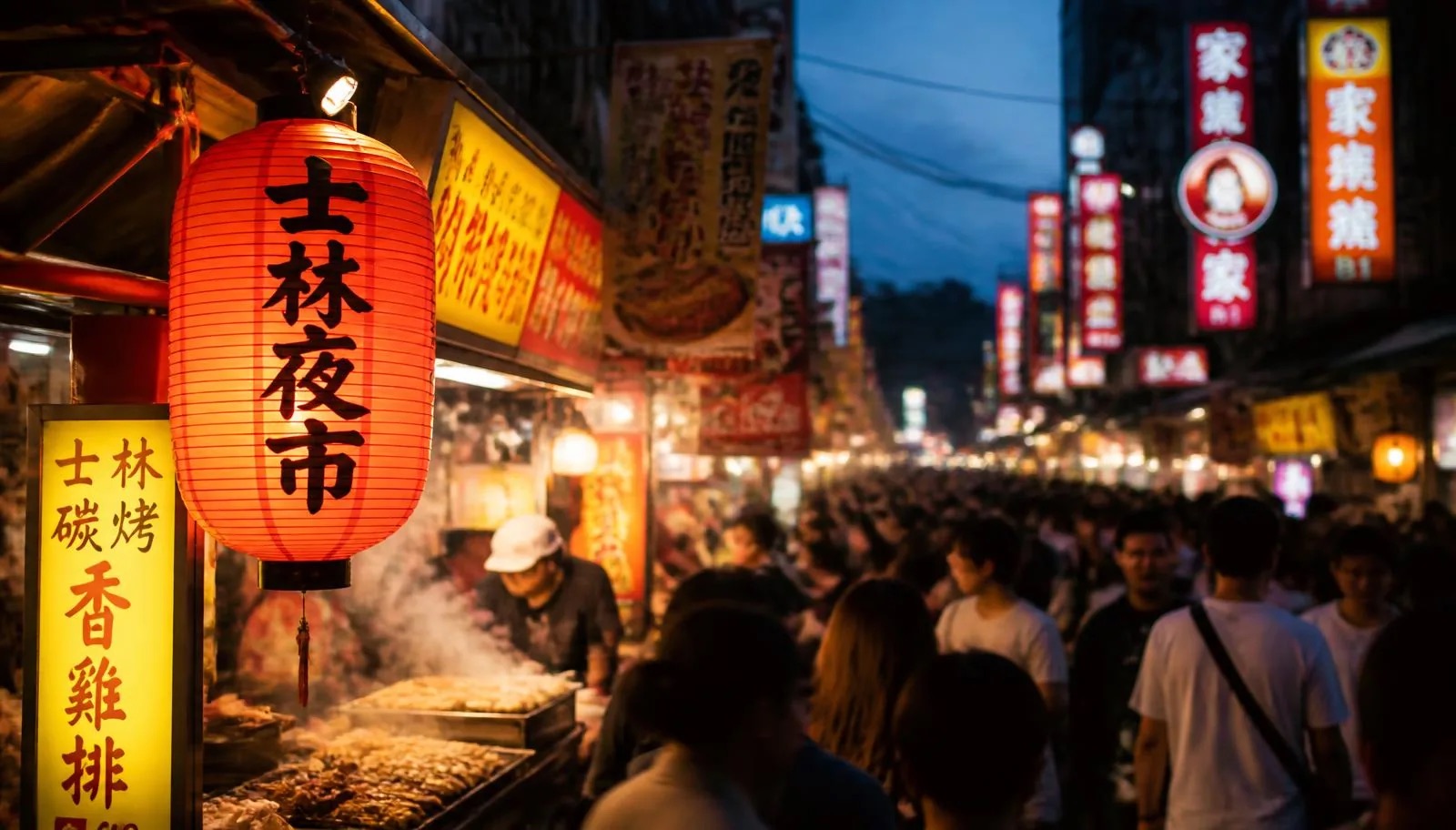
Taiwan Night Market Food Guide: What to Eat and How to Order
Beef noodle soup, gua bao, lu rou fan, oyster omelette and stinky tofu — what to order at Taiwan's night markets and how ordering works.
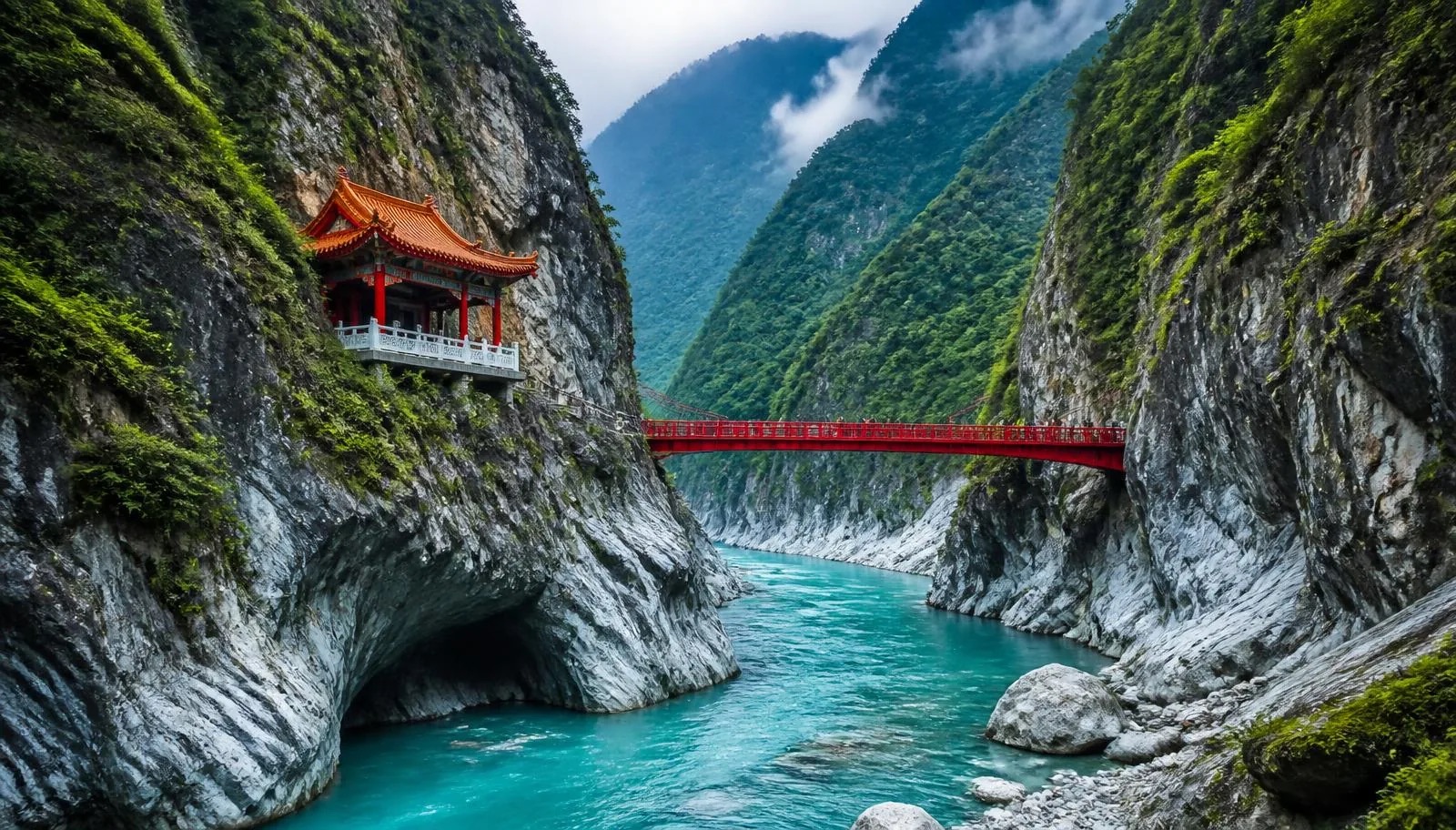
Things to Do in Taiwan: Taipei, Taroko and Beyond
Taipei 101, Beitou hot springs, Jiufen, Taroko Gorge, Sun Moon Lake and the night markets, with timing and transport for each.