Tanzania Safari Guide: Serengeti and Ngorongoro
Planning a first Tanzanian safari: the northern circuit, the migration calendar, camps versus lodges and what a day looks like.
In this guide
- Quick Facts
- The Northern Circuit: Your Safari Blueprint
- A Day on Safari: The Rhythm of the Wild
- Meet the Parks: A Cast of Characters
- The Great Migration: A Year-Round Epic
- When to Go: Seasons and Safari Strategy
- Your Safari Vehicle and Guide
- Accommodation: From Canvas to Concrete
- Beyond the 'Big Five': Managing Expectations
- Practicalities: Fees, Health, and Culture
- A Photographer's Perspective
- What to Pack for the Bush
- Explore in Depth
- Frequently Asked Questions
- Final Thoughts
On the Serengeti plains, the fine red dust is something you taste as much as see. In that magical hour just after sunrise, the air still carries a surprising chill and the light turns the long grasses to liquid gold. A lioness bathed in that perfect light, her amber eyes fixed on a distant herd of zebra, is the kind of sighting that shrinks the entire world to one primordial scene. It isn't just watching a nature documentary; it's being inside it, feeling the tension, the patience, the raw, unfiltered beauty of the wild.
That feeling is the heart of a Tanzanian safari, and it's an experience that stays with you forever. Few places match the sheer scale and soul-stirring power of the northern circuit. We'll break down what a safari day actually looks like, explore the unique personalities of parks like the Serengeti and Ngorongoro Crater, and decode the rhythms of the Great Migration. We'll also cover the practical stuff: choosing the right season, what to pack, photography tips, and how to make your trip a respectful and truly unforgettable adventure.
Quick Facts
- Location: Northern Tanzania, East Africa. The main safari circuit is a network of national parks and conservation areas west of the city of Arusha.
- Getting There: Most international visitors fly into Kilimanjaro International Airport (JRO), located between the cities of Arusha and Moshi. Arusha is the primary starting point for almost all northern circuit safaris.
- Getting Around: The only practical way to explore the parks is in a dedicated 4x4 safari vehicle (usually a Toyota Land Cruiser or Land Rover with a pop-top roof) with a professional driver-guide.
- Language & Currency: Swahili is the official language, but English is widely spoken in the tourism industry. The official currency is the Tanzanian Shilling, though US dollars are often accepted for larger transactions in tourist areas.
- Best Time to Visit: It's a year-round destination. The dry season (June to October) offers easier wildlife viewing. The calving season in the southern Serengeti (January to March) is spectacular. The green season (April, May, November) means fewer crowds and lush scenery.
The Northern Circuit: Your Safari Blueprint
When people talk about a classic Tanzanian safari, they're almost always referring to the northern circuit. It’s a well-trodden but magnificent route that offers an incredible density and diversity of wildlife in a relatively compact region. Think of it as a grand tour of East Africa's most famous ecosystems. Your journey will almost certainly begin in Arusha, a bustling city that serves as the safari capital of the country.
From Arusha, a typical itinerary flows westwards. The first stop is often the baobab-studded plains of Tarangire National Park or the lush, forest-fringed Lake Manyara National Park. These serve as a brilliant introduction before you ascend the Great Rift Valley escarpment into the highlands. Here lies the breathtaking Ngorongoro Crater, a self-contained world teeming with life. From there, the road descends onto the seemingly endless plains of the main event: the Serengeti National Park, a name that's synonymous with safari itself. While you can visit just one or two, the magic of the circuit lies in experiencing how different and complementary each park is.
A Day on Safari: The Rhythm of the Wild
A safari has its own distinct rhythm, dictated by the movement of the sun and the behaviour of the animals. Forget sleeping in; the best things happen at dawn and dusk. Your day typically starts before the sun is up, with a quick cup of coffee and a biscuit before you head out in the cool, crisp morning air. This is prime hunting time for predators, and the soft, golden light is a photographer’s dream. You might spend three or four hours exploring, your guide reading the tracks in the dust, listening for alarm calls, and positioning the vehicle for the best views.
As the sun climbs high and the heat intensifies around midday, the wildlife (and you) will seek shelter and rest. You'll head back to your lodge or camp for a proper lunch and some downtime. This is a great time for a nap, a swim if your lodge has a pool, or simply sitting on your veranda, watching the smaller critters and birds go about their business. The safari resumes in the late afternoon, around 3 or 4 PM, as the temperature drops and the animals become active again. This second game drive lasts until sunset, often culminating in a "sundowner" – enjoying a drink as you watch the sky catch fire over the acacia trees, a truly classic safari ritual.
Meet the Parks: A Cast of Characters
Each park on the northern circuit has its own unique flavour and landscape. Seeing them back-to-back is like watching different acts of a grand play unfold.
Tarangire National Park
Tarangire is the land of giants. It’s defined by two things: ancient, monumental baobab trees that look like they were planted upside down, and colossal herds of elephants. During the dry season (from around June to October), the Tarangire River becomes a lifeline, drawing incredible concentrations of wildlife from the surrounding areas. Hundreds of elephants can be seen digging for water in the dry riverbed here, a sight of humbling scale and power. It's less famous than the Serengeti, but for elephant lovers, it is an unmissable stop.
Lake Manyara National Park
Nestled at the base of the Rift Valley escarpment, Manyara is a compact gem that packs a surprising variety of habitats into a small area. You enter through a lush groundwater forest that feels positively jungle-like, home to troops of blue monkeys and baboons, before emerging onto grasslands and the shores of the vast, shallow soda lake itself. The lake often shimmers pink with thousands of flamingos. Manyara is historically famous for its tree-climbing lions, though it’s a behaviour now seen in other parks too and never a guaranteed sighting. It’s a beautiful, gentle introduction to the safari experience.
Ngorongoro Crater
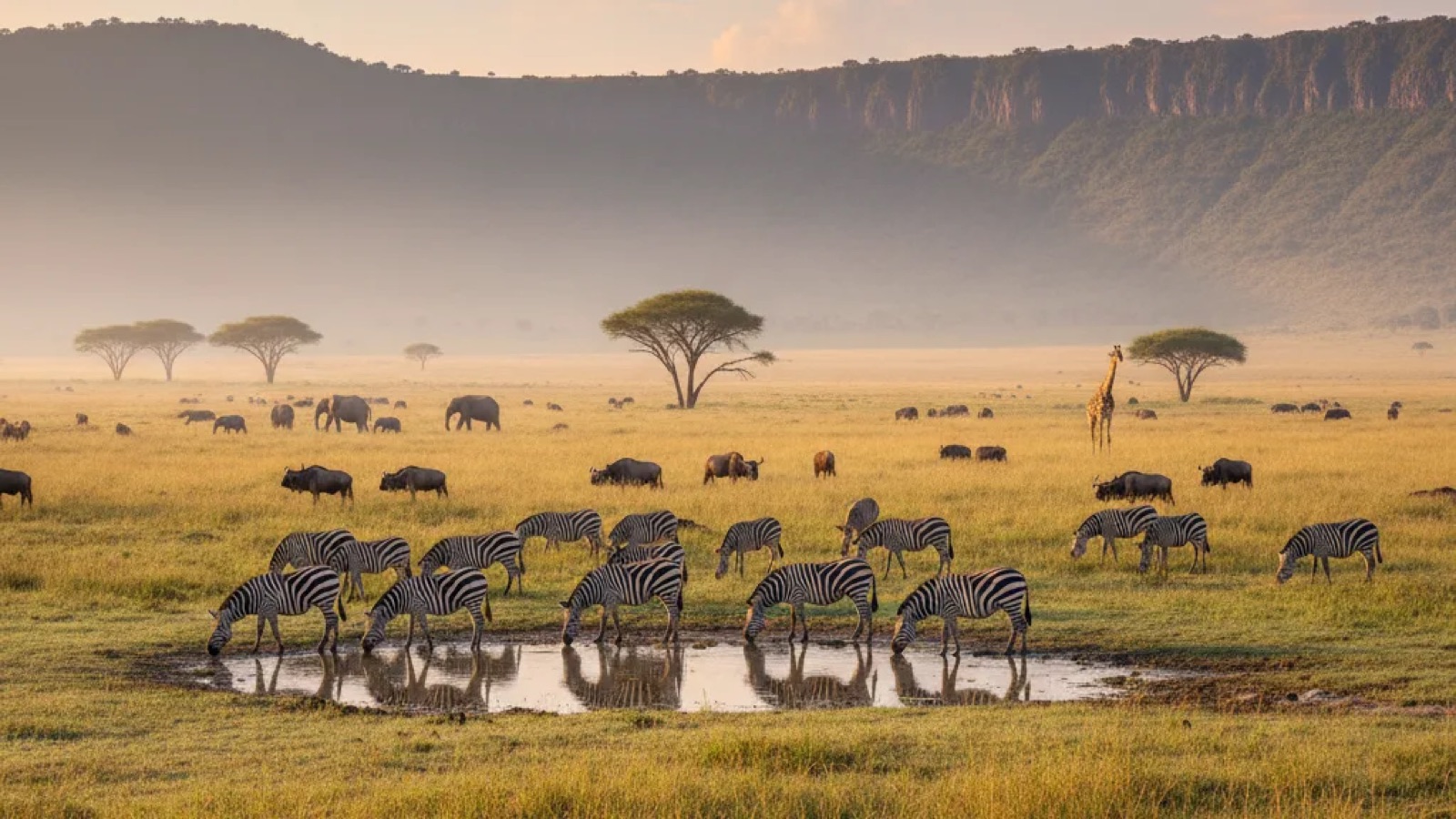
There are few places on earth that prepare you for the view from the rim of the Ngorongoro Crater. Some 600 metres below, a 260-square-kilometre natural amphitheatre unfolds, home to one of the highest densities of wildlife in Africa. Driving down the steep track to the crater floor feels like descending into a lost world. Because water and grazing are available year-round, most of the animals here don't migrate. This makes for exceptionally reliable game viewing, including for the endangered black rhino. It is, however, a conservation area, not a national park, and strict rules govern vehicle numbers and the time you can spend on the floor. It's a truly phenomenal, but busy, experience.
Serengeti National Park
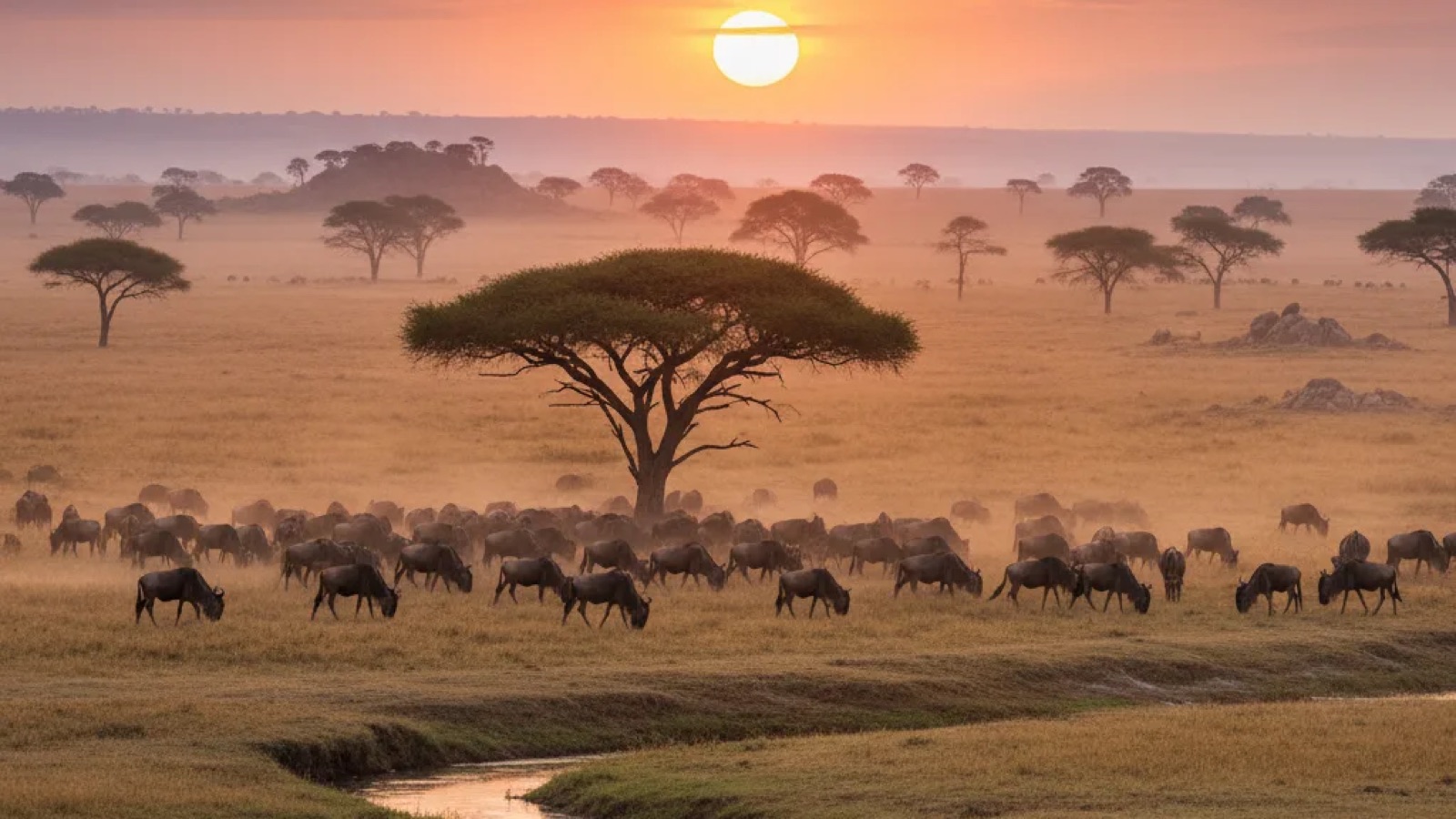
The Serengeti is everything you've ever imagined Africa to be. The name itself means "endless plains" in the Maasai language, and it's no exaggeration. The scale is immense, the horizons infinite, and the feeling of space is profound. This is the stage for the planet's greatest wildlife spectacle: the Great Migration of over a million wildebeest and zebra. But even outside of the migration, the Serengeti delivers some of the best big cat viewing in the world. Its sheer size means it's broken into regions: the southern plains, the central Seronera valley (famous for its leopards), the western corridor, and the rugged northern reaches where the Mara River crossings happen.
The Great Migration: A Year-Round Epic
Many people think of the Great Migration as a single event, but it's really a continuous, year-long circular journey driven by the search for fresh grazing and water. The herds are almost always on the move, so "seeing the migration" is about being in the right part of the Serengeti ecosystem at the right time of year.
From roughly January to March, the herds congregate on the nutrient-rich short-grass plains of the southern Serengeti and the adjoining Ndutu area (part of the Ngorongoro Conservation Area). This is the calving season. Over a few short weeks, hundreds of thousands of wildebeest are born. The sheer number of baby animals is staggering, but it also attracts a huge number of predators, making it a time of incredible drama.
As the rains end and the southern plains dry up, around April and May, the herds begin their long trek north. Between roughly June and September, they reach the northern Serengeti, where they face their most famous and perilous obstacle: the river crossings. Watching the herds plunge into the crocodile-infested waters of the Grumeti and, later, the Mara River is one of the most sought-after and thrilling sights in the natural world. From October, the herds start moving south again to repeat the cycle. Planning your trip around this calendar is key if the migration is your focus.
When to Go: Seasons and Safari Strategy
There is no single "best" time to go on safari; the best time depends entirely on what you want to experience. The main consideration is the rain.
The Dry Season (June to October) is the most popular time for a reason. The weather is pleasant, with sunny days and cool nights. More importantly, the vegetation is sparse and animals congregate around the few remaining water sources like rivers and waterholes, making them easier to find and see. This is peak season, so expect more vehicles and higher demand for accommodation.
The Green Season encompasses the "short rains" (November/December) and the "long rains" (typically April/May). Some travellers are wary of the rain, but this can be a magical time to visit. The landscape is transformed into a lush, vibrant green, the air is clear of dust, and the birdwatching is phenomenal. You will also find far fewer other tourists. The calving season falls within this period. While a heavy downpour can make some tracks temporarily tricky, tour operators are used to it. The dramatic skies and sense of renewal are a bonus of the green season.
Your Safari Vehicle and Guide
Your safari experience will revolve around two things: your vehicle and your guide. Almost all safaris here use customised 4x4s, most commonly Toyota Land Cruisers. These are tough, reliable machines built for the punishing roads. The most important feature is the pop-top roof. This allows you to stand up (when the vehicle is stopped) for a 360-degree, unobstructed view and a stable platform for photography, while still providing shade from the sun.
Even more important than the vehicle, however, is your guide. A great guide will transform your trip. They are not just drivers; they are trained naturalists, expert trackers, and your cultural interpreters. They can spot a leopard's tail flicking in a tree from hundreds of metres away, identify a bird from its call, and explain the subtle behaviours you’re witnessing. A good guide will often skip the scrum of cars around a sleeping lion, read the signs and wait for the action to come to you. Invest in a reputable company with experienced, well-paid guides. It is the single most important decision you will make.
Accommodation: From Canvas to Concrete
Safari lodging has evolved to suit every comfort level, but the options generally fall into three categories. Don't be fooled by the word "camp" – it can mean very different things.
- Public Campsites: These are the most basic option, often located in beautiful spots inside the parks. It's essentially DIY camping; you or your budget safari operator will provide the tents, sleeping gear, and cooking equipment. Facilities are simple, usually with shared toilet and shower blocks. It's a brilliant way to feel close to the bush on a budget.
- Tented Camps: This is the quintessential safari experience for many. Think of it as a hotel room with canvas walls. These are permanent or semi-permanent camps with large, walk-in tents on solid platforms. You'll have a proper bed, an en-suite bathroom with a flush toilet and hot shower, and often a private veranda. There's nothing quite like lying safely in bed while listening to the sounds of the African night – a hyena's whoop or the distant roar of a lion – just outside the canvas.
- Safari Lodges: These are more conventional, solid-structured buildings. They range from rustic and charming to the height of luxury, often perched in spectacular locations with panoramic views. They usually feature restaurants, bars, and often swimming pools. They offer a higher level of comfort and amenities but can feel a little more removed from the surrounding wilderness compared to a tented camp.
Beyond the 'Big Five': Managing Expectations
You’ll hear the term "Big Five" a lot. It refers to the lion, leopard, elephant, rhino, and Cape buffalo. It’s an old hunting term, coined for the five animals considered most dangerous to hunt on foot. Today, it’s a marketing checklist. While you have a very good chance of seeing lions, elephants, and buffalo on the northern circuit, the leopard is famously elusive and the black rhino is critically endangered and seen reliably only in the Ngorongoro Crater.
Forget the checklist. Obsessing over the Big Five can create a sense of pressure and disappointment. The real magic of a safari lies in appreciating everything, from the intricate social lives of a family of dwarf mongooses to the startling beauty of a lilac-breasted roller in flight. Celebrate every sighting. Be curious about animal behaviour. A safari is not a zoo; sightings are never guaranteed, and that's precisely what makes every encounter so special and thrilling.
Practicalities: Fees, Health, and Culture
A little bit of planning goes a long way in ensuring a smooth trip. These are the key things to get sorted before you go.
Park Fees and Permits
Be aware that park entrance fees are a significant part of the overall cost of a Tanzanian safari. Fees are levied by the Tanzania National Parks Authority (TANAPA) and the Ngorongoro Conservation Area Authority (NCAA). They are charged per person, per 24-hour period, and there are additional fees for vehicles and specific activities. These fees change, sometimes with little notice. It is essential to check the latest fee structures on the official TANAPA and NCAA websites before you finalise your budget. Your tour operator will handle the payments, but the cost will be built into your quote.
Health and Safety
Tanzania is a malaria zone, especially in the low-lying park areas. You should absolutely consult a travel doctor or clinic well in advance of your trip. They will provide the most up-to-date advice on malaria prophylaxis and any other recommended vaccinations. Also, be aware of rules regarding Yellow Fever. Tanzania may require proof of vaccination if you are travelling from a country with risk of yellow fever transmission. Again, your travel doctor is the authority on this, so check with them.
Cultural Encounters
You will see Maasai people throughout your journey; their traditional lands overlap with much of the safari circuit. Many safari itineraries include a visit to a Maasai village. It's important to ensure this is handled ethically. The best experiences are arranged through operators who have a genuine, long-standing relationship with the community, ensuring your visit contributes directly and respectfully. Avoid roadside "villages" that feel like tourist traps. A good cultural visit should be a two-way exchange, not a performance.
Tipping
Tipping is a customary and important part of the safari economy. For many guides, cooks, and camp staff, tips form a significant portion of their income. It is, however, entirely at your discretion and should reflect the quality of service you received. There is no fixed amount. As a general guide, your main driver-guide is tipped separately and more generously at the end of the trip. For lodges and camps, there is often a communal tip box where you can leave something for the entire team (kitchen staff, housekeeping, etc.) to share. It's best to have cash (either USD or Shillings) set aside for this purpose.
A Photographer's Perspective
Tanzania is a photographer's paradise, but its unique conditions require a bit of thought. Here's what you need to know.
First, get long. A lens with a reach of at least 300mm is crucial. Many of the best sightings will be at a distance, and a long lens lets you capture intimate portraits without disturbing the animals. A 100-400mm zoom offers great flexibility. Second, protect your gear from dust. The fine red dust gets everywhere. Change lenses inside the vehicle, not out in the open, and keep a dust blower and lens cloth handy at all times. Use a camera bag that seals well.
Compositionally, try to get low. Standing up in the pop-top is great for spotting, but for powerful animal portraits, shooting from a seated position can get you closer to eye-level, creating a more engaging image. Embrace the light. The "golden hours" of sunrise and sunset are your best friends. Don't be afraid of shooting into the light (backlighting); it can create stunning silhouettes and dramatic rim light on an animal's fur. Finally, be patient. The biggest mistake is taking a few quick snaps and asking the driver to move on. Stay with a subject. Wait. Watch. Behaviour is what tells a story. The best shots often come after 20 minutes of quiet observation, when the animal forgets you're there and does something wonderful.
What to Pack for the Bush
Packing for a safari is all about layers and practicality. Leave the bright colours at home; you want to blend in with the landscape.
- Clothing: Pack lightweight clothes in neutral, earthy tones – khaki, green, beige, and brown. Avoid dark blue and black, as they can attract tsetse flies. Bring T-shirts, long-sleeved shirts (for sun and insect protection), and a warm fleece or jacket. It gets surprisingly cold on early morning game drives. A waterproof jacket is wise, especially in the green season.
- Footwear: You'll spend most of your time in the vehicle, so heavy hiking boots aren't necessary unless you're doing a walking safari. Comfortable, closed-toe shoes like trainers are perfect. Bring sandals or flip-flops for relaxing at the lodge.
- Binoculars: This is non-negotiable. Don't rely on your guide's pair. A good pair of binoculars (8x42 or 10x42 are excellent choices) brings the wildlife up close and makes the experience infinitely more rewarding for everyone in the car.
- Health & Sun: Pack a personal first-aid kit with insect repellent, antiseptic wipes, plasters, and any personal medications. High-SPF sunscreen, a wide-brimmed hat, and sunglasses are essential.
- Gadgets: Camera, extra batteries, and plenty of memory cards. A power bank is a great idea, as charging facilities can be limited, especially in tented camps. A buff or scarf is invaluable for keeping dust out of your face on drives.
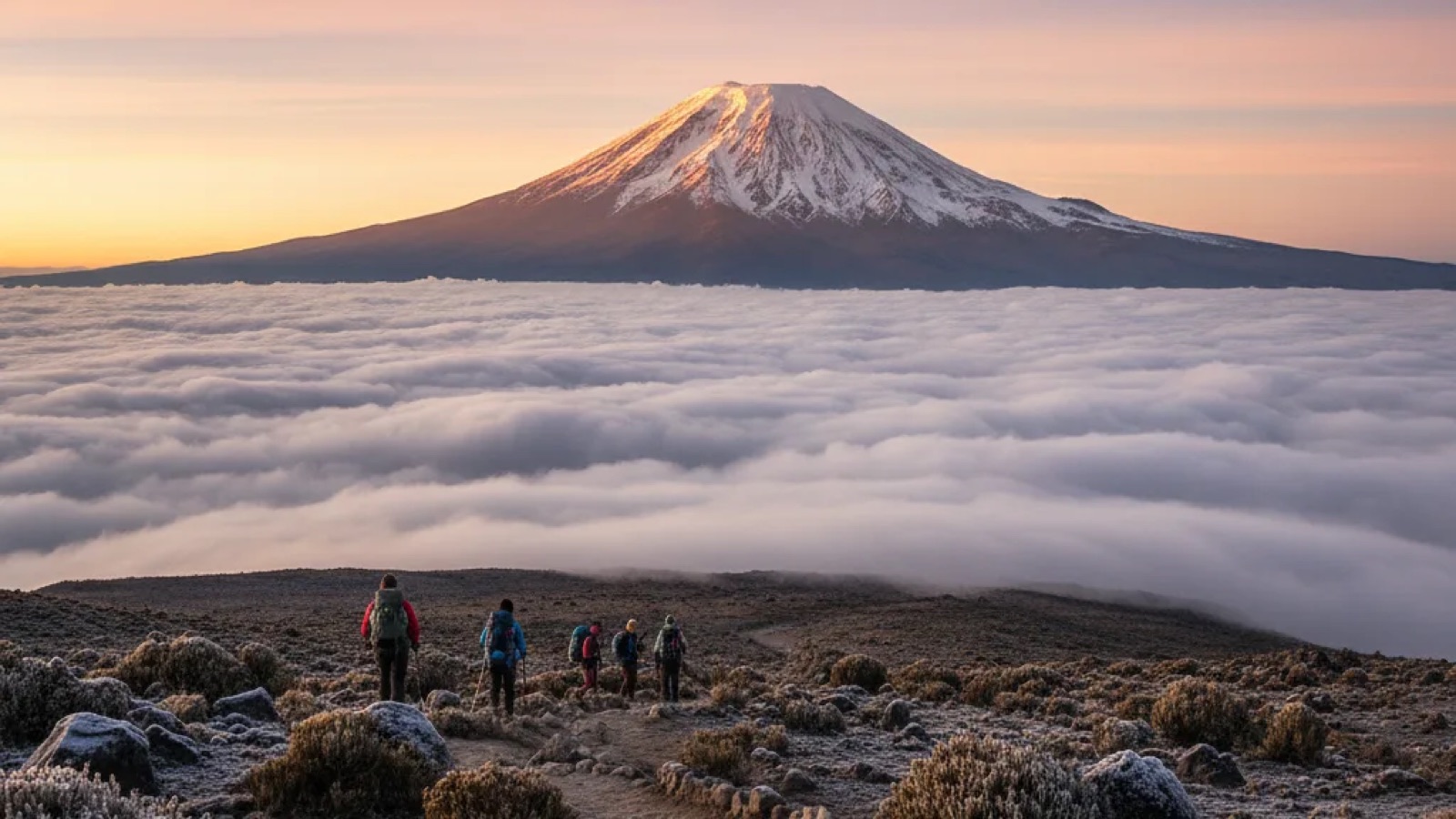
After immersing yourself in the wildlife of the Serengeti and Ngorongoro, you might be looking for your next Tanzanian adventure. Many travellers pair their safari with a trek up Africa's highest peak or a relaxing break on a tropical island.
Explore in Depth
Frequently Asked Questions
What about toilets during a long game drive?
This is a very practical and common question! While you're out on a game drive, there are no formal bathroom facilities. Your guide will be very experienced in finding a safe, private spot behind a termite mound or some bushes for a "bush toilet" break when needed. Most parks also have designated picnic sites with basic toilet blocks where you'll likely stop for lunch. It feels a bit adventurous at first, but you quickly get used to it. Just remember to bring your own hand sanitiser.
How much driving is there on a typical safari day?
It varies, but you should expect to spend a good portion of your day in the vehicle. A typical day involves two game drives, one in the morning and one in the afternoon, each lasting around 3-4 hours. In large parks like the Serengeti, you might also have "transit days" where you drive for several hours from one region to another, with game viewing along the way. The roads inside the parks are unpaved and bumpy, so the driving is slow. The vehicle is your platform for viewing wildlife, so being inside it is the core of the experience.
Is a safari in Tanzania safe for families with children?
Absolutely, a safari can be a magical and educational trip for children. Most operators welcome families, but some lodges and tented camps have age restrictions, so always check first. A private safari is often best for families, as it allows you to customise the day to your children's energy levels and interests, stopping when they need a break. The key is managing their expectations, keeping them engaged with checklists and binoculars, and always reinforcing the rule of staying inside the vehicle and keeping quiet near wildlife.
Should I add Zanzibar to my safari trip?
The "bush and beach" combination of a Tanzanian safari followed by a few days relaxing in Zanzibar is a classic for a very good reason. It’s a perfect pairing. After the early mornings, dusty roads, and intense excitement of a safari, decompressing on a white-sand beach and exploring the historic alleyways of Stone Town is a wonderful contrast. The logistics are straightforward, with short flights connecting the safari circuit (from Arusha or Seronera) to Zanzibar. If you have the time, it's highly recommended.
Can I do a self-drive safari in the Serengeti?
While technically possible, a self-drive safari in the northern circuit parks is highly discouraged for first-time visitors. The roads are challenging, unmarked, and often in poor condition. Vehicle breakdowns are a real risk in remote areas with no mobile service. Most importantly, you would miss out on the single most valuable asset: the expertise of a local guide. Their ability to track animals, interpret behaviour, and navigate the vast landscapes is something you simply cannot replicate on your own. For safety, efficiency, and the quality of your wildlife experience, a guided safari is the way to go.
Final Thoughts
There are places in the world that you visit, and then there are places that visit you, leaving an indelible mark on your soul. Tanzania's northern parks are firmly in the latter category. It's more than just seeing animals; it's about feeling the immense, humbling scale of nature, reconnecting with a rhythm of life that is ancient and powerful. The silence of the plains at midday, the rumbling approach of an elephant herd, the shared thrill in the vehicle when a leopard is finally spotted – these moments are the real souvenirs.
A safari here strips away the noise of modern life, replacing it with a profound sense of wonder. It’s a journey that recalibrates your perspective, reminding you of a wilder, more fundamental world that still exists. If you let it, the dust of the Serengeti will settle not just on your clothes, but deep within your memory, calling you back long after you've returned home.
More Tanzania guides
Serengeti and Ngorongoro: Parks, Timing, Wildlife
How the Serengeti and the Ngorongoro Crater differ, where to stay in each, and how to time a visit around the migration.
Kilimanjaro Trek Guide: Routes, Altitude, Training
Climbing Kilimanjaro: choosing a route, acclimatisation and summit night, training realistically and what the days involve.