Things to Do in Vietnam: Hanoi to the Mekong Delta
The experiences worth building a Vietnam trip around, north to south: Hanoi's Old Quarter, Ha Long Bay, Ninh Binh, Phong Nha caves, Hoi An and the Mekong Delta.
In this guide
- Quick Facts: Vietnam at a Glance
- Hanoi: Atmospheric Quarters and Culinary Heritage
- Northern Karst Landscapes: Ha Long, Lan Ha, and Ninh Binh
- Northern Highlands: Ha Giang and Sapa
- Central Underground Wonders and Imperial Splendour: Phong Nha and Hue
- The Central Coast: Hai Van Pass, Da Nang, and Hoi An
- Vietnam Regions Compared: Finding Your Rhythm
- Southern Highlands and Saigon: Da Lat, Ho Chi Minh City, and Cu Chi
- The Far South: The Mekong Delta and Phu Quoc Island
- Practical Travel Tips for Vietnam
- Final Thoughts: Embarking on Your Journey
- Explore in Depth
This guide is part of our Vietnam Itinerary: Two Weeks From Hanoi to Ho Chi Minh — start there for the overview, when to go and how to get around.
Sit on a tiny blue plastic stool on a Hanoi kerb, clutching a warm glass of sweet, foam-topped egg coffee while a torrent of motorbikes swarms past like a school of silver fish. The aroma of star anise from a nearby simmering phở cauldron hangs heavy in the humid night air, mingling with fresh coriander and the faint perfume of jasmine tea. It’s a frantic, intoxicating moment, and the kind that makes Vietnam capture your imagination.
Traveling through Vietnam feels less like visiting a single country and more like moving through a collection of distinct worlds. From the emerald peak carpet of the far north to the languid, sun-drenched waterways of the southern delta, the sheer geographical and cultural variety packed into this slender, S-shaped nation is staggering.
Whether you are seeking ancient imperial history, world-class trekking along mountain passes, tranquil beach days, or an energetic street food scene that never sleeps, this comprehensive guide walks you through the very best things to do across Vietnam.
Quick Facts: Vietnam at a Glance
- Capital: Hanoi (in the north); Ho Chi Minh City (formerly Saigon) is the largest economic hub in the south.
- Geography: Stretches over 1,600 kilometres from northern mountain borders with China down to the Gulf of Thailand.
- Terrain: Mountainous topography in the north and central highlands, fringed by over 3,000 kilometres of coastline and anchored by two vast river deltas.
- Climate: Highly varied climate zones; when the north is cool and misty, the central coast can be sunny, and the south remains tropical year-round.
- Primary Transport: Domestic flights, extensive passenger rail networks (including overnight sleeper trains), long-distance sleeper buses, and motorbikes.
- Safety & Culture: Very safe for travellers, with low violent crime rates, exceptionally warm hospitality, and a rich culture deeply influenced by Confucian traditions and indigenous heritage.
Hanoi: Atmospheric Quarters and Culinary Heritage
Hanoi is a city that demands you surrender your senses. The political and cultural heart of Vietnam retains an undeniable old-world charm, where ancient traditions endure alongside bustling modern commerce. It is a city best explored on foot, provided you master the art of crossing the street with slow, predictable steps.
Explore the Labyrinthine Old Quarter
The Old Quarter, or the "36 Streets", has been the trading core of Hanoi for over a thousand years. Historically, each narrow street specialized in a specific trade, from silver and bamboo to paper goods and silk. Walking these streets today, you will still find clusters of shops selling tinware on one block and ceremonial paper offerings on the next.
Take time to wander without a rigid map. Look out for narrow "tube houses"—traditional long, slender buildings designed to minimize street frontage taxes—and peek into hidden courtyard cafes tucked behind unassuming alleyways.
Stroll Around Hoan Kiem Lake and Temple of Literature
In the heart of the city lies Hoan Kiem Lake (Lake of the Restored Sword), a peaceful oasis where locals gather at dawn to practice tai chi and aerobic dancing. Crossing the striking red Huc Bridge brings you to Ngoc Son Temple, perched on a small island near the northern shore.
A short journey west leads to the Temple of Literature (Van Mieu), founded in the 11th century as Vietnam's first national university. Dedicated to Confucius, this serene complex features peaceful courtyards, ancient stone stelae resting on carved turtle bases, and traditional wooden architecture that offers a quiet sanctuary from the city's traffic.
Immerse Yourself in Street Food Culture
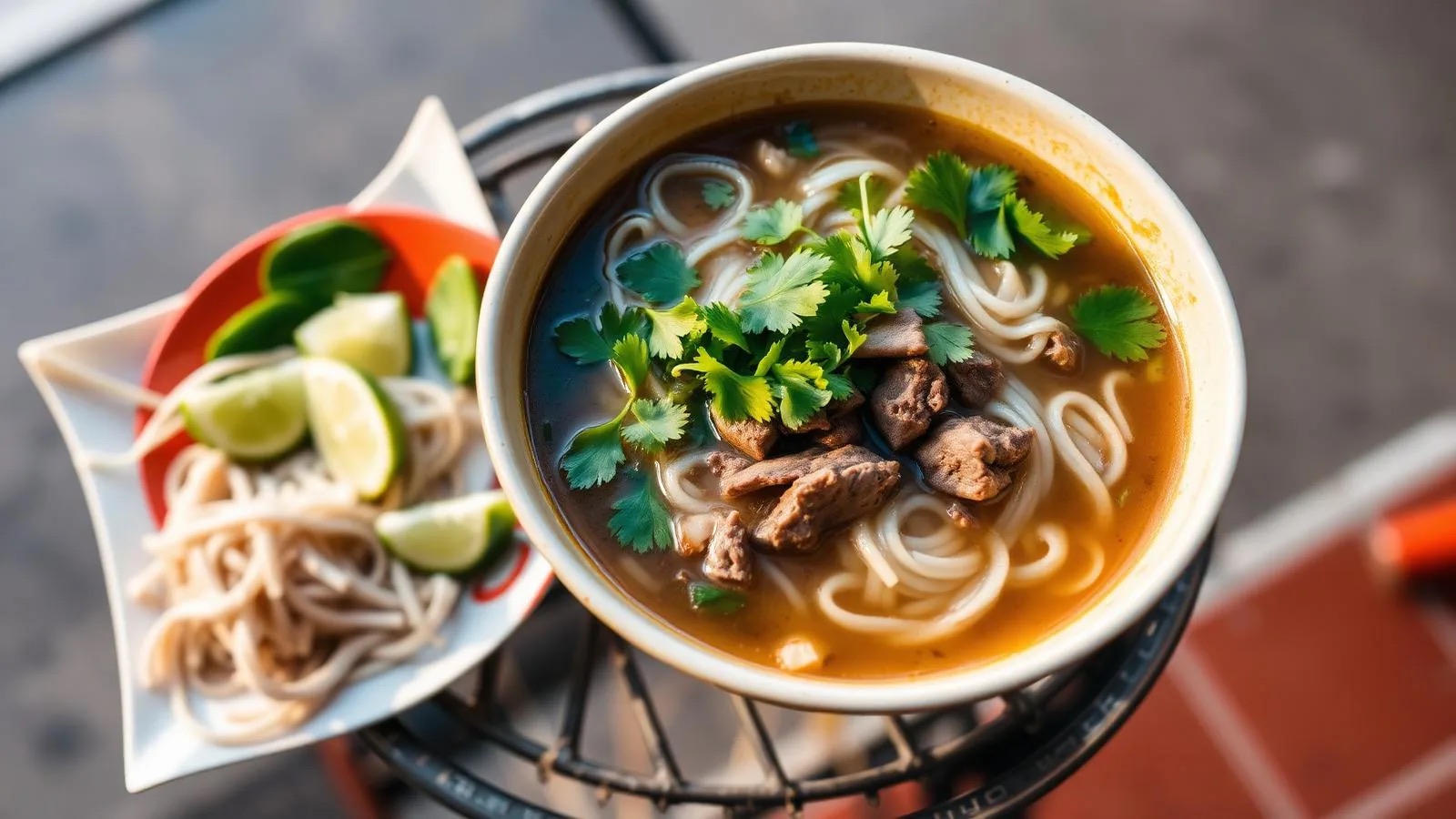
Hanoi is arguably the street food capital of Southeast Asia. Beyond the globally famous phở (aromatic noodle soup cooked with beef or chicken), be sure to sample local specialties:
- Bún Chả: Grilled seasoned pork patties and tender pork belly served over cold rice vermicelli, fresh herbs, and a light dipping broth infused with green papaya.
- Chả Cả: Flaky white fish marinated in turmeric and galangal, seared at your table with generous heaps of fresh dill and spring onions.
- Cà Phê Trứng: Rich Vietnamese drip coffee topped with an airy, custard-like whip made of whisked egg yolk and condensed milk.
Northern Karst Landscapes: Ha Long, Lan Ha, and Ninh Binh
Just a few hours south and east of the capital lie some of the most spectacular limestone karst landscapes on planet Earth. Eons of chemical weathering have carved dramatic, sheer-sided pillars out of ancient ocean beds, creating breathtaking terrain on both sea and land.
Sailing Through Ha Long Bay and Lan Ha Bay
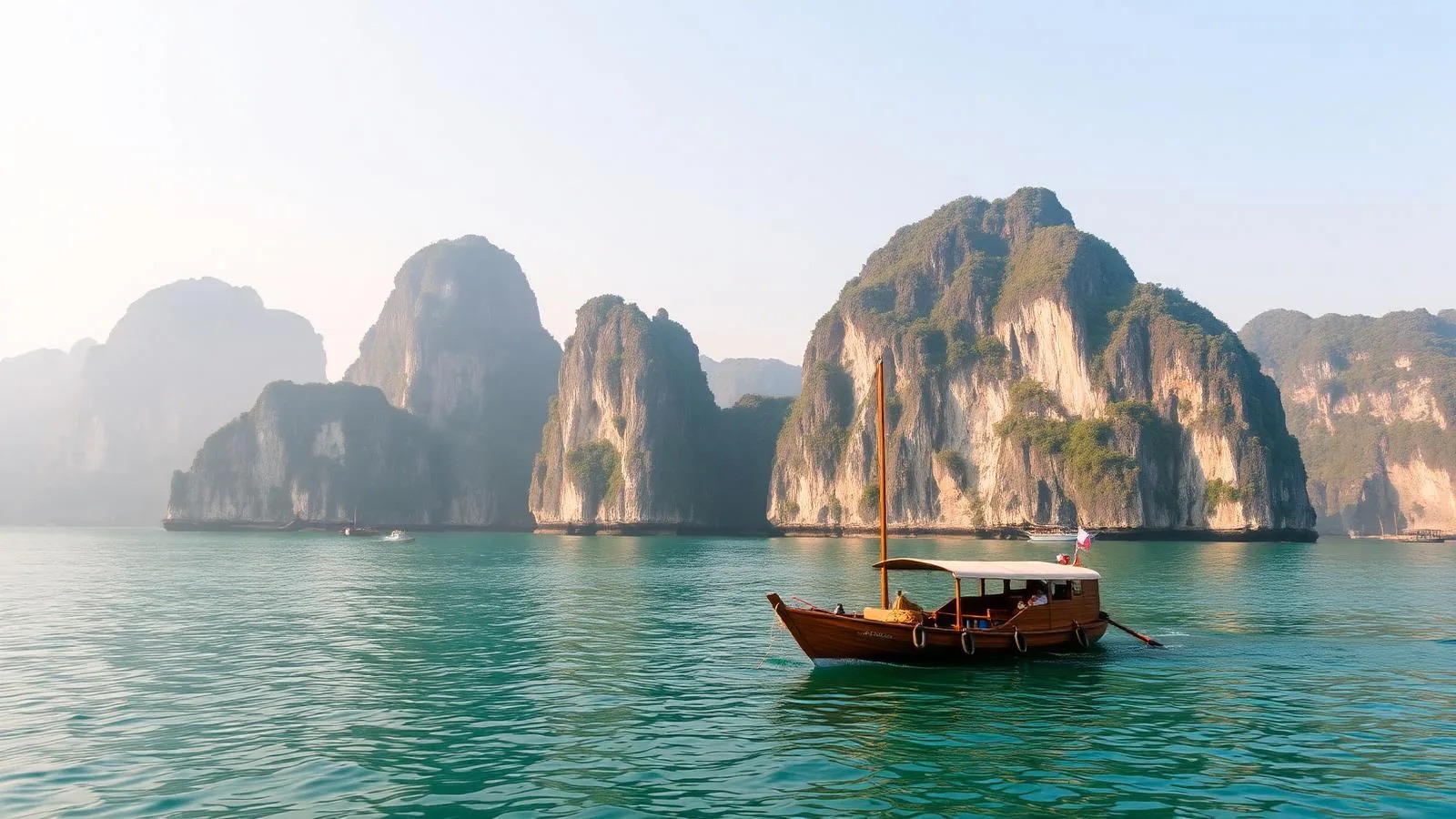
A UNESCO World Heritage site, Ha Long Bay features thousands of towering limestone islands protruding from emerald waters. Cruising among these karst formations on an overnight wooden junk or modern vessel is a quintessential Vietnamese experience.
To escape the busiest vessel channels of central Ha Long, consider booking an itinerary that sails through neighbouring Lan Ha Bay or Bai Tu Long Bay. These areas offer identical geological grandeur—hidden lagoons, secluded beaches, and limestone caves—with significantly fewer boat tour crowds.
- Key Activities: Kayaking into quiet sea caves, swimming off secluded sandbars, visiting floating fishing villages, and watching the sunrise over misty karst peaks from the sun deck.
- Trip Duration: Overnight cruises (2 days/1 night or 3 days/2 nights) are highly recommended over day trips to allow enough time to reach quieter outer waters.
Ninh Binh: "Ha Long Bay on Land"
Located roughly two hours south of Hanoi, Ninh Binh province offers breathtaking karst scenery surrounded by bright emerald rice paddies instead of sea water. The region served as Vietnam's capital in the 10th and 11th centuries, giving it deep historical resonance.
The best way to experience Ninh Binh is aboard a small rowboat paddled by a local villager (who often use their feet to propel the oars). In Trang An, boat trips navigate through subterranean cavern systems connecting hidden mountain valleys. In nearby Tam Coc, boats glide quietly down the Ngo Dong River, threading between towering rock faces and seasonal rice fields.
For sweeping panoramic views across the landscape, climb the 500 stone steps up to the dragon shrine atop Hang Mua Peak (Mua Cave view point). The climb is steep, but the viewpoint over the winding river below is unmatched.
Northern Highlands: Ha Giang and Sapa
For travellers seeking cool mountain air, dramatic mountain passes, and deep cultural immersion, the far north near the border with China is an essential region to explore.
Riding the Ha Giang Loop
The Ha Giang Loop has quickly earned a reputation among international travellers as one of the world's premier road journeys. Skirting through the former Ha Giang province (merged into Tuyen Quang province in 2025) at Vietnam's northern tip, this circuit winds through towering limestone canyon ranges, mountain passes, and minority villages.
The highlight of the route is the legendary Ma Pi Leng Pass, where the road clings precariously to cliffs hovering hundreds of metres above the turquoise Nho Que River below. You can complete the loop as a driver on a hired motorbike, or hire an experienced local rider ("easy rider") to navigate the hairpin bends safely while you take in the panoramic views.
Trekking in Sapa and the Hoang Lien Son Range
Set against the backdrop of Mount Fansipan—Indochina's tallest peak—Sapa is famous for its intricate, hand-carved rice terraces cascading down steep valley slopes. The town itself has developed rapidly, but the surrounding valleys offer incredible opportunities for multi-day trekking.
Hiking through the Muong Hoa Valley allows you to visit villages inhabited by Hmong, Dao, and Giay ethnic minority communities. Stay overnight in a rural homestay to experience regional home-cooked meals, sample locally distilled rice wine, and learn about centuries-old textile dyeing techniques using indigo plants.
Central Underground Wonders and Imperial Splendour: Phong Nha and Hue
Moving south into Central Vietnam, the landscape transitions into dense rainforest jungles concealing colossal underground cave networks, before dropping down to historical coastal cities along river banks.
Exploring the Caves of Phong Nha-Ke Bang
Phong Nha-Ke Bang National Park is a UNESCO-protected wilderness containing some of the world's oldest karst formations and largest cave passages. It is home to Son Doong, the largest known cave passage on Earth by volume, which requires multi-day expedition permits to enter.
Fortunately, you don't need a high-level expedition budget to enjoy this subterranean paradise. Easily accessible caves include:
- Paradise Cave (Thien Duong): A massive cathedral-like cavern spanning kilometres, accessible via a wooden boardwalk illuminated by soft spotlighting that highlights dramatic stalactites.
- Phong Nha Cave: Explored via quiet wooden motorboats that travel deep inside an active underground river pathway.
- Dark Cave (Hang Toi): An adventure-focused experience involving a zipline entry, kayaking, and wading through thick, mineral-rich mud baths inside a completely unlit cavern.
Discovering Imperial History in Hue
Positioned on the banks of the iconic Perfume River, Hue served as the capital of the Nguyen Dynasty from 1802 until 1945. The city remains Vietnam's primary hub for imperial architecture, court cuisine, and royal history.
The centre of imperial power was the sprawling, walled Imperial City (Citadel) and its innermost sanctuary, the Forbidden Purple City. Though heavily damaged during 20th-century conflicts, extensive restoration work has brought many of its opulent palaces, red-lacquered gates, and quiet ancestral temples back to life.
Outside the city centre, dotting the surrounding forested hills, lie the ornate Royal Tombs of the Nguyen emperors. Each tomb was designed by the emperor during his lifetime to reflect his individual personality. Highlights include the grand, sprawling garden complex of Tomb of Tu Duc and the striking, porcelain-mosaic interior of the Tomb of Khai Dinh.
The Central Coast: Hai Van Pass, Da Nang, and Hoi An
Where the Annamite Mountain Range reaches down to meet the ocean, Central Vietnam delivers dramatic coastal scenery and beautifully preserved historic trading ports.
Riding the Hai Van Pass
Separating the climate zones of Hue and Da Nang, the Hai Van Pass ("Ocean Cloud Pass") is one of the most famous coastal roads in Asia. Curving along steep ocean cliffs with dramatic views of the East Sea and pristine isolated beaches below, this mountain pass is best experienced on a motorbike or open-top vehicle.
Da Nang: Modern Coastal Chic
At the southern end of the pass lies Da Nang, a clean, modern coastal city featuring wide sandy stretches like My Khe Beach. Known for its ambitious bridge engineering, the city features the famous Dragon Bridge, which breathes fire and spray water on weekend evenings.
Just inland from the coast lie the Marble Mountains, a cluster of five limestone and marble hills filled with hidden Buddhist sanctuaries, pagodas, and cavern altars carved directly into the rock face.
Hoi An Ancient Town: Lanterns and Craftsmanship
Just a 45-minute drive south of Da Nang lies Hoi An Ancient Town, a remarkably preserved South-East Asian trading port dating from the 15th to the 19th centuries. The town's architecture reflects a unique fusion of indigenous, Chinese, Japanese, and European influences, marked by ochre-yellow wooden shophouses, terracotta-tiled roofs, and quiet canal waterways.
Key experiences in Hoi An include:
- Exploring Historic Merchant Houses: Visit preserved merchant homes like Phung Hung House and the iconic 17th-century Japanese Covered Bridge.
- Bespoke Tailoring: Hoi An is world-famous for its skilled custom tailors. You can select fabrics and have suits, dresses, or leather coats custom-fitted within 24 to 48 hours.
- Evening Lantern Light: At sunset, motorised traffic is barred from the town centre, and thousands of silk lanterns illuminate the streets and float along the Thu Bon River.
- Cycling to An Bang Beach: Hire a bicycle and ride through lush rural rice paddies to relax at the nearby sandy coast.
Vietnam Regions Compared: Finding Your Rhythm
To help you decide how to divide your time across this varied country, here is a breakdown comparing the three primary geographical regions of Vietnam:
| Region | Primary Vibe | Key Landscapes | Best Travel Seasons | Must-See Highlights |
|---|---|---|---|---|
| North | Cultural, traditional, dramatic terrain | Jagged karst mountains, terraced valleys, deep sea bays | September–November & March–May | Hanoi, Ha Long Bay, Sapa, Ha Giang Loop, Ninh Binh |
| Central | Historical, artistic, relaxed coastal atmosphere | Long sandy beaches, coastal passes, ancient caves | February–August | Hue Citadel, Phong Nha Caves, Hai Van Pass, Hoi An |
| South | Energetic, modern, tropical, lush | Vast river deltas, tropical islands, bustling markets | November–April (Dry Season) | Ho Chi Minh City, Mekong Delta, Cu Chi Tunnels, Phu Quoc |
Southern Highlands and Saigon: Da Lat, Ho Chi Minh City, and Cu Chi
Transitioning into the south, the climate becomes reliably warm, and the pace of life shifts into a faster, forward-looking gear.
Da Lat: Cool Air and French Heritage in the Highlands
Perched atop the Langbiang Plateau in the Central Highlands, Da Lat offers a refreshing temperate refuge from coastal heat. Developed by the French as a hill station, the city is known for its pine forests, cool lakes, art deco villas, and flower farms.
Adventure seekers flock to Da Lat for canyoning down forest waterfalls, mountain biking along pine ridges, and visiting eccentrically designed architecture like the surreal, Gaudi-inspired Crazy House (Hang Nga Guesthouse).
Ho Chi Minh City: Commercial Dynamo
Dynamic, vibrant, and relentless, Ho Chi Minh City (still widely called Saigon by locals) is Vietnam's economic engine. Towering glass skyscrapers stand alongside French colonial monuments, while street vendors grill fragrant marinades on sidewalk corners.
Essential experiences in Ho Chi Minh City include:
- War Remnants Museum: A sobering, highly detailed look at the Vietnam War (known locally as the American War) through powerful photojournalism galleries and military equipment exhibits.
- Colonial Architecture Walk: Admire historic landmarks built during the French colonial era, including the red-brick Notre Dame Cathedral Basilica, the grand Central Post Office (designed by colonial architect Alfred Foulhoux, though often wrongly credited to Gustave Eiffel), and the Saigon Opera House.
- Reunification Palace: Step back into the 1970s inside this preserved presidential residence, frozen in time since the end of the war in 1975.
- Ben Thanh Market & Street Food Walks: Navigate busy covered markets for handicrafts and dry goods, then head out at night for southern culinary staples like Cơm Tấm (broken rice topped with grilled pork chops) and Bánh Xèo (crispy turmeric crepes filled with prawns and bean sprouts).
The Cu Chi Tunnels
Located roughly two hours northwest of Ho Chi Minh City, the Cu Chi Tunnels provide a striking look at the underground guerrilla tactics used by the Viet Cong during the war. This vast subterranean network spanned hundreds of kilometres, connecting living quarters, command posts, kitchens, and supply depots beneath the jungle floor.
Visitors can crawl through widened segments of the original tunnels to experience the cramped conditions firsthand, view clever camouflaged trapdoors, and gain context on the harsh realities of wartime survival.
The Far South: The Mekong Delta and Phu Quoc Island
At the southernmost tip of Vietnam, life revolves around water—from the complex, silt-rich river channels feeding the nation's agriculture to tropical island beaches.
The Mekong Delta: Life Along the Waterways
Known as Vietnam's "Rice Bowl", the Mekong Delta is a vast network of rivers, canals, islands, and fruit orchards where the mighty Mekong River empties into the sea. Life here is intimately bound to the rhythm of the water.
Base yourself in towns like Can Tho or Ben Tre to explore the delta. Early morning boat trips take you to floating markets like Cai Rang, where vendors sell river fruits, vegetables, and hot breakfast bowls directly from wooden barges. Paddling small sampans along quiet, narrow canals shaded by water coconut palms offers an enchanting peak into rural life.
Phu Quoc Island: Tropical Beaches and Sunsets
Located off the coast of Cambodia in the Gulf of Thailand, Phu Quoc is Vietnam's largest island and ultimate beach escape. Famed for its white sand beaches, clear turquoise water, and fresh seafood, it offers an ideal place to unwind after travelling the country.
Relax on popular shores like Sao Beach, swim along quieter northern coastlines, or explore Phu Quoc National Park. In the evenings, head to the bustling night market in Duong Dong to feast on grilled slipper lobsters, sea urchins, and fresh local catches seasoned with Phu Quoc's famous black pepper.
Practical Travel Tips for Vietnam
To make your journey across Vietnam as smooth and enjoyable as possible, keep these practical considerations in mind:
Getting Around the Country
- Domestic Flights: Ideal for saving time when travelling long distances (e.g., Hanoi to Hue, or Da Nang to Ho Chi Minh City). Budget regional carriers connect all major hubs frequently.
- Trains: The Reunification Express train line runs along the coast from Hanoi to Ho Chi Minh City. Overnight sleeper trains (offering four-berth soft sleeper compartments) are a charming, scenic way to travel between Hanoi, Hue, and Da Nang.
- Buses: Long-distance sleeper buses connect almost every destination in Vietnam. They are budget-friendly, though road traffic can be unpredictable. High-end "limousine vans" offer comfortable seats for shorter regional hops.
- Ride-Hailing Apps: Download ride-hailing apps (like Grab) on your smartphone upon arrival. They work exceptionally well for both cars and motorbike taxis across major cities, ensuring transparent fare structures without language barriers.
Etiquette and Street Smart Advice
- Dress Respectfully at Temples: Cover your shoulders and knees when visiting pagodas, temples, or the Ho Chi Minh Mausoleum. Remove shoes where indicated.
- Negotiating Costs: Polite bargaining is standard in open-air markets for items without fixed price tags. Always keep negotiations lighthearted and friendly; a warm smile goes a long way.
- Hydration and Food Safety: Stick to bottled or filtered water and avoid tap water. Look for busy street stalls with high turnover—a long line of local diners is the best indicator of fresh, delicious, and safe food.
- Crossing the Road: Traffic in big cities can appear chaotic, but it operates on a steady flow. Step off the kerb calmly, keep a consistent and slow walking pace, and let motorbike drivers anticipate your trajectory. Never step backward suddenly.
Final Thoughts: Embarking on Your Journey
Vietnam is a country that stays with you long after the dust settles on your luggage. Its landscapes—from the mountain vistas of the north down to the peaceful waterways of the south—are matched only by the incredible warmth and resilience of its people.
Whether you choose to cover the entire length of the country in one grand overland adventure or focus your time exploring a single region in depth, Vietnam rewards curious, open-minded travellers at every turn. Grab a seat on a roadside stool, order a bowl of fresh noodles, and prepare for an unforgettable journey.
Explore in Depth
More Vietnam guides
What to Eat in Vietnam: A Region-by-Region Food Guide
Northern phở, central bún bò Huế and cao lầu, southern cơm tấm and bánh xèo — how Vietnamese food changes down the country, plus…

Vietnam Itinerary: Two Weeks From Hanoi to Ho Chi Minh
A two-week Vietnam itinerary from Hanoi to Ho Chi Minh City — Halong Bay, Sapa, Hoi An, best time to visit, train travel and honest daily…

Hanoi and Ha Long Bay: How to Plan the Trip
How to pair Hanoi's Old Quarter with a Ha Long Bay cruise: how many nights, when to go, and what the overnight boats are actually like.