What to Eat in Vietnam: A Region-by-Region Food Guide
Northern phở, central bún bò Huế and cao lầu, southern cơm tấm and bánh xèo — how Vietnamese food changes down the country, plus street-stall etiquette.
In this guide
- Quick Facts: Vietnamese Culinary Culture
- The Three Culinary Regions of Vietnam
- Northern Culinary Capital: Hanoi & Surrounds
- Central Fire and Spice: Hue & Hoi An
- Southern Sweetness: Saigon & The Mekong Delta
- The Alchemy of Herbs, Condiments, and Nuoc Mam
- The Craft of Vietnamese Coffee
- Plastic Stools and Sidewalk Etiquette
- Navigating Plant-Based Eating: Com Chay
- Practical Tips for Safe Street Food Dining
- Final Bites: Embracing the Vietnamese Table
This guide is part of our Vietnam Itinerary: Two Weeks From Hanoi to Ho Chi Minh — start there for the overview, when to go and how to get around.
I still remember crouching on a tiny blue plastic stool in a narrow Hanoi alleyway, my knees practically knocking against my chin, as a bowl of piping hot charcoal-grilled pork was set down before me. The air was thick with the fragrant haze of burning embers, roasted garlic, and pungent fish sauce. Around me, locals huddled together in lively conversation, deftly wrapping fresh perilla leaves around strands of silky rice vermicelli before plunging them into warm dipping bowls. In that single bite—crisp, herbaceous, smoky, and delightfully sweet—I realised that eating in Vietnam is not merely sustenance; it is a sensory journey into the very soul of the country.
Every corner of Vietnam tells a different story through its kitchen. The narrow streets of the North echo with centuries of refined minimalism, where delicate broths let the purest ingredients shine. Travel further south down the long, snake-like spine of the country, and the food transforms dramatically: Central Vietnam explodes with fiery chillies, complex spices, and elaborate royal heritage, while the tropical South rolls out a sweet, extravagant bounty of coconut, vibrant herbs, and seafood freshly harvested from the Mekong Delta.
To truly understand Vietnam, you must eat your way through it regional bowl by regional bowl. Whether you are balancing on a kerbside stool enjoying a morning bowl of soup, exploring bustling nocturnal food markets, or sitting down to a feast of delicate rice cakes, this guide will navigate you through the incredible culinary landscape of one of the world's greatest food destinations.
Quick Facts: Vietnamese Culinary Culture
- Staple Foundation: Rice in endless iterations—steamed grains, paper wrappers, rice wine, and countless varieties of rice noodles.
- Philosophical Core: Balance of five fundamental tastes (spicy, sour, bitter, salty, sweet) mapped to the five elemental forces of traditional medicine.
- Essential Dip: Nuoc cham—a balanced dipping sauce composed of fish sauce, lime juice, sugar, garlic, and sliced bird's eye chillies.
- Street Stool Etiquette: Find a busy stall, grab a low plastic seat, watch the cook work, and discard used napkins into the bin located beneath your table.
- Plant-Based Travelers: Vegetarian food is widely available and deeply rooted in Buddhist heritage under the phrase An Chay.
The Three Culinary Regions of Vietnam
Vietnamese cuisine is broadly divided into three geographical culinary zones: the North, the Centre, and the South. While shared ingredients like fish sauce, rice, and fresh herbs thread them all together, distinct climates, trade histories, and geography have forged three completely different dining experiences.
The Northern climate experiences true seasons, including cold winters, which historically limited the availability of exotic spices and sweet tropical fruits. As a result, Northern cooking is characterised by light, clean, and balanced flavours. Black pepper takes precedence over fresh chilli, and cooks rely on meticulous technique rather than heavy spices to extract deep flavour from basic ingredients.
Central Vietnam, bounded by rugged mountains and the sea, presents a dramatic departure. Home to the historic imperial capital of Hue, Central cuisine is famous for its fiery heat, complex sauces, and intricate presentation. Here, food was once crafted for emperors, resulting in bite-sized delicacies, intense seasoning, and a lavish use of fresh mountain herbs and coastal seafood.
Down in the South, warm weather and fertile soils produce an endless abundance of produce. Southern food is unapologetically bold, sweet, and exuberant. Rich coconut milk, palm sugar, fresh herbs, and an endless array of wild greens dominate the table. Southern cooks love to wrap, roll, and dunk their food, serving every meal alongside giant baskets of leafy greens.
| Region | Primary Character | Key Ingredients | Signature Dish | Dominant Seasoning |
|---|---|---|---|---|
| North (Hanoi) | Subtle, light, elegant, warm | Black pepper, green papaya, dill, pork broth | Pho Bo / Bun Cha | Light salt, quality fish sauce |
| Centre (Hue & Hoi An) | Spicy, complex, colourful, rich | Lemongrass, fermented shrimp paste, chilli oil | Bun Bo Hue | Fiery chili, rich shrimp paste |
| South (Saigon & Mekong) | Sweet, vibrant, fresh, tropical | Coconut milk, palm sugar, abundant fresh herbs | Com Tam / Banh Xeo | Sweet fish sauce, fresh lime |
Northern Culinary Capital: Hanoi & Surrounds
Eating in Northern Vietnam feels like stepping into a living culinary tradition that has remained largely unchanged for generations. Hanoi is the beating heart of this region, a city where morning fog clears to reveal street vendors carrying bamboo shoulder poles laden with fresh rice noodles, herbs, and simmering stockpots.
Pho: The Subtle Art of Northern Noodle Soup
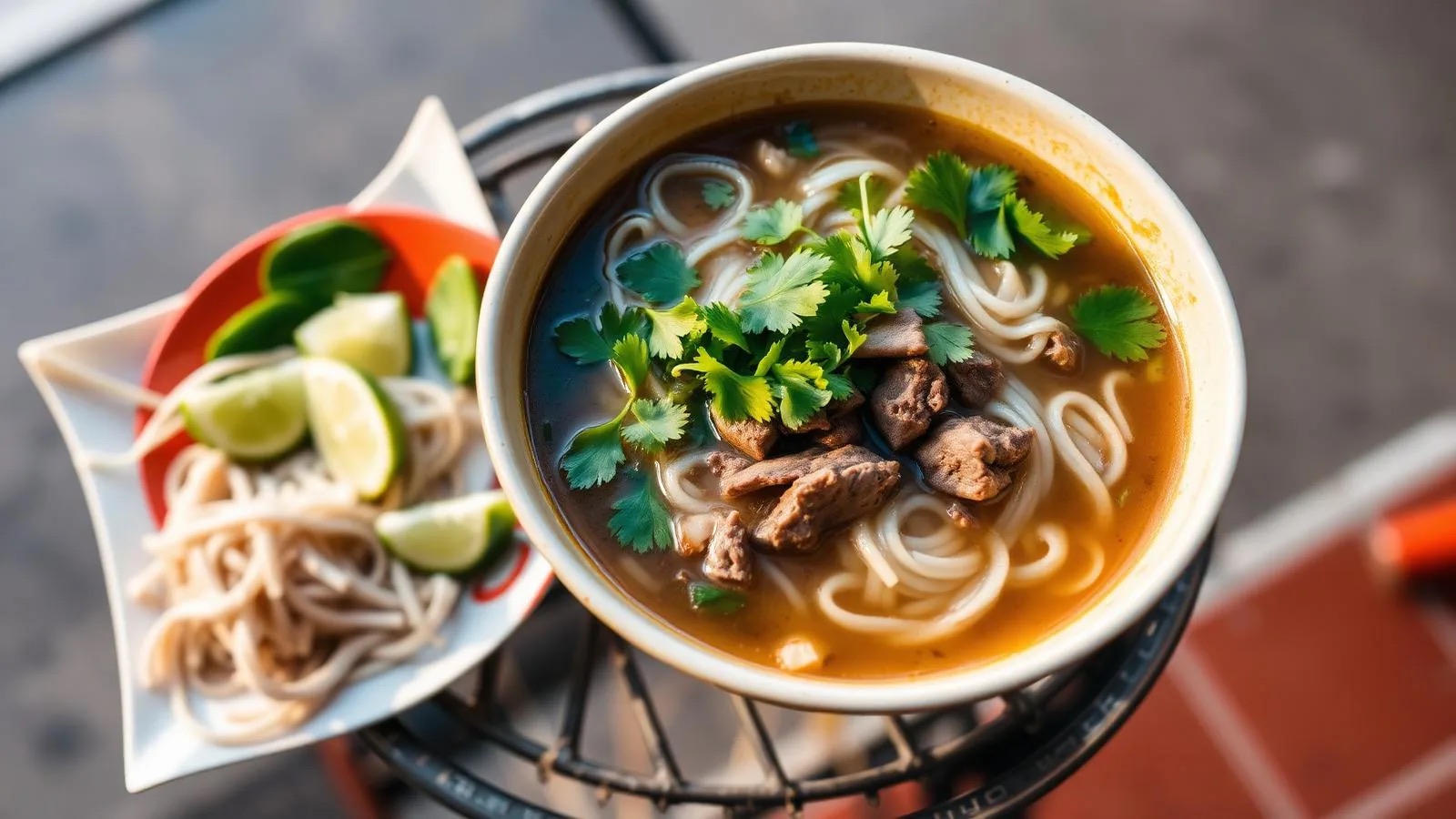
While pho is now celebrated across the globe, its true home is the North. Unlike the sweet, heavily spiced, herb-loaded versions served in southern regions, Northern-style pho gia truyen is an exercise in minimalist elegance. The clear beef broth is simmering gently for hours with marrow bones, charred ginger, and sweet yellow onions, seasoned lightly with star anise and cinnamon without overpowering the meat.
When you order a bowl of Northern beef noodle soup (pho bo), it comes simple: wide flat rice noodles, tender slices of beef (such as tai for rare flank or chin for brisket), chopped spring onions, and a sprinkle of coriander. Diners lightly season their soup with a squeeze of fresh lime juice, a dash of garlic-infused vinegar, and a spoonful of chilli sauce. Pair it with crispy fried dough sticks (quay), dunking them deep into the savory broth to absorb every last drop.
Bun Cha: Smoky Pork and Rice Vermicelli
No trip to Hanoi is complete without experiencing bun cha, a lunchtime staple that fills the capital's alleys with sweet charcoal smoke. Fatty pork belly slices and seasoned minced pork patties are grilled over glowing embers until caramelized and slightly charred on the edges.
The grilled pork is served submerged in a warm, light dipping bowl filled with diluted fish sauce, rice vinegar, sugar, garlic, and crunchy slices of green papaya and carrot. Alongside sits a basket of silky, cold rice vermicelli noodles (bun) and a hill of fresh herbs, including wild betel leaves, perilla, and coriander. You assemble each mouthful yourself, dipping noodles and herbs into the warm, savoury pork broth.
Cha Ca La Vong: Turmeric Fish with Dill
One of Hanoi's most iconic dish experiences is cha ca, a unique seafood creation so beloved that an entire street in the Old Quarter was named after it. Meaty chunks of white river fish are marinated in turmeric, galangal, garlic, and fermented rice before being brought to your table in a sizzling cast-iron skillet.
As the pan sizzles over a small portable burner, heaps of fresh dill and green scallions are tossed into the hot oil, wilting down instantly around the golden fish. You spoon the aromatic fish, sweet dill, and crisp onions into a bowl over thin rice noodles, adding roasted peanuts, crispy rice crackers, and a splash of pungent fermented shrimp paste (mam tom) whipped with lime and sugar until foamy.
Banh Cuon: Delicate Steamed Rice Rolls
For a light breakfast, locals turn to banh cuon. Cooked on a thin cloth stretched over a pot of boiling water, a fermented rice batter is spread thin as a feather and steamed in seconds. The cook swiftly lifts the delicate transparent sheet using a long bamboo stick.
The delicate roll is filled with a savoury mixture of seasoned minced pork and finely chopped wood ear mushrooms, rolled up, and topped with crispy golden fried shallots and fresh cucumber slices. dipped into warm light fish sauce accompanied by slices of Vietnamese pork sausage (cha lua), it provides a soft, comforting textually balanced bite.
Ca Phe Trung: The Creamy Story of Hanoi Egg Coffee
Born out of a milk shortage in the mid-20th century, Hanoi's famous egg coffee (ca phe trung) has become a classic sweet treat. A fresh egg yolk is whipped vigorously with condensed milk and sugar until it transforms into a thick, velvety, meringue-like foam layer.
This sweet golden cream is poured carefully over a hot shot of robust dark dark-roasted Vietnamese Robusta coffee. The rich, dessert-like egg foam balances the intense bitterness of the dark drip brew, tasting wonderfully like a warm tiramisu in a cup.
Central Fire and Spice: Hue & Hoi An
Crossing south past the cloud-wrapped Hai Van Pass brings you into Central Vietnam, where the peaceful subtleness of the North vanishes in a blaze of chilli, garlic, and deep coastal flavours. This region boasts two incredible culinary heavyweights: the royal imperial capital of Hue and the historic trading port of Hoi An.
Bun Bo Hue: The Spicy Imperial Noodle Soup
If Northern pho is an elegant whisper, bun bo hue is a thunderous shout. Originating from the royal court kitchens of Hue, this deeply complex noodle soup features thick cylindrical rice noodles swimming in a rich, spicy broth made from simmered beef marrow bones, lemongrass, annatto seeds, and fermented shrimp paste (mam tom).
A true bowl of bun bo hue comes laden with toppings: tender sliced beef shank, soft pork knuckle, crab meat balls, and cubes of congealed blood pudding. The bowl is garnished with thinly sliced banana blossoms, red cabbage, mint, and plenty of fiery chilli oil. It is bold, spicy, herbal, and utterly unforgettable.
Cao Lau: Hoi An’s Sacred Noodle Legacy
Found exclusively in the ancient lanterns-lit town of Hoi An, cao lau is a dish wrapped in local folklore. The unique chewy texture and smoky straw-yellow hue of these thick wheat-like rice noodles are said to come from soaking the rice grains in lye water made from the ashes of specific trees grown on the nearby Cham Islands, paired with water drawn from the ancient local Ba Le well.
Unlike soup noodles, cao lau is served with just a splash of intense, dark pork pan juices at the bottom of the bowl. The chewy noodles are topped with tender slices of char siu pork, crispy squares of fried noodle dough, bean sprouts, and wild herbs picked from nearby organic gardens. The Japanese, Chinese, and Vietnamese trade influences of Hoi An's past are perfectly captured in a single bowl.
Banh Mi Hoi An: The Ultimate Street Sandwich
While the French introduced the baguette to Vietnam, Central street vendors perfected it into a world-famous street food staple. The Central style of banh mi—particularly in Hoi An—is celebrated for its ultra-crispy, air-light bread crust that cracks loudly upon first bite.
The split baguette is slathered with rich homemade pork liver pate, creamy mayonnaise, a drizzle of savoury chili-infused meat sauce, and packed with layers of roasted pork belly, cold cuts, pickled daikon radish, cucumber, and fresh cilantro. It hits every texture and flavour axis simultaneously: hot, cold, crispy, creamy, spicy, and tangy.
White Rose Dumplings: Banh Bao Banh Vac
Another delicacy unique to Hoi An is banh bao banh vac, affectionately dubbed "White Rose" dumplings by French colonial travelers due to their delicate, flower-like shape. Made from translucent rice flour dough wrapped around a bite of seasoned minced shrimp or pork, these bite-sized gems are gently steamed until translucent.
Arranged neatly on a platter, the delicate dumplings are dressed with a scattering of crunchy fried shallots and served alongside a customized sweet dipped sauce made from shrimp broth, chilli, and lime. Their silky texture and subtle sweetness make them an essential prelude to a central feast.
Imperial Tapas: Banh Beo, Banh Nam, and Banh Loc
Hue's royal legacy lives on through its miniature steamed rice flour dishes, historically served as refined small bites for the Nguyen dynasty royals. Dining on these central snacks feels like a royal culinary tasting flight:
- Banh Beo: Small, shallow ceramic saucers filled with steamed rice batter, topped with savoury dried crushed shrimp, crispy pork crackling, and scallion oil. You drizzle a spoonful of sweet fish sauce over the top and scoop it out with a spoon.
- Banh Nam: Flat, rectangular rice flour parcels stuffed with seasoned minced pork and shrimp, wrapped neatly in banana leaves and steamed.
- Banh Loc: Chewy, translucent tapioca dumplings stuffed with a whole small shrimp and braised pork belly, cooked inside banana leaf packages for an earthy aroma.
Southern Sweetness: Saigon & The Mekong Delta
As you venture down into Ho Chi Minh City (Saigon) and further into the vast, winding waterways of the Mekong Delta, the food grows sweeter, bolder, and even more vibrant. Warm sun, rich black alluvial soil, and extensive coastlines ensure that Southern tables overflow with lush tropical produce, dynamic seafood, and sweet coconut milk.
Com Tam: Broken Rice with Grilled Pork Chops
Originally considered a humble dish consumed by poor rice farmers using damaged, fractured grains that were unsellable, com tam (broken rice) has risen to become Saigon's quintessential signature dish. The smaller broken rice grains possess a unique, slightly sticky texture that absorbs flavours brilliantly.
A classic plate of com tam suon nuong features a bed of fragrant broken rice topped with a thin pork chop marinated in condensed milk, lemongrass, garlic, and soy before being grilled over flaming coals. It is accompanied by cha cua (a steamed egg, pork, and mushroom meatloaf slice), crisp pork skin strands (bi), a fried egg, scallion oil, and a sweet, thick fish sauce poured generously over everything.
Hu Tieu: The Multicultural Noodle Bowl
Reflecting the southern hub's rich historical mix of Vietnamese, Chinese, and Cambodian trade communities, hu tieu is a incredibly versatile noodle dish enjoyed dry or in soup. The key feature is its chewy, translucent tapioca noodles or thin rice noodles, bathed in a sweet, clear pork bone broth.
Toppings vary wildly but routinely include tender sliced pork, minced pork, boiled quail eggs, plump shrimp, squid, fried shallots, and crisp Chinese celery. When ordered dry (hu tieu kho), the noodles are tossed in a sweet, savoury dark soy sauce mixture and served alongside a separate small bowl of piping hot stock.
Banh Xeo: Crispy Sizzling Pancakes
Named after the loud "sizzling" sound the batter makes when it hits a hot, oil-slicked skillet, banh xeo is a giant, golden crispy pancake. Despite its bright yellow appearance, there is no egg in the batter; the brilliant colour comes from turmeric powder mixed into a batter of rice flour and coconut milk.
The skillet is filled with pork slices, shrimp, wild onions, and bean sprouts, covered briefly to steam, then folded over like a large crepe. Eating banh xeo is a hands-on experience: you tear off a crispy piece of the hot pancake, place it inside a large green mustard leaf or lettuce leaf alongside herbs like mint and basil, roll it tight like a spring roll, and dip it into sweet chilli fish sauce.
Tropical Fruit and Mekong Seafood
Travelling through the Mekong Delta offers access to extraordinary tropical fruit orchards and fresh freshwater seafood. River fish like the famous elephant ear fish are deep-fried whole until crisp, brought vertically to the table, and rolled into fresh rice paper rolls with cucumber, rice vermicelli, and sweet pineapple sauce.
Between meals, road stalls display colorful mountains of seasonal fruits: creamy durian, sweet dragon fruit, aromatic mangosteens, spiky rambutan, red lychees, and crisp green mango sliced and dipped into spicy chilli salt.
The Alchemy of Herbs, Condiments, and Nuoc Mam
You cannot understand Vietnamese food without understanding the herbs and sauces that accompany every single meal. In Vietnamese dining, a dish is rarely served fully finished from the kitchen; instead, the cook provides the raw elements, and you complete the balance at your own table.
The Herb Basket Unpacked
Every street stall and restaurant places a heaped basket of fresh herbs (rau sống) on your table. These are not decorative garnishes; they are essential structural ingredients providing fresh texture, natural digestive aids, and aromatic complexity. Common staples include:
- Rau Ram (Vietnamese Coriander): Peppery, slightly musky, and herbal; commonly served with seafood and duck dishes.
- Tia To (Perilla / Shiso Leaf): Striking purple-backed leaves offering an earthy, slightly minty, anise-like flavour profile; mandatory for bun cha and snail soups.
- Hung Cay (Spearmint): Bright, cool, and sharp; elevates fresh spring rolls and southern salads.
- Rau Muong (Water Spinach): Crisp hollow stems, often served raw and shredded alongside spicy central soups or flash-fried with garlic.
- Gia Dou (Bean Sprouts): Plump, sweet bean sprouts adding cool crunch to hot broths and crispy crepes.
Fish Sauce (Nuoc Mam): The Heartbeat of the Kitchen
Pure fish sauce—made by fermenting wild anchovies and sea salt in massive wooden barrels for up to a year—is the savoury foundation of Vietnamese cooking. The finest fish sauce hails from the tropical islands of Phu Quoc and the coastal city of Phan Thiet.
While dark, pure fish sauce is used in cooked pots and braises, the universal dip on every table is nuoc cham. This golden condiment balances fish sauce with warm water, lime juice, palm sugar, finely minced garlic, and chopped fresh chillies. A good bowl of nuoc cham balances sweet, sour, salty, and spicy in a single translucent spoonful.
The Craft of Vietnamese Coffee
Introduced by French colonists in the 19th century, coffee (ca phe) was enthusiastically adopted and transformed by the Vietnamese into a world-famous craft. Vietnam is the world's second-largest coffee producer, known primarily for its bold, punchy Robusta beans, which yield a dark roast with notes of chocolate, caramel, and intense bitterness.
From Phin Drip to Coconut and Salt Coffee
Traditional coffee is brewed using a small stainless-steel metal drip filter called a phin, sitting balanced directly on top of a serving glass. Hot water slowly seeps through the coarse coffee grounds drop by drop into a layer of rich, sweet condensed milk resting at the bottom of the glass. Once brewed, you stir the layers together and pour it over a glass packed with ice to make classic ca phe sua da.
Modern cafe culture across the country has spawned exciting innovative modern variations:
- Ca Phe Sua Da: The quintessential iced coffee stirred with sweetened condensed milk—strong, sweet, and intensely refreshing in humid weather.
- Ca Phe Den: Dark black coffee, served hot or iced, usually lightly sweetened with a spoon of sugar to balance the dark roast.
- Ca Phe Cot Dua: Rich espresso blended with icy frozen coconut cream and condensed milk—a frosty slushie-style treat popular in summer heat.
- Ca Phe Muoi (Salt Coffee): A Central speciality originating in Hue, combining dark drip coffee with a layer of salted whipped cream. The salt cuts through the bitterness, accentuating the sweet, chocolatey undertones of the bean.
Plastic Stools and Sidewalk Etiquette
In Vietnam, the sidewalk is the social lounge, the dining room, and the local news hub. Eating on the street sitting on tiny low plastic stools is not merely a cheap dining option; it is the absolute best way to taste authentic regional flavours cooked by vendors who have spent decades perfecting just one single family recipe.
Navigating Street Stalls with Confidence
To the uninitiated traveler, street food markets can feel chaotic and overwhelming. Following a few simple guidelines will help you dive right in like a seasoned local:
- Look for Specialisation: The best vendors cook only one or two dishes (e.g., a sign reading solely Bun Bo Hue or Banh Cuon). Avoid stalls attempting to cook massive international menus.
- Follow the Local Crowds: High customer turnover guarantees two vital things: high ingredient fresh turnover and steaming hot food cooked continuously.
- Observe the Workstation: Choose vendors keeping clear, organized counters with steaming, boiling broths and active open cooktops.
- Tidy Table Habits: Chopsticks and spoons are stored in central desktop containers. Wipe them clean with a dry napkin before eating if desired. When you finish, drop squeezed lime hulls, used paper napkins, and herb stems into the trash bucket placed under your table.
- Paying the Bill: Simply catch the host's eye and say "Thanh toan" or ask "Bao nhieu tien?" (How much money?). Cash remains king at sidewalk street food stalls across the country.
Navigating Plant-Based Eating: Com Chay
Thanks to a rich history of Mahayana Buddhism, Vietnam is an amazingly easy country for vegetarian and vegan travelers to navigate. On the 1st and 15th days of the lunar calendar month, many locals adopt a strictly plant-based diet, meaning even regular restaurants offer dedicated meat-free options.
Look out for signs reading Quán Ăn Chay or Cơm Chay (Vegetarian Food). These specialized eateries serve incredible plant-based buffets, replacing meats with seasoned tofu, braised mushrooms, green banana, gluten, and complex mock meats crafted out of soy and yam roots.
When ordering at standard non-vegetarian stalls, use these helpful phrases:
- "Toi an chay" — I eat vegetarian / vegan.
- "Khong co nuoc mam" — Without fish sauce (essential for strict vegans).
- "Khong co thit" — Without meat.
Practical Tips for Safe Street Food Dining
Experiencing world-class street food shouldn't come with gastrointestinal stress. By applying standard culinary common sense, you can enjoy street eating safely throughout your Vietnamese journey:
- Stick to Freshly Cooked Foods: Choose dishes cooked right before your eyes—boiling soups, hot sizzling pan noodles, and fried items are generally completely safe.
- Be Mindful of Fresh Water: Ice produced in major towns and cities (identifiable by uniform machine-cut cylindrical shapes with hollow centres) is manufactured in commercial ice plants using filtered water and is widely safe. Avoid crushed block ice hacked off street kerbs.
- Peel Fresh Fruit: Enjoy fruits you can peel yourself (like bananas, mangosteens, oranges, and rambutan) or purchase fresh fruit from busy vendors cutting items fresh on demand.
- Hydrate Wisely: Drink sealed bottled mineral water, fresh coconut water straight from a newly cracked green coconut, or freshly brewed hot tea (tra da iced tea is ubiquitous and routinely safe).
- Pace Yourself: Vietnamese food features high herb fiber content, fish sauces, and chili spices. Give your system time to adapt during the first few days of your journey by balancing street food with sit-down dining.
Final Bites: Embracing the Vietnamese Table
Eating across Vietnam is an unforgettable celebration of geography, history, and community. From the steaming, quiet early morning noodle shops of Hanoi to the fragrant, chilli-spiced imperial plates of Hue, and down to the sun-soaked, sweet coconut curries of the Mekong Delta, food is the true connective thread binding this magnificent country together.
Do not be shy to pull up a small plastic chair, smile at your neighbours, slide your chopsticks apart, and dive into a piping hot bowl of soup. The warmth of the hospitality, the incredible complexity of fresh herbs, and the unforgettable symphony of regional flavours will stay with you long after the final bowl is finished.
More Vietnam guides

Things to Do in Vietnam: Hanoi to the Mekong Delta
The experiences worth building a Vietnam trip around, north to south: Hanoi's Old Quarter, Ha Long Bay, Ninh Binh, Phong Nha caves, Hoi An…

Vietnam Itinerary: Two Weeks From Hanoi to Ho Chi Minh
A two-week Vietnam itinerary from Hanoi to Ho Chi Minh City — Halong Bay, Sapa, Hoi An, best time to visit, train travel and honest daily…

Hanoi and Ha Long Bay: How to Plan the Trip
How to pair Hanoi's Old Quarter with a Ha Long Bay cruise: how many nights, when to go, and what the overnight boats are actually like.