Vietnam Itinerary: Two Weeks From Hanoi to Ho Chi Minh
A two-week Vietnam itinerary from Hanoi to Ho Chi Minh City — Halong Bay, Sapa, Hoi An, best time to visit, train travel and honest daily costs.

In this guide
- Why Vietnam Is Worth the Hype
- Best Time to Visit Vietnam
- Hanoi
- Halong Bay
- Sapa and the Northern Mountains
- Hoi An and the Central Coast
- Ho Chi Minh City (Saigon)
- Food Culture
- Getting Around: Trains, Buses and Motorbikes
- Visa Basics
- Is Vietnam Expensive to Visit? Costs and Daily Budget
- How Many Days Do You Need in Vietnam? A 2-Week North-to-South Itinerary
- Final Practical Tips
- Explore Vietnam in Depth
A proper bowl of phở on the pavement in Hanoi's Old Quarter — the broth clear and slightly cinnamon-warm, the tiny plastic stool ten inches off the ground, a chorus of scooter horns in every direction — shows how much life Vietnam packs into a single street corner. From the mountain terraces of Sapa down to the Mekong Delta, this is the guide to read before your first flight into Noi Bai.
Vietnam is a long, thin country — 1,650 km end to end — and the north, centre and south feel almost like three separate countries. The northern Hanoi bowl of phở is not the southern Saigon bowl. The rice-terrace mountains of Sapa look nothing like the karst lagoons of Halong or the tailored old town of Hoi An. This guide is for the trip that actually crosses that geography properly, north to south, and gives each piece the time it deserves.
Why Vietnam Is Worth the Hype
Vietnam is the best-value-for-money major destination in Southeast Asia and arguably the most rewarding one to actually travel through slowly. In a single two-week trip you can drink egg coffee on a Hanoi rooftop, sleep on a wooden junk in Halong Bay, watch dawn over the rice terraces at Y Ty, take a bicycle around a UNESCO-listed lantern town, walk the DMZ tunnels at Vinh Moc, and end up sitting on a low plastic stool in Saigon's District 4 with a bowl of bún bò huế for less than the price of a coffee at home.
What surprises most first-time visitors is how varied the country feels along its length. The north is cooler, more reserved, and heavier with Chinese influence. The centre — Hue, Da Nang, Hoi An — is the imperial and ceremonial heart, with distinctive cuisine and clear seasons. The south is hotter, faster, more southeast-Asian-tropical, more entrepreneurial, more American-inflected. Plan for one Vietnam and you'll experience about a third of it.
Vietnam also has genuinely functional infrastructure. Domestic flights are cheap and frequent, the Reunification Express train runs the length of the country, buses are surprisingly comfortable, and English is spoken in every tourist-facing setting. This is not a hard country to travel in.
Best Time to Visit Vietnam
Because Vietnam runs 15 degrees of latitude, "best time" depends on where you're going.
- North (Hanoi, Halong, Sapa): best in October–November (cool, dry, clear) and March–April (spring warm). Winter (December–February) is genuinely cold in Sapa (0–10°C, sometimes snow) but Hanoi is fine at 15–20°C. Summer (June–August) is hot and humid with typhoon risk.
- Central (Hue, Hoi An, Da Nang): best in February–May (dry, warm, sea calm). Rainy season is October–November with real flooding risk in Hoi An (rickshaws through knee-deep water in the old town some years). June–August is beach season for Da Nang.
- South (HCMC, Mekong Delta, Phu Quoc): best in December–March (dry, warm, 25–32°C). Rainy season is May–October, though rain is usually short heavy afternoon storms.
The single sweet-spot window for a north-to-south trip is March to April: cool spring in the north, hot dry beach weather in the centre, dry season still holding in the south. Second-best is October to early November, though you accept some rain risk in Hoi An.
Hanoi
Hanoi is 1,000 years old, and it feels like it. It's not a beautiful city in the postcard sense — it's a dense, hectic, low-rise sprawl of French colonial architecture, Chinese-quarter shophouses and Soviet apartment blocks, drowned in scooters. And it's one of the most compelling cities in Asia. Give it three full nights.
The neighbourhoods:
- The Old Quarter — 36 streets, each historically named for the trade practised on it — is where you should stay. It's chaotic, it's touristy, it also happens to be where 90% of the food and life is.
- Hoan Kiem Lake, at the southern edge of the Old Quarter, is the city's living room. Walk around it in the morning to see Hanoians doing tai chi.
- The French Quarter, south-east of the lake, is where the opera house, the Sofitel Metropole and the wide colonial boulevards are.
- Ba Dinh, west of the Old Quarter, holds the Ho Chi Minh Mausoleum, the Presidential Palace and the Temple of Literature — founded in 1070 and home to Vietnam's first university from 1076.
- Tay Ho (West Lake) is the expat and cafe neighbourhood, quieter, greener, cheaper accommodation for longer stays.
Non-negotiables: bun cha at Bun Cha Huong Lien (still trading on the "Obama and Bourdain ate here" story, still very good), egg coffee at Cafe Giang (invented here in 1946), a Water Puppets show at the Thang Long Theatre, and a slow walk through the Old Quarter's night market on a Friday, Saturday or Sunday when Hoan Kiem's ring road is closed to traffic. The Vietnamese Women's Museum and the Ethnology Museum are both far better than they sound.
Halong Bay
Halong Bay is the World Heritage seascape of ~1,600 limestone karst islands rising out of emerald water in the Gulf of Tonkin, three hours by road east of Hanoi. It's genuinely spectacular; it's also busy. A one-night junk cruise is fine and gives you the money shot; two nights lets you get further from the crowds and see more.
Three important distinctions:
- Halong Bay proper is the classic itinerary — most of the visible islands from Sung Sot and Ti Top viewpoints. Very photogenic, very heavily trafficked by cruise boats.
- Bai Tu Long Bay, immediately north-east, is geologically the same but with a fraction of the boats. If you can only pick one, pick Bai Tu Long.
- Lan Ha Bay, to the south around Cat Ba Island, is the third option — smaller karsts, more kayaking, better swimming, and much cheaper.
For the cruise itself, book through a real operator. Indochina Junk, Bhaya Cruises, Paradise Elegance and Heritage Line at the top end are all reliable. Budget cruises can be a mixed bag. Pick a smaller boat (16–24 cabins) over a mega-vessel (40+); pick Bai Tu Long or Lan Ha over Halong central. What you're paying for is the private balcony over the karsts at sunrise — that's the moment.
Sapa and the Northern Mountains
Sapa is the old French hill station in the far north-west, 1,500 metres up in the Hoang Lien Son range near the Chinese border. What draws people is the terraced rice landscape — carved into the hillsides over generations by H'mong, Dao and Giay ethnic-minority farmers — and the trekking between hill villages.
The truth about Sapa is that Sapa town itself has ballooned into a Vietnamese domestic tourism resort — cable cars, new hotels, karaoke bars. What you actually want is one or two nights outside the town, in a homestay in Ta Van, Ta Phin, Lao Chai or Y Linh Ho. A local guide walks you between villages, you sleep in a family bure or wooden stilt house, and you eat what the family cooks.
One of the best experiences in northern Vietnam is a two-day guided walk between homestays, arranged through Sapa O'Chau (a social-enterprise agency run by H'mong women). You pay a fair price, most of it goes to the villages, and you get a genuinely warm door opened.
Getting there: overnight sleeper train Hanoi to Lao Cai (~8 hours, book a soft-sleeper 4-berth cabin), then a 45-minute road transfer to Sapa. The road option is a 5-hour luxury sleeper bus straight from Hanoi. The train is the better choice.
If you want to go further and quieter, the Ha Giang loop (three or four days on a motorbike through Vietnam's northernmost province) is the current Southeast Asia backpacker rite of passage. If you're a nervous rider, hire an "easy rider" (you sit on the back of a local driver's bike). If you're a confident rider, do it yourself.
Hoi An and the Central Coast
Hoi An is the perfectly preserved 15th–19th-century trading port on the central coast, UNESCO-listed, entirely pedestrianised in the old town, and lit at night by silk lanterns strung across every alley. It is the single most photogenic small town in Vietnam and, in high season, also crowded. Come at dawn or after 9pm and it's magic; come at 3pm and it's shoulder-to-shoulder. Give it three nights.
What actually to do:
- The Old Town walk. Buy the multi-attraction ticket (120,000 VND) which gets you into five heritage buildings — the Japanese Covered Bridge, the Assembly Halls, the old merchant houses. Walk it at 6am, again after dark.
- Get clothes made. Hoi An is the country's tailoring capital. Bebe Tailor, Yaly Couture and A Dong Silk are three trustworthy names. Allow three days for two fittings.
- Cooking classes in the surrounding rice fields. Red Bridge Cooking School and Morning Glory are two consistently good options.
- An Bang and Cua Dai beaches are 5 km from town by bike — Cua Dai is heavily eroded; An Bang has actual sand, beach bars, and long-tail sunset light.
- My Son sanctuary, an hour inland, is a partly ruined Cham Hindu temple complex from the 4th–14th century. Not Angkor, but genuinely beautiful. Go at first opening (7am) to beat both the heat and the crowds.
Base yourself either in the Old Town (charming, more expensive, no scooters allowed at night) or at the beach (quieter, cheaper, cycle in for dinner). Combine Hoi An with a night or two in Hue, the old imperial capital 3 hours north — the Imperial City citadel and Nguyen dynasty tombs are essential. Da Nang, in between, is a functional modern beach city (Marble Mountains, Ba Na Hills, the Golden Bridge) — worth a night if you're already flying in and out.
Ho Chi Minh City (Saigon)
Officially Ho Chi Minh City since 1976, still Saigon to most locals and any expat who's lived here more than a year. HCMC is Vietnam at its most modern, capitalist and forward-facing. It's not a beautiful city — the skyline is a mixture of glass towers, low-rise blocks and a scattering of French colonial buildings — but it's an extraordinarily energetic one. Give it three nights.
The essential districts:
- District 1 is the tourist and business core. Notre Dame Cathedral, the old Central Post Office (designed by Alfred Foulhoux, though often credited to Gustave Eiffel), the Reunification Palace, and the excellent War Remnants Museum — this last is a hard, non-negotiable half day. It's an unflinching look at the American War from the Vietnamese side.
- District 3 is the residential-turned-hip neighbourhood immediately west, with the best coffee shops in the country.
- District 5 (Cholon) is the historic Chinese quarter, less touristy, packed with dim-sum lunches and traditional-medicine shops.
- District 4, across the canal from District 1, is where the real Saigon street food lives — night market at Vinh Khanh Street especially.
Non-negotiables: the War Remnants Museum, a Cu Chi Tunnels half-day trip (Ben Duoc, not Ben Dinh — smaller crowds and more authentic), a Vespa-tour night-food ride through Saigon's backstreets (XO Tours does this well), coffee on a rooftop bar in D1, and a bowl of bún bò huế at a low-plastic-stool place in District 4.
From HCMC you can day-trip or overnight into the Mekong Delta (Cai Rang floating market, Ben Tre coconut villages), or fly in an hour to Phu Quoc island for the Vietnamese beach ending your trip deserves.
Food Culture
Vietnamese food is one of the most consistently good national cuisines in the world and, more usefully, one of the freshest. Herbs are on every table, oil is used sparingly, and each dish is built around balance — sweet, sour, salty, bitter, spicy — rather than heaviness. A few things to know:
- Northern, central and southern cuisines are genuinely different. Northern (Hanoi): subtle, less sweet, focused on clear broths — pho, bun cha, cha ca la vong. Central (Hue, Hoi An): more complex, more spicy, more colourful — bun bo Hue, mi Quang, cao lau, banh khoai. Southern (Saigon, Mekong): sweeter, herb-heavy, more tropical — bun mam, banh xeo, hu tieu, canh chua.
- Learn a few key dishes by name. Phở (rice noodle soup — bò is beef, gà is chicken), bún chả (grilled pork with rice noodles and herb salad, a Hanoi speciality), bánh mì (baguette sandwich, better in the south), bún bò huế (spicy beef noodle soup, imperial-city dish), cao lầu (Hoi An noodle bowl found nowhere else), cà phê sữa đá (Vietnamese iced coffee with condensed milk).
- Street food is the point. Follow crowds, especially at lunch (11am–1:30pm) and after 6pm. Plastic stools 10 cm off the pavement are a positive signal.
- Coffee culture is deep. Vietnamese coffee is robusta (not arabica) — stronger, more bitter, made for milk. Beyond the standard cà phê sữa đá, seek out egg coffee (Hanoi invention, whipped egg yolk on hot espresso), coconut coffee (Ho Chi Minh version, blended with coconut ice cream) and salt coffee (Hue speciality). Cong Caphe is the chain to know.
- Drinks: Bia hoi is the local draft beer, brewed daily and sold at pavement joints in Hanoi for about 8,000 VND (US$0.35) a glass. Saigon Special and 333 are the everyday bottled beers. Vietnamese rice wine (rượu) is served straight and used mostly for toasts.
Water: bottled only. Ice at reputable restaurants and bars is fine — it's factory-made from filtered water. Street vendors: high turnover, cooked in front of you, and you'll almost always be fine.
Getting Around: Trains, Buses and Motorbikes
Vietnam is a north-south country, and internal transport reflects that. Options:
- Reunification Express train: the north-south rail line from Hanoi to HCMC, ~1,730 km. You'd never do the whole thing in one go — do it in legs, like Hanoi to Hue (13 hours overnight, soft-sleeper 4-berth), Danang to Nha Trang, and so on. The Danang-to-Hue stretch, along the Hai Van Pass, is one of the most spectacular train rides in Southeast Asia. Book at baolau.com or 12go.asia.
- Domestic flights: Vietnam Airlines, Bamboo Airways, Vietjet Air fly every major city-pair for often less than the equivalent train fare. Book 2–4 weeks ahead. Suggested legs to fly rather than train: HCMC to Hanoi in either direction if you're short on time, or Hanoi to Danang.
- Buses: modern sleeper buses (Futa Bus Lines, Hanh Cafe, The Sinh Tourist) run every route. Fine for shorter legs; take the train on the long ones for comfort.
- Grab and Be are the ride-hailing apps. Both work in every big city; Grab in Hanoi and HCMC is essentially a substitute for taxis. Grab Bike (motorbike ride) is faster than car in traffic.
- Motorbike travel: renting a motorbike (~US$8–12 per day) is a Vietnamese travel classic. The Ha Giang loop in the north and the Hai Van Pass in the centre are two of the world's great motorbike rides. Only if you have a valid motorcycle licence and some real riding experience — accidents on unfamiliar Vietnamese roads are one of the top reasons foreign travellers end up in hospital.
Visa Basics
Visa policy in Vietnam changes more often than in most countries, so always confirm the current rule for your passport before flying. As of 2026:
- E-visa is now available to citizens of all countries, valid for 90 days, single or multiple entry. Apply online at evisa.xuatnhapcanh.gov.vn (the official government site — do not use the many lookalike scam sites). Fee US$25 (single entry) or US$50 (multiple entry). Processing is 3–5 working days; apply at least 10 days ahead.
- Visa-free entry is available for some countries for up to 15 or 45 days (UK, Germany, France, Italy, Spain, Japan, South Korea, Scandinavia and others get 45 days; Chile and Panama get 90 days). US, Canadian, Australian and NZ passports do not get visa-free entry — get the e-visa.
- Land border crossings from Laos, Cambodia and China are open at multiple points; the e-visa specifies which port of entry you'll use, so pick correctly.
Print two copies of your e-visa approval and have it in your carry-on when flying in. Airlines occasionally refuse boarding without a printed copy.
Is Vietnam Expensive to Visit? Costs and Daily Budget
Vietnam is one of the cheapest destinations on this list. Actual daily budgets in US dollars, excluding international flights:
- Backpacker (hostel dorm, street food, sleeper trains/buses): US$25–40 per day.
- Mid-range (private hotel room, mix of street food and sit-down restaurants, occasional Grabs, one or two paid activities per day): US$55–90 per day per person. This is where most travellers land.
- Comfort (boutique hotel, restaurant meals, guided tours, domestic flights instead of trains): US$150–260 per day per person.
- Luxury (Metropole in Hanoi, Six Senses Ninh Van Bay, Reverie in Saigon, an Indochina Junk private cabin): the ceiling is high — expect US$400–1,500 a night for high-end.
Concrete price points from 2025–2026 trips: bowl of phở from a street stall 45,000–70,000 VND (US$1.80–3), bánh mì 25,000–45,000 VND, sit-down mid-range restaurant main 120,000–250,000 VND, bia hoi 8,000–15,000 VND per glass, decent boutique hotel double 1,000,000–2,500,000 VND (US$40–100), Grab across Hanoi 40,000–100,000 VND, soft-sleeper train Hanoi to Danang 700,000–1,300,000 VND (US$28–52), Halong overnight cruise US$120–350 per person mid-range.
Tipping is not culturally traditional but 10% at nicer restaurants and 20,000–50,000 VND at hotels for luggage is appreciated. Cash (VND) is required in markets, at street food, and for cheap taxis; cards work at hotels and mid-range restaurants.
How Many Days Do You Need in Vietnam? A 2-Week North-to-South Itinerary
Two weeks is the sweet spot for a first Vietnam trip. This is the recommended route for a first-time visitor, working north to south:
- Days 1–3 (Hanoi): arrive, day 1 stroll the Old Quarter and Hoan Kiem, day 2 Ho Chi Minh Mausoleum + Temple of Literature + Vietnamese Women's Museum, day 3 street-food tour and Water Puppets.
- Days 4–5 (Halong or Bai Tu Long Bay): one-night or two-night junk cruise from Hanoi. Two nights if you can spare it.
- Days 6–7 (Sapa homestay): overnight sleeper train Hanoi to Lao Cai, guided trek between hill villages, homestay in Ta Van, sleeper train back.
- Day 8 (fly to Danang): short domestic flight, transfer to Hoi An (45 min).
- Days 9–11 (Hoi An): Old Town by dawn and after dark, tailored clothes, cooking class, day trip to My Son at first light, half day to Hue if you have appetite.
- Day 12 (fly to Ho Chi Minh City): short flight south, evening street food in District 4.
- Days 13–14 (HCMC): War Remnants Museum + Reunification Palace, Cu Chi Tunnels day trip (Ben Duoc), Mekong Delta day trip (or overnight to Ben Tre), Saigon rooftop bar farewell.
Have another week? Add three nights on Phu Quoc island for the beach ending, or two nights in Ninh Binh (dry land Halong Bay) about two hours south of Hanoi.
Final Practical Tips
- Money: Vietnamese dong (VND). Around 24,000–26,000 VND to the US dollar in 2026. Withdraw in larger amounts (2–3 million at a time) — ATM fees are per-transaction. Vietcombank and Techcombank are reliable; avoid brand-less machines. Break big notes at coffee shops early; taxis and market vendors rarely have change for 500,000-dong notes.
- SIM cards: Viettel is the most reliable; Vinaphone and Mobifone are alternatives. Tourist SIMs at airport for 200,000–300,000 VND with 30 days unlimited data. eSIMs (Airalo, Holafly) also work.
- Plugs: mix of Type A (US flat two-pin) and Type C (EU round two-pin), both fit most sockets. 220V. Bring an adapter or buy one at any electronics shop.
- Crossing the road is a national art. Look, step out at a slow steady pace, do not stop and do not run — scooters will flow around you. Trying to wait for a "clear moment" in Hanoi is how you never cross.
- Scams to know: the Hanoi Old Quarter cyclo who "misunderstands" the price, the taxi at Noi Bai airport that "prefers" a flat rate — use Grab. The Ho Chi Minh City "friendly student" who wants to practise English and steers you to an overpriced coffee shop.
- Respect: the Vietnamese War is called the American War here, and it's still living memory. Talk about it if a local wants to, don't lecture on politics.
- Dress modestly at temples and mausoleums — cover shoulders and knees. The Ho Chi Minh Mausoleum enforces this at the door and has strict silence and photography rules inside.
Vietnam rewards travellers who move slowly along its length. Two weeks north-to-south is exactly right; three is better if you can. Eat at the crowded stall with plastic stools, take the overnight train at least once, and trust that the country is far bigger and more layered than any single trip can capture. That's the whole point — you'll come back.
Explore Vietnam in Depth
This guide is the overview. When you are ready to plan a specific part of the trip, these deep-dives go further, and each one links back here:
More Vietnam guides
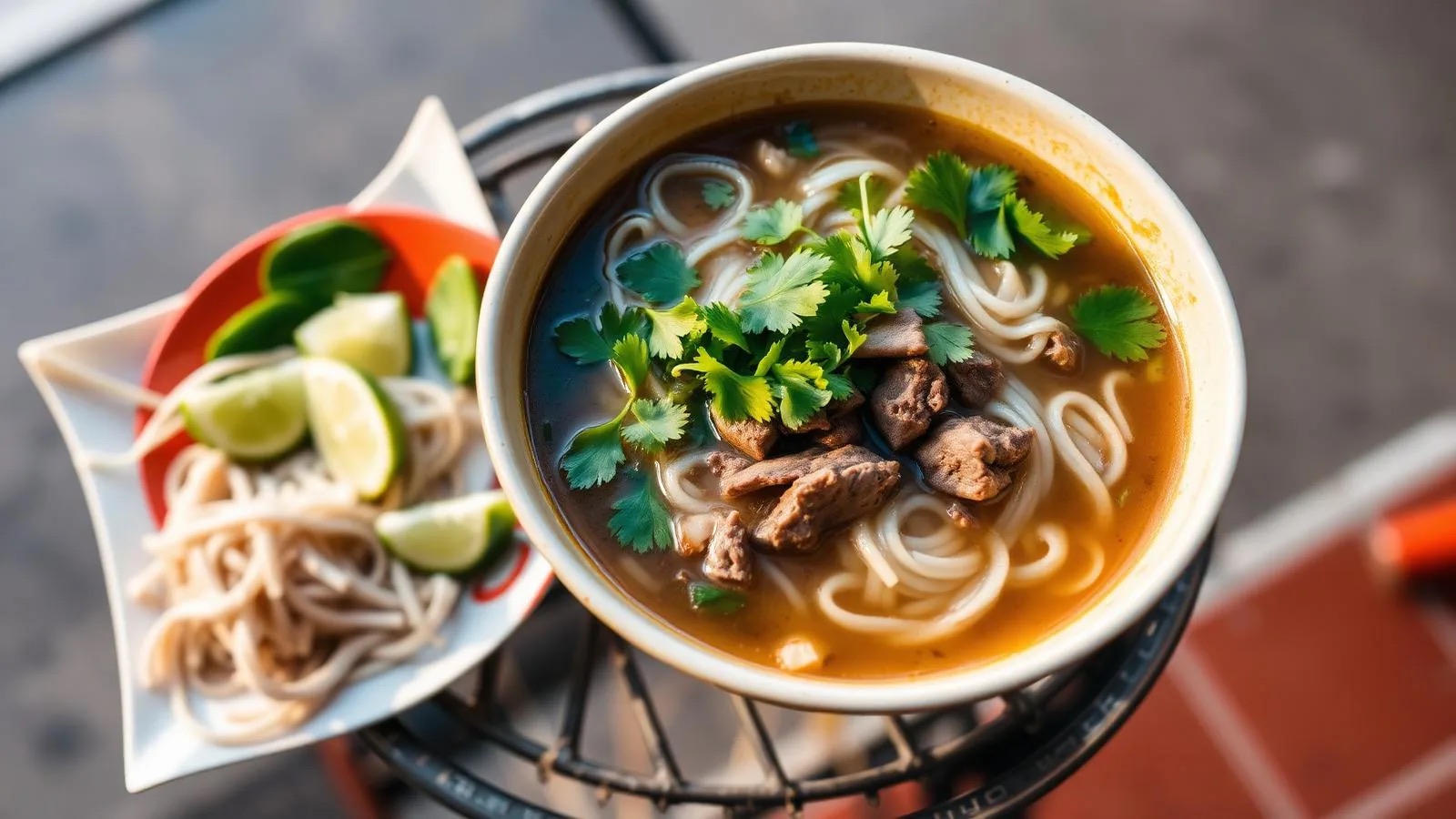
What to Eat in Vietnam: A Region-by-Region Food Guide
Northern phở, central bún bò Huế and cao lầu, southern cơm tấm and bánh xèo — how Vietnamese food changes down the country, plus…
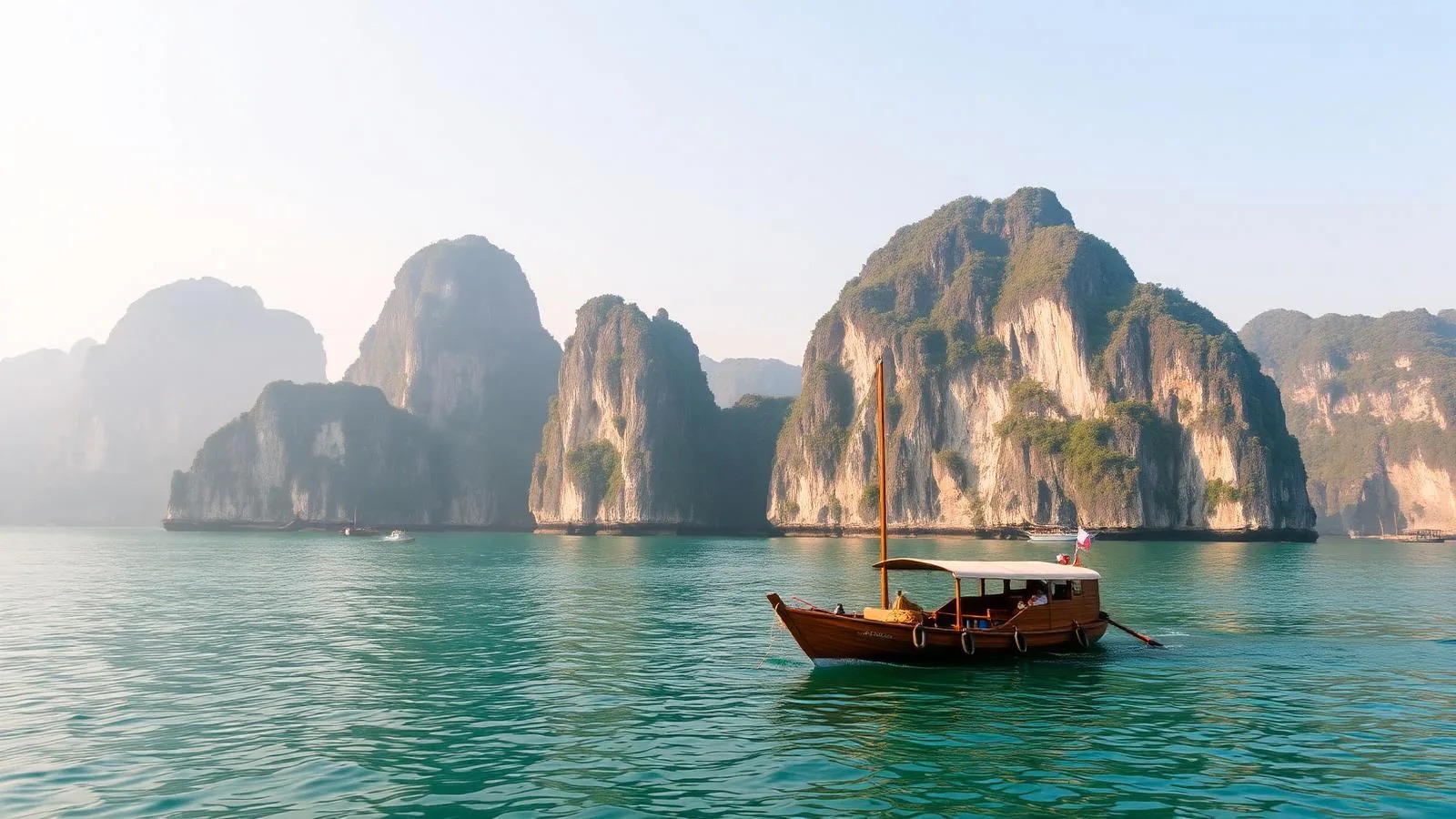
Things to Do in Vietnam: Hanoi to the Mekong Delta
The experiences worth building a Vietnam trip around, north to south: Hanoi's Old Quarter, Ha Long Bay, Ninh Binh, Phong Nha caves, Hoi An…

Hanoi and Ha Long Bay: How to Plan the Trip
How to pair Hanoi's Old Quarter with a Ha Long Bay cruise: how many nights, when to go, and what the overnight boats are actually like.