Pyramids of Giza: Tickets, Timing and How to Visit
Giza tickets and prices, the best time to visit for weather and crowds, transport to the plateau and what to see across the necropolis beyond the pyramids.
In this guide
- Unveiling the Majesty of the Great Pyramids of Giza
- The Enduring Legacy: A Brief History of the Great Pyramids of Giza
- What to See at the Giza Necropolis: Beyond the Pyramids
- Planning Your Visit to Giza Pyramids: Essential Details
- Giza Pyramids Tickets & Prices
- Best Time to Visit the Pyramids: Weather, Crowds & Events
- Getting There: Transport Options to the Giza Necropolis
- Pro Tips for Visiting the Great Pyramids: My Hard-Earned Wisdom
- Making the Most of Your Giza Visit
This guide is part of our Egypt Travel Guide — start there for the overview, itineraries and costs.
Unveiling the Majesty of the Great Pyramids of Giza
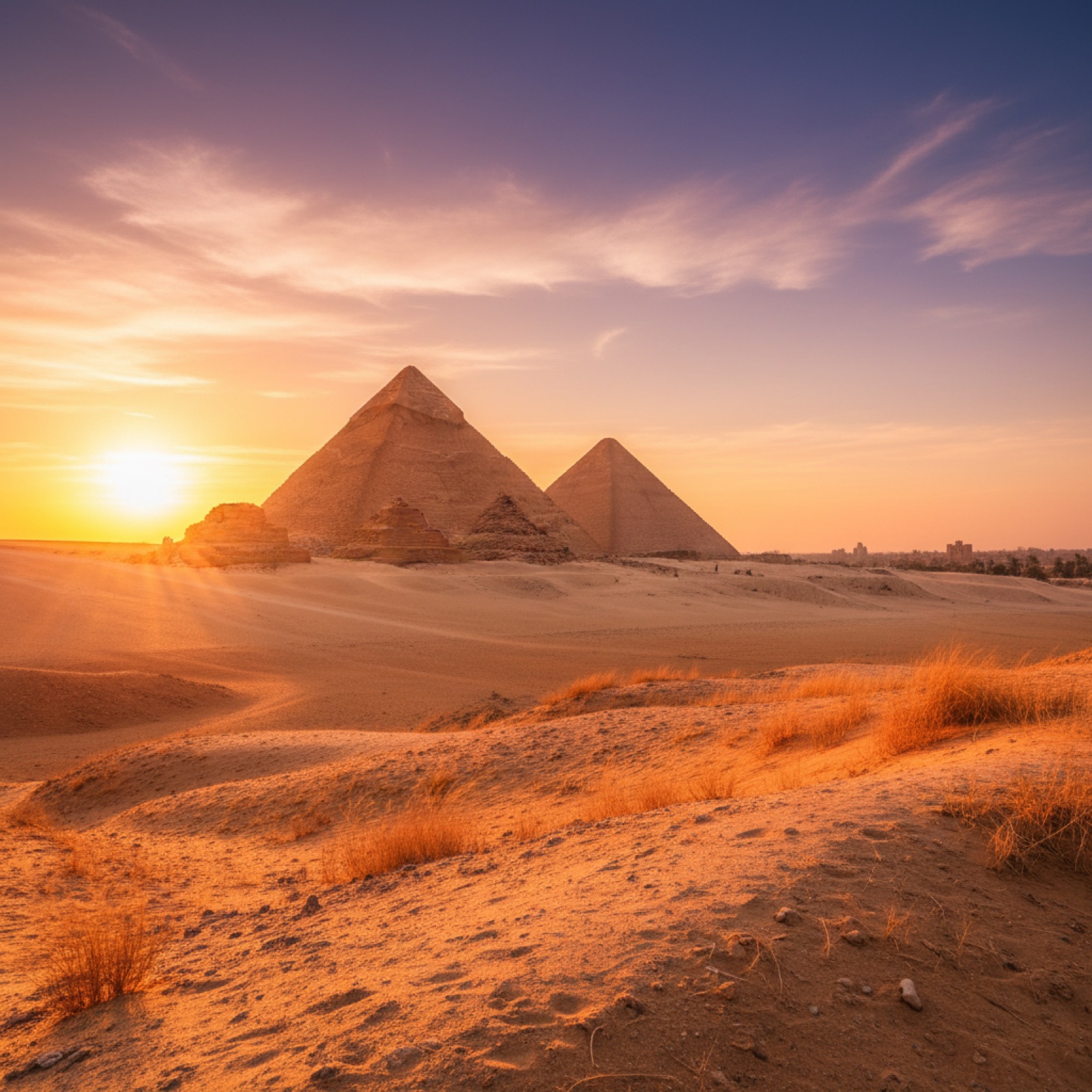
Nothing prepares you for the scale and presence of the Great Pyramids of Giza in person. These colossal structures, guardians of millennia, stand silent and stoic against the vibrant Cairo skyline, exactly as every history book and documentary promises. Even on a scorching May morning when the air shimmers, the sense of awe is overwhelming. A visit is a journey back through the mists of time to an era of pharaohs, ingenuity, and unparalleled ambition.
For anyone planning to visit this iconic wonder, especially in 2025, you're in for the trip of a lifetime. But let's be honest, navigating such a monumental site, especially in a bustling city like Cairo, can feel a little daunting. That's why this ultimate guide to the Great Pyramids of Giza exists. Whether you're chasing historical facts, seeking the perfect photo op, or trying to figure out the best way to avoid the crowds, this guide has you covered. This isn't just about seeing the pyramids; it's about understanding them, feeling their history, and making your adventure truly unforgettable.
The Enduring Legacy: A Brief History of the Great Pyramids of Giza
Understanding the history behind these magnificent structures truly enhances your experience when visiting Giza Pyramids. Built over 4,500 years ago during the Fourth Dynasty of ancient Egypt's Old Kingdom (circa 2580-2560 BC), the Great Pyramids of Giza were not just massive tombs; they were sophisticated architectural marvels, a testament to a civilization's profound belief in the afterlife and its incredible organizational capabilities.
The Pharaohs Behind the Monuments: Khufu, Khafre, and Menkaure
The Giza plateau is home to three main pyramids, each built for a different pharaoh:
- The Great Pyramid of Khufu (Cheops): This is the largest and oldest of the three, and the only remaining of the original Seven Wonders of the Ancient World. Imagine, a structure built with an estimated 2.3 million stone blocks, each weighing an average of 2.5 tons! It stood as the tallest man-made structure in the world for over 3,800 years. Its precision engineering and internal chambers still puzzle and inspire modern engineers.
- The Pyramid of Khafre (Chephren): Slightly smaller than Khufu's, but often appears taller due to its higher elevation on the plateau and the preserved casing stones at its apex. Khafre was Khufu's son, and his pyramid complex includes the iconic Great Sphinx, standing guard.
- The Pyramid of Menkaure (Mycerinus): The smallest of the three, built for Khafre's son and Khufu's grandson. Though smaller, its lower courses were originally encased in red Aswan granite, making it equally striking in its original form.
The construction methods remain a subject of intense debate, but the consensus points to a combination of ramps, levers, and immense human power, driven by a highly organized workforce, not slaves, as often misrepresented. These weren't just buildings; they were cities of the dead, surrounded by temples, smaller pyramids for queens, and mastabas for nobles, all intended to ensure the pharaoh's successful journey to the afterlife and his eternal reign.
Visiting the Great Pyramids of Giza allows you to step directly into this ancient narrative, touching the stones that witnessed millennia. It's a humbling experience to realize the sheer human effort and unwavering belief that brought these structures into existence, a true highlight of any Cairo Egypt travel guide.
What to See at the Giza Necropolis: Beyond the Pyramids
While the pyramids themselves are undoubtedly the main event, the Giza Necropolis is a sprawling complex filled with incredible historical sites. Make sure you allocate enough time to explore everything that this ancient wonder has to offer when you're visiting Giza Pyramids.
The Great Sphinx: Guardian of the Giza Plateau
No visit to the Great Pyramids of Giza is complete without staring into the enigmatic eyes of the Great Sphinx. This colossal limestone statue features the body of a lion and the head of a human, believed to represent Pharaoh Khafre. At 66 feet (20 meters) high and 240 feet (73 meters) long, it's the largest monolith statue in the world. Stand before it, and you'll feel the weight of centuries. There are many legends surrounding the Sphinx secrets, from hidden chambers to its very purpose, adding to its mystique.
Khufu's Solar Boat: Now at the Grand Egyptian Museum
The Solar Boat Museum that stood beside the Great Pyramid of Khufu has closed: in 2021 its reconstructed ancient Egyptian vessel was moved to the Grand Egyptian Museum (GEM), where it is now displayed. Discovered in 1954 in a pit beside the pyramid, this cedar wood boat was intended to carry Khufu's soul in the afterlife. It's an incredible example of ancient shipbuilding and a fascinating insight into funerary practices. Seeing it requires a separate GEM ticket.
Queens' Pyramids and Mastabas
Surrounding the main pyramids are smaller structures, including the pyramids of Khufu’s wives and dozens of mastabas – rectangular, flat-topped tombs for nobles and other high-ranking officials. While not as grand, these offer a more intimate look at ancient Egyptian burial practices and sometimes feature preserved hieroglyphs and carvings within their small chapels. Take some time to wander amongst them; you might discover some fascinating details.
Panoramic Viewpoint: The Classic Photo Opportunity
For that iconic shot of all three pyramids perfectly aligned, head to the panoramic viewpoint. This spot, slightly elevated and further out on the plateau, provides a breathtaking perspective and is where many of those classic postcard images are taken. It's also the common area for camel rides if you're inclined to try that experience. This is a must-do for anyone serious about capturing the majesty of the Great Pyramids of Giza.
Planning Your Visit to Giza Pyramids: Essential Details
A well-planned trip makes all the difference, especially when you're exploring a site as significant as the Great Pyramids of Giza. Here's what you need to know for your 2025 adventure.
Opening Hours
The Giza Necropolis is open daily from 7:00 AM to 5:00 PM, with the interior of Khufu's pyramid closed from 12:00 PM to 1:00 PM. Hours can change, so it's always wise to double-check closer to your travel date.
- Giza Necropolis: 7:00 AM to 5:00 PM
- Great Pyramid of Khufu (interior): 7:00 AM to 5:00 PM, closed 12:00–1:00 PM
Arrival at opening is highly recommended to beat the worst of the heat and the largest crowds. Getting there at 7 AM can give you precious moments of relative solitude inside Khufu's pyramid before the tour buses arrive.
Entrances to the Giza Plateau
Entry arrangements changed in 2025 under a major site revamp:
- Great Gate (Cairo–Fayoum Road): The main visitor entrance and visitor centre, on the southern edge of the plateau. Private cars and tour coaches can no longer drive onto the plateau; electric buses run between the visitor centre and stops near the pyramids, the Sphinx and the panoramic viewpoint.
- Mena House entrance: The historic gate beside the Mena House hotel has closed to visitors.
Check the latest arrangements before you go, as the new system is still being refined.
Giza Pyramids Tickets & Prices
Navigating ticket prices and options can be a bit confusing, so here is a breakdown. Always use Egyptian Pounds (EGP) in Egypt, cash is king, but major tourist sites now accept credit cards. Prices are subject to change, so use these as a 2025 estimate.
| Attraction | Adult Price (EGP) | Child/Student Price (EGP) | Approx. Adult Price (USD) |
|---|---|---|---|
| Giza Necropolis (General Admission) | EGP 700 | EGP 350 | ~$15 |
| Entry Inside Great Pyramid of Khufu | EGP 1,500 | EGP 750 | ~$31 |
| Entry Inside Pyramid of Khafre | EGP 280 | EGP 140 | ~$6 |
| Entry Inside Pyramid of Menkaure | EGP 280 | EGP 140 | ~$6 |
(Exchange rate used: 1 USD = ~48 EGP for estimation. Actual rates may vary.)
Important Notes on Tickets:
- General Admission: This covers entry to the Giza plateau, allowing you to walk around the Sphinx and view the pyramids from the outside.
- Pyramid Interior Tickets: If you want to go INSIDE a pyramid, you need a separate ticket for each. You usually buy these at the entrance alongside your general admission. Going inside at least one is highly recommended. The Great Pyramid of Khufu is an incredible, albeit claustrophobic, experience. The passages are narrow and steep, but ascending to the burial chamber gives you a profound sense of scale and ancient engineering.
- Student Discounts: Valid international student ID cards are often accepted for discounts.
- Purchasing Tickets: Tickets can be purchased at the entrance gates. While cash is generally preferred across Egypt, major tourist sites like Giza are increasingly accepting credit cards. However, always have sufficient local currency (EGP) as a backup.
- Online Booking: As of 2025, online booking for Giza entry might be available through the official Ministry of Tourism and Antiquities website or authorized tour operators. Always check official sources for the most up-to-date information. Avoid third-party sites that claim exclusive direct ticket sales, as most are reselling at a markup.
Best Time to Visit the Pyramids: Weather, Crowds & Events
Choosing the right time for visiting Giza Pyramids can significantly impact your experience. Nobody wants to be roasted by the sun or jostle among swarms of tourists, right?
Seasonal Considerations for the Great Pyramids of Giza:
- October to April (Winter): This is widely considered the best time to visit Pyramids. The weather is pleasantly mild, with daytime temperatures averaging between 20-25°C (68-77°F). Mornings and evenings can be cool, so a light jacket is advisable. The downside? More tourists, especially during peak holiday seasons like Christmas and Easter.
- May and September (Shoulder Seasons): The weather starts to get warmer, but it's still manageable, with temperatures around 28-35°C (82-95°F). Crowds are slightly thinner than peak winter, offering a good balance. May can be hot, but arriving early makes it perfectly enjoyable.
- June to August (Summer): This is the low season due to extreme heat, with average highs around 35°C (95°F) and heatwaves above 40°C (104°F). While crowds are minimal, the heat can be unbearable for extensive outdoor exploration. If you must travel during summer, plan your visit for very early in the morning and prioritize indoor activities where possible.
Daily Timings:
- Early Morning (7:00 AM - 10:00 AM): This is unequivocally the best time to visit Pyramids on any given day. You'll avoid the harshest sun, experience fewer crowds, and enjoy cooler temperatures, especially if you plan to go inside a pyramid. The light for photography is also beautiful.
- Mid-Day (10:00 AM - 2:00 PM): The busiest and hottest part of the day. Avoid if possible, or plan for indoor attractions or long breaks if you're there during this time.
- Late Afternoon (2:00 PM - Closing): Crowds thin out a bit, and the light becomes softer for photography, leading up to a beautiful sunset. It can still be quite warm, but the golden hour glow is spectacular.
Pro Tip for Sunrise/Sunset:
While you can't be on the plateau itself for sunrise (before opening hours), staying at a hotel with pyramid views (like the Mena House) allows for a magical experience. Sunset from the plateau is equally stunning, as the sun dips below the horizon and paints the ancient stones in hues of orange and purple – a perfect end to a day exploring the Great Pyramids of Giza.
Getting There: Transport Options to the Giza Necropolis
Getting to the Great Pyramids of Giza from central Cairo is straightforward, with several options to suit different budgets and preferences. Cairo is known for its intense traffic, so always factor in extra travel time.
1. Taxi/Ride-Hailing Apps (Uber/Careem)
- Cost: This is generally the most convenient and affordable option for tourists. A ride from central Cairo (e.g., Tahrir Square) typically costs around EGP 150-250 (approx. $3-$5 USD), depending on traffic and exact destination.
- Booking: Uber and Careem (a local competitor acquired by Uber) are widely used and reliable in Cairo. It is often the best option for point-to-point travel in the city, as it eliminates haggling and clearly shows the route.
- Pro Tip: Ask to be dropped at the Great Gate visitor entrance on the Cairo–Fayoum Road. Confirm the price before starting if you’re using a traditional taxi without a meter, or better yet, insist on the meter (rare) or use an app.
2. Private Driver/Tour
- Cost: Significantly more expensive, but offers maximum convenience and often includes a guide. A full-day tour including transportation to Giza, Saqqara, and Dahshur could range from EGP 1,000 - 3,000 (approx. $21-$63 USD) per car, excluding entrance fees, depending on the operator and inclusions.
- Booking: Can be arranged through your hotel, a reputable tour agency (e.g., Emo Tours Egypt, Memphis Tours), or a local freelancer.
- Benefits: A knowledgeable guide can truly enhance your understanding of the sites, and a private driver means no worries about navigation or haggling. This is highly recommended for first-time visitors to optimize their time exploring the Great Pyramids of Giza and surrounding areas.
3. Public Transport (Metro & Bus)
- Cost: Extremely cheap, EGP 8-20 (under $0.50 USD) per ride, depending on the number of stations.
- Route: Take the Cairo Metro (Line 2 – Red Line) to Giza Station. From there, you'll need to take a local bus (Routes 357, 900, 997) or a short taxi/tuk-tuk ride to the pyramids entrance (approx. 15-20 minutes).
- Considerations: While very budget-friendly, this option can be challenging for those unfamiliar with local public transport, due to crowded buses and potential language barriers. Not ideal if you're short on time or prefer comfort.
For most travelers, a ride-hailing app like Uber or Careem, or a pre-arranged private driver, offers the best balance of cost, convenience, and comfort for reaching the Great Pyramids of Giza.
Pro Tips for Visiting the Great Pyramids: My Hard-Earned Wisdom
These insights will make your visit smoother, safer, and more memorable when you’re visiting Giza Pyramids.
1. Get There Early, Really Early
This point can't be stressed enough. Arrive by 8:00 AM, especially if you plan to go inside a pyramid. The first hour is magical – fewer people, cooler temperatures, and the best light for photography. You'll feel a genuine connection to history without fighting for space.
2. Dress Appropriately
Egypt is a conservative country. While there's no strict dress code for Giza, modest clothing is respectful and practical. Light, loose-fitting clothing that covers your shoulders and knees will protect you from the sun and offer comfort. Wear comfortable, closed-toe walking shoes – you'll be doing a lot of walking on uneven terrain.
3. Hydrate, Hydrate, Hydrate
The desert sun is relentless. Carry a large water bottle (or two!) and keep refilling it. Dehydration can quickly sap your energy levels and dampen your enthusiasm.
Making the Most of Your Giza Visit
A smooth day at Giza starts with timing. October to April offers the mildest weather, and arriving at the 7 AM opening beats both the heat and the tour buses, especially if you plan to go inside a pyramid. In summer, keep outdoor exploring to the early morning. Uber or Careem is the simplest way from central Cairo; allow extra time for traffic and ask for the Great Gate visitor entrance on the Cairo–Fayoum Road.
General admission covers the plateau only, so buy a separate ticket for each pyramid interior. Carry Egyptian pounds as a backup even though cards are increasingly accepted, avoid third-party sellers claiming exclusive tickets, wear modest clothing and closed-toe shoes, and bring plenty of water.
More Egypt guides
Egypt Travel Guide: Pyramids, the Nile and Practical Tips
When to visit, visas and entry, getting around, 7 to 14 day itineraries, safety and local customs, Egyptian food and what a trip to Egypt…
Egypt Weather Guide: The Complete Month-by-Month Breakdown
Month-by-month weather for Cairo, Luxor and the Red Sea - cool winter temple days, peak summer diving heat - so you can pick the right…

Snorkelling in the Red Sea: Best Spots and Tips
The best snorkelling spots on Egypt's Red Sea coast, the marine life on its reefs, tours and excursions, gear to bring, practical tips and…