Best Croatian Islands: Hvar, Brac, Korcula and Vis
A practical rundown of Croatia’s main islands — who each one suits, how the ferries connect, when to go and how to build an island-hopping route that works.
In this guide
- Quick Facts: The Croatian Archipelago
- Central Dalmatian Heavyweights: Hvar, Brač, Korčula and Vis
- Untamed Nature and Southern Solitude: Mljet, Lastovo and the Elaphitis
- Near Split & Northern Party Shores: Šolta and Pag
- The Kvarner Gulf & Northern Gems: Rab, Lošinj, Cres and Krk
- The Zadar Archipelago: Kornati, Dugi Otok and Silba
- Croatian Island Comparison Matrix
- Mastering the Adriatic: Catamarans, Ferries and Hubs
- Tested Island-Hopping Routes
- Essential Tips for Croatian Island Travel
- Final Thoughts: Finding Your Adriatic Paradise
- Explore in Depth
This guide is part of our Croatia Travel Guide: From Dubrovnik to Istria — start there for the overview, when to go and how to get around.
An early passenger catamaran slicing through the calm blue waters between Split and the Pakleni Islands is a fine introduction to the Adriatic. The morning sun lights up the limestone peaks, and close to shore the aroma of crushed pine needles, salty sea spray, and wild lavender brushes across the deck. Compared with the wide beaches of Australia, the Adriatic feels totally unique—an ancient, emerald realm where every harbour holds centuries of Venetian history and every secluded cove invites you to dive straight into glass-clear waters.
With more than twelve hundred islands, islets, and reefs scattered along Croatia's shattered coastline, choosing where to anchor your holiday can feel overwhelming. Some islands buzz with harbourfront champagne lounges and superyachts, while others remain tranquil enclaves where life moves to the slow, traditional rhythms of olive harvesting, fishing, and afternoon naps in the shade.
Whether you are looking for sun-drenched beach clubs, UNESCO-protected medieval walled towns, wild national parks, or quiet pebbled bays where the only sound is the chirping of cicadas, there is an Adriatic island tailored to your travel style. This comprehensive guide shares key insights for navigating this legendary coastline from top to bottom.
Quick Facts: The Croatian Archipelago
- Total Islands: 1,244 islands, islets, and crags (only around 50 are permanently inhabited).
- Primary Gateway Hubs: Split, Dubrovnik, Zadar, and Rijeka.
- Transport Types: High-speed passenger catamarans (foot passengers only) and vehicle car ferries.
- Peak Season: July and August (maximum sunshine, busiest ports, highest accommodation costs).
- Shoulder Season: May to June and September to October (warm swimming weather, fewer crowds, reduced ferry schedules).
- Local Currency: Euro (€).
Central Dalmatian Heavyweights: Hvar, Brač, Korčula and Vis
The islands clustered off the coast of Split and Dubrovnik form the quintessential Croatian cruising ground. Easy ferry connections and iconic scenery make these central Dalmatian gems the most popular stopovers for travellers exploring the coast.
Hvar: Lavender Fields and Chic Nights
Character: Hvar is Croatia's sunniest and most glamourous island, famous for its Venetian architecture, lavender-scented hillsides, and lively nightlife. Beyond the harbourfront cocktail bars lies a quiet landscape of ancient olive groves, UNESCO-listed agricultural plains, and rustic vineyards producing crisp white wines.
Main Town: Hvar Town dominates the island's scene, anchored by a vast marble piazza, the Renaissance Cathedral of St. Stephen, and an intimidating hilltop fortress (Fortica) that rewards climbers with sweeping views over the Pakleni archipelago.
Beaches: Dubovica is a picture-perfect pebbled bay set in a stone amphitheatre, while Pokonji Dol offers family-friendly amenities closer to town. For secluded rocky ledges, take a short water taxi across to Jerolim or Stipanska on the Pakleni Islands.
How to Get There: Frequent high-speed passenger catamarans connect Hvar Town directly with Split, Brač, Korčula, and Dubrovnik. Car ferries dock at the quieter port of Stari Grad, roughly twenty minutes away by bus or taxi.
How Long to Stay: Stay three to four nights to enjoy both the high-energy harbour lifestyle and the tranquil inland villages like Pitve and Vrisnik.
Who It Suits: Nightlife enthusiasts, yachties, wine lovers, couples, and luxury travellers.
Brač: Golden Horn and Limestone Peaks
Character: Brač is the largest island in central Dalmatia, grounded in working-class traditions, olive cultivation, and legendary white stone quarrying—the very stone used to build Diocletian's Palace in Split. It feels less polished than Hvar, offering a wonderful mix of adventure sports, authentic dining, and coastal drives.
Main Town: Supetar serves as the bustling car ferry port on the northern coast, but Bol on the southern coast steals the spotlight as the island's main resort destination.
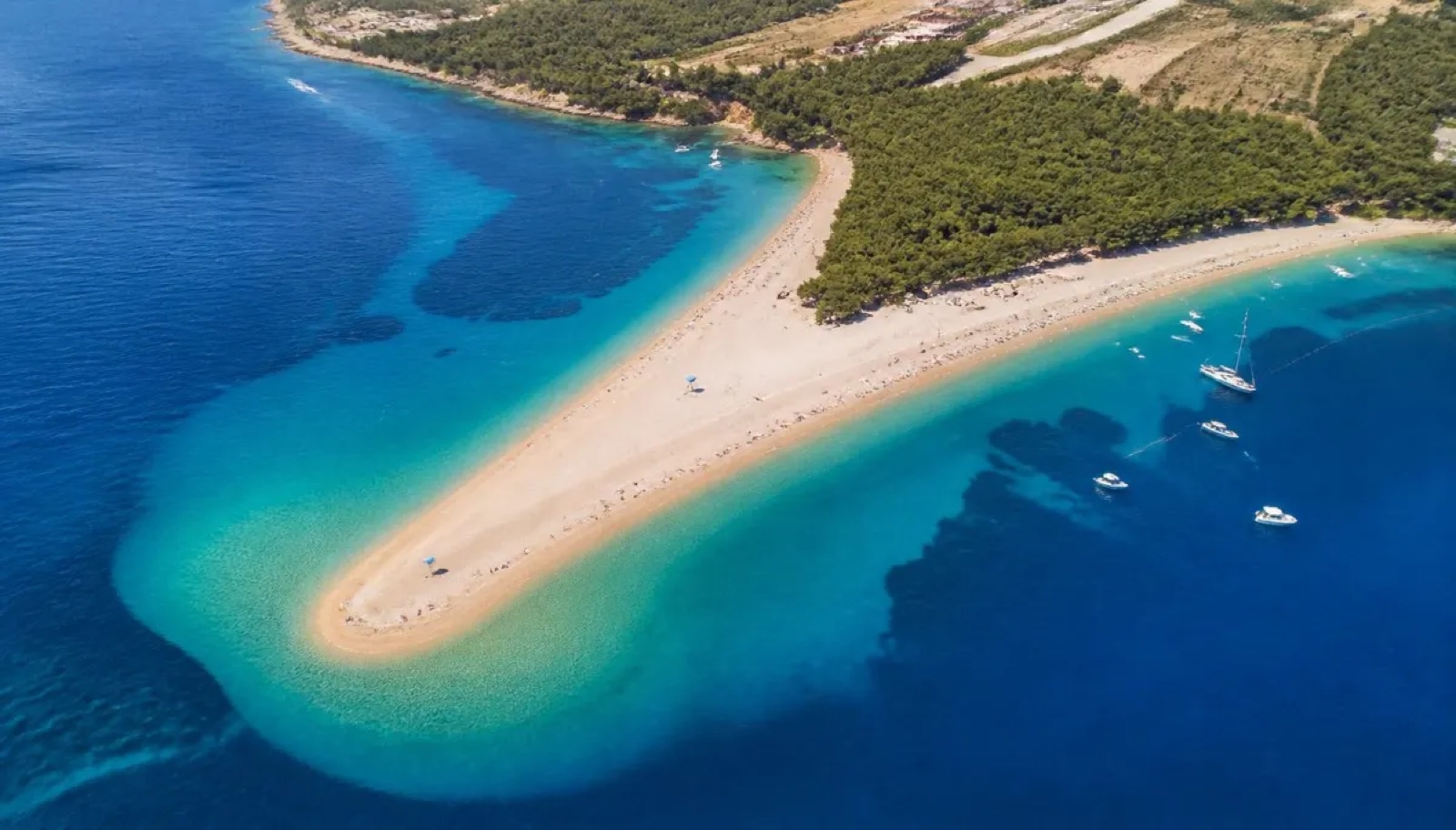
Beaches: Zlatni Rat (the Golden Horn) near Bol is Croatia's most iconic beach. This V-shaped spit of polished pebbles shifts its tip depending on the ocean currents and wind direction. For quiet swimming, head to Murvica or the secluded bays around Sumartin.
How to Get There: Car ferries run hourly in summer from Split to Supetar. Catamarans connect Split directly to Bol, with seasonal links onward to Hvar and Dubrovnik.
How Long to Stay: Two to three nights allow enough time to swim at Zlatni Rat, hike or drive up Vidova Gora (the highest peak in the Adriatic islands), and explore stone-carving heritage in Pučišća.
Who It Suits: Windsurfers, active travellers, families, and road trippers wanting car-accessible scenery.
Korčula: Medieval Fortresses and Grk Wine
Character: Deeply atmospheric and steeped in maritime history, Korčula is often called "Little Dubrovnik" because of its fortified medieval old town. The interior is lush, covered in dense pine forests, olive groves, and unique pocket vineyards that produce rare local grape varieties.
Main Town: Korčula Town is a marvel of urban planning, laid out in a herring-bone pattern to channel cool sea breezes while protecting residents from harsh winter winds. It is also the reputed birthplace of the explorer Marco Polo.
Beaches: Lumbarda boasts rare sandy stretches like Vela Pržina and Bilin Žal, making it popular for young families. Along the southern coast, Pupnatska Luka offers crystal-clear waters in a deep pine bay.
How to Get There: Catamarans run daily from Split, Hvar, and Dubrovnik. Car ferries connect Domince (near Korčula Town) to Orebić on the Pelješac Peninsula across a narrow channel.
How Long to Stay: Three nights. This gives you time to watch a traditional Moreška sword dance, cycle through Lumbarda's vineyards, and explore the island's west coast around Vela Luka.
Who It Suits: Culture buffs, history lovers, wine enthusiasts, and couples looking for romantic evenings.
Vis and Biševo: Wild Beauty and the Blue Cave
Character: As the furthest inhabited island from the central Dalmatian mainland, Vis spent decades closed to foreigners while serving as a strategic military base. This long isolation protected the island from overdevelopment, preserving an authentic, retro atmosphere defined by organic produce, military heritage, and dramatic sea cliffs.
Main Town: Vis Town sits in a wide bay where the ferry docks, while the fishing village of Komiža on the opposite side of the island offers stone lanes nestled against mountain backdrop.
Beaches: Stiniva Cove is world-famous, hidden behind a high, narrow cliff gap that opens into a dramatic pebble amphitheatre. Srebrena and Stončica beaches offer gentler waters and natural shade.
How to Get There: Direct car ferries and catamarans depart daily from Split. Komiža is the jumping-off point for small boat excursions to the famous Blue Cave (Modra Špilja) on nearby Biševo island.
How Long to Stay: Three to four nights. Vis moves at a slower pace; rushing through it defeats its charm.
Who It Suits: Independent travellers, divers, foodies, history enthusiasts, and those seeking an off-the-beaten-path feel.
Untamed Nature and Southern Solitude: Mljet, Lastovo and the Elaphitis
For travellers seeking lush forests, pristine national parks, and quieter waters away from big tour groups, the southern Dalmatian islands near Dubrovnik offer peaceful refuges.
Mljet National Park: Salt Lakes and Pine Forests
Character: Mljet is Croatia's greenest island, covered in thick Aleppo pine forests and Mediterranean macchia. The western third of the island is designated as a National Park, famous for two interconnected, saltwater lakes (Veliko and Malo Jezero).
Main Town: Pomena and Polače serve as the main gateway villages inside the national park, filled with waterfront seafood taverns and cycle rental shops.
Beaches: Swimming inside the warm saltwater lakes is a highlight, especially near the narrow channel connecting them. On the eastern tip of the island, Saplunara offers calm, sandy bays surrounded by pine groves.
How to Get There: Passenger catamarans link Dubrovnik directly to Pomena and Sobra year-round, with increased summer services connecting from Korčula and Split. A car ferry operates from Prapratno on the Pelješac Peninsula to Sobra.
How Long to Stay: Two to three nights to properly cycle around the lakes, visit the 12th-century Benedictine Monastery on St Mary Islet, and explore Odysseus Cave.
Who It Suits: Nature lovers, hikers, cyclists, couples, and eco-tourists.
Lastovo Archipelago: Dark Skies and Hidden Coves
Character: Remote, quiet, and rugged, Lastovo sits isolated in the open sea. Designated as a Nature Park, the island is famous for its dark night skies (perfect for stargazing), unique chimney designs (fumari) on traditional stone houses, and deep maritime traditions.
Main Town: Lastovo Town is built inland on a natural amphitheatre facing away from the sea, a layout designed centuries ago to hide the town from pirates.
Beaches: Skrivena Luka (Hidden Harbour) offers sheltered swimming under one of Croatia's oldest lighthouses. Mali Žal and Zaklopatica feature transparent, deep waters framed by rocks.
How to Get There: Reaching Lastovo takes commitment. A daily car ferry and catamaran run from Split via Hvar and Korčula, taking around four to five hours.
How Long to Stay: Three nights minimum to justify the journey and immerse yourself in the slow island pace.
Who It Suits: Stargazers, adventurous travellers, seekers of solitude, and sailors.
The Elaphiti Islands: Car-Free Serenity Near Dubrovnik
Character: The Elaphiti archipelago comprises thirteen islands just north of Dubrovnik, though only three are inhabited: Koločep, Lopud, and Šipan. Koločep and Lopud are completely car-free, offering an easy escape from the summer crowds in Dubrovnik's Old Town.
Main Town: Lopud Village lines a curve of sand and stone, shaded by palms and classical summer villas built by Dubrovnik nobility during the Renaissance.
Beaches: Sunj Beach on Lopud is a long, sandy bay with shallow waters—a rarity along Croatia's rock-dominated coast. Koločep features romantic sea caves and dramatic drop-offs.
How to Get There: Local Jadrolinija passenger ferries depart multiple times daily from Dubrovnik's Gruž port, stopping at all three islands in sequence.
How Long to Stay: Excellent as a full day trip from Dubrovnik, or stay two nights for absolute quiet after the day-trippers depart.
Who It Suits: Day-trippers, families with small children, kayakers, and peace-seekers.
Near Split & Northern Party Shores: Šolta and Pag
Šolta: Olives, Honey and Unspoilt Bays
Character: Located right across the channel from Split, Šolta is often overlooked by tourists rushing toward Hvar or Brač. It remains a tranquil island dominated by olive orchards, honey production (from wild rosemary), and quiet fishing harbour fronts.
Main Town: Maslinica is a charming village on the western coast, featuring a restored castle, high-end marina, and sunset views over an offshore cluster of islets.
Beaches: Nečujam features the island's largest bay with gravel shores, while Uvala Tatinja and Stračinska offer wild, rocky inlets with jade-coloured waters.
How to Get There: Regular car ferries and catamarans cross daily from Split to Rogač port (a quick forty-five-minute journey).
How Long to Stay: One to two nights, or a relaxing day trip from Split.
Who It Suits: Travellers looking to avoid big crowds, foodies interested in olive oil tasting, and short-stay visitors.
Pag: Moonlike Landscapes, Salt and Electronic Beats
Character: Pag looks like nowhere else in Croatia. Scorched by the harsh winter bura wind blowing off the Velebit mountains, much of the island is stark, treeless, and pale stone. It is famous for sharp Pag cheese (Paški sir), traditional lace-making, and world-renowned open-air nightlife.
Main Town: Pag Town features elegant grid-pattern streets designed by Renaissance architect Juraj Dalmatinac. Novalja in the north serves as the hub for nightlife.
Beaches: Zrće Beach near Novalja is Croatia's party capital, lined with massive beach clubs hosting international electronic music festivals all summer. For stark natural beauty, visit Ručica Beach near Metajna.
How to Get There: Pag is connected to the mainland via a bridge in the south, making it easy to drive from Zadar. Car ferries also run from Prizna on the mainland to Žigljen.
How Long to Stay: Two nights for festival-goers or travellers taking a scenic road trip down the Adriatic coast.
Who It Suits: Festival fans, clubbers, photographers, lovers of unique landscapes, and foodies.
The Kvarner Gulf & Northern Gems: Rab, Lošinj, Cres and Krk
Heading north into the Kvarner Gulf, the atmosphere shifts. Here, Austro-Hungarian grandeur blends with rugged island wilderness, health tourism, and historic pine forests.
Rab: Sandy Beaches and Bell Towers
Character: Rab is an island of striking contrasts: a barren, windswept eastern coast facing the mainland, and a lush, pine-covered western side dotted with golden sand beaches and calm coves.
Main Town: Rab Town is one of the most stunning walled settlements in the Adriatic, instantly recognisable by its skyline of four Romanesque bell towers rising above stone rooftops.
Beaches: Lopar Peninsula in the north offers more than a dozen sandy bays, including Rajska Plaža (Paradise Beach), where you can wade out hundreds of metres in shallow warm water.
How to Get There: Car ferries connect Stinica on the mainland to Mišnjak on Rab. Seasonal catamarans operate from Rijeka, Zadar, and Krk.
How Long to Stay: Two to three nights.
Who It Suits: Families with toddlers, architecture enthusiasts, and campers.
Lošinj and Cres: Dolphins, Healing Air and Ancient Trails
Character: Geographically linked by a tiny swing bridge at Osor, Cres and Lošinj act as twin islands with distinct personalities. Cres is wild, steep, and home to rare griffon vultures. Lošinj was developed by 19th-century Habsburg aristocracy as a health retreat, planted with aromatic pine forests and exotic gardens.
Main Town: Mali Lošinj is a colorful, horseshoe-shaped harbour town, while Cres Town retains strong Venetian fishing traditions.
Beaches: Sunčana Uvala (Sunny Bay) on Lošinj features emerald turquoise water framed by scented pine trees. On Cres, Lubenice beach sits at the foot of a 378-metre cliff top village, offering pristine, isolated pebbles.
How to Get There: Car ferries connect Cres to the Istrian peninsula (Porozina-Brestova) and Krk island (Merag-Valbiska). Catamarans run from Rijeka.
How Long to Stay: Four nights across both islands to explore the hiking networks, visit the Apoxyomenos museum, and join a marine conservation boat trip to spot resident bottlenose dolphins.
Who It Suits: Hikers, nature lovers, wellness seekers, and road-tripping families.
Krk: The Accessible Island
Character: Known historically as the "Golden Island," Krk is Croatia's most populous and accessible island. It offers a diverse mix of ancient Roman heritage, cliffside winemaking villages, and bustling holiday resorts.
Main Town: Krk Town features historic castle walls and narrow stone alleys, while Vrbnik perches dramatically on an eastern cliff top, producing the celebrated dry white wine, Žlahtina.
Beaches: Vela Plaža in Baška is a dramatic two-kilometre pebble crescent tucked into a high mountain valley. Vela Luka requires a hike or boat ride but offers quiet crystal waters.
How to Get There: Krk is connected directly to the mainland by a massive toll-free bridge near Rijeka Airport, making travel simple by car or public bus.
How Long to Stay: Two to three nights on a self-drive northern Croatia itinerary.
Who It Suits: Road trippers, wine enthusiasts, and travellers wanting easy logistics without relying on ferry timetables.
The Zadar Archipelago: Kornati, Dugi Otok and Silba
stretching off the coast of Zadar lies a maze of low-lying islands, steep cliffs, and quiet archipelagos that feel far removed from the mainstream tourist trial.
Kornati National Park: Labyrinth of Stone
Character: The Kornati archipelago is a stark, uninhabited seascape of 89 islands, islets, and reefs. George Bernard Shaw famously wrote: "On the last day of Creation God desired to crown His work, and thus created the Kornati Islands out of tears, stars and breath."
Main Town: There are no towns or permanent settlements—only temporary stone shepherd shelters and seasonal seafront taverns serving visiting sailors.
Beaches: Swimming takes place off the boat in deep, clear channels or inside protected coves like Lojena on Levrnaka island, which features white pebbles and a sandy seabed.
How to Get There: Accessible via organised full-day boat excursions from Zadar, Murter, or Biograd na Moru, or by private charter boat.
How Long to Stay: Typically visited as a full day-trip boat excursion, or multi-day sailing charters.
Who It Suits: Sailors, divers, day-trippers, and admirers of wild maritime geology.
Dugi Otok: Sakarun Beach and Dramatic Cliffs
Character: Translating to "Long Island," Dugi Otok measures roughly 45 kilometres long and just a few kilometres wide. It offers dramatic contrasts: dramatic drop-off cliffs and saltwater lakes in Telascica Nature Park to the south, and idyllic white sand beaches to the north.
Main Town: Sali is the largest fishing village, featuring a lively harbourfront, colorful painted doors, and local cafes.
Beaches: Sakarun Beach is the main highlight—a broad, Caribbean-style bay with pale sand and shallow turquoise waters framed by pine trees.
How to Get There: Car ferries and catamarans depart daily from Zadar port to Brbinj or Sali.
How Long to Stay: Two to three nights to properly explore both ends of the island by car or scooter.
Who It Suits: Outdoor adventurers, beach enthusiasts, lovers of open space, and road trippers.
Silba: The Island of Pedestrians
Character: Silba is a small, quiet island where cars and even bicycles are strictly banned during peak summer months. Life revolves entirely around walking, swimming, and quiet reading under mulberry trees.
Main Town: Silba Village sits at the narrowest waist of the island, home to the iconic Tower of Love (Toreta), built by an old sea captain so his lover could watch for his ship's return.
Beaches: Šotorišće is a clear, sandy-bottomed bay near the village. Walking trails lead through forested paths to secluded rocky swimming spots around the perimeter.
How to Get There: Catamarans run daily from Zadar and seasonally from Mali Lošinj.
How Long to Stay: Two nights to completely disconnect and slow down.
Who It Suits: Writers, readers, slow travellers, and families looking for safe, car-free surroundings.
Croatian Island Comparison Matrix
| Island | Primary Vibe | Standout Highlight | Ferry Hub | Ideal Stay | Best For |
|---|---|---|---|---|---|
| Hvar | Glamourous & Vibrant | Hvar Old Town & Pakleni Islets | Split | 3–4 Nights | Nightlife, Luxury, Wine |
| Brač | Active & Picturesque | Zlatni Rat Beach & Vidova Gora | Split | 2–3 Nights | Windsurfing, Families |
| Korčula | Historic & Cultural | Medieval Fortified Old Town | Split / Dubrovnik | 3 Nights | History, Couples, Local Wine |
| Vis | Unspoilt & Retro | Stiniva Cove & Blue Cave | Split | 3–4 Nights | Divers, Foodies, Explorers |
| Mljet | Lush & Peaceful | Salt Lakes & National Park | Dubrovnik | 2–3 Nights | Nature, Hiking, Kayaking |
| Pag | Stark & Energetic | Zrće Beach & Moonlike Terrain | Zadar / Mainland Bridge | 2 Nights | Music Festivals, Foodies |
| Rab | Charming & Sandy | Four Bell Towers & Lopar Sand | Rijeka / Zadar | 2–3 Nights | Sandy Beaches, Families |
| Lošinj & Cres | Aromatic & Wild | Pine Forests & Dolphin Spotting | Rijeka / Pula | 4 Nights | Hiking, Wellness, Nature |
| Dugi Otok | Dramatic & Scenic | Sakarun Beach & Telašćica Cliffs | Zadar | 2–3 Nights | Uncrowded Beaches, Scenery |
Mastering the Adriatic: Catamarans, Ferries and Hubs
Understanding how island transport works is the key to an enjoyable Croatian holiday. Marine transit is dominated by two main vessel types, each serving different travel styles.
Catamaran (High-Speed Passenger Foot Ferry)
These sleek twin-hulled vessels travel fast, linking major tourist hubs (Split, Hvar Town, Korčula Town, Dubrovnik) directly from old town ports. They carry foot passengers only—no cars, motorbikes, or heavy cargo. Tickets must be booked in advance during peak summer months as passenger capacity is strictly enforced. luggage is stored on entrance racks on board.
Car Ferry (Trajekt)
Larger, slower roll-on/roll-off ferries operated primarily by the national ferry carrier, Jadrolinija. These connect mainland ports like Split, Zadar, and Ploče to primary island ports (e.g., Supetar on Brač, Stari Grad on Hvar, Domince on Korčula). Passengers can travel with or without vehicles. During July and August, vehicle spots are first-come, first-served at the pier; lining up at least ninety minutes before departure is essential.
Key Departure Hubs
- Split Port: The busy heart of island travel. Operates high-frequency connections to Brač, Hvar, Šolta, Vis, and Korčula.
- Dubrovnik Port (Gruž): Gateway to the southern islands, including the Elaphiti chain, Mljet, Korčula, and Lastovo.
- Zadar Port (Gaženica / Old Town): Access point for the northern Dalmatian islands including Dugi Otok, Silba, Ugljan, and the Kornati archipelago.
Planning Tip: Always double-check current official timetables through primary operators like Jadrolinija, Kapetan Luka (Krilo), or TP Line when planning your journey, as schedules shift significantly between peak summer and the shoulder seasons.
Tested Island-Hopping Routes
Option 1: The Classic Central Route (7 to 10 Days)
Ideal for first-time visitors to Croatia who want to experience iconic highlights between Split and Dubrovnik.
- Days 1–3: Split to Brač or Hvar. Dock in Hvar Town for nightlife and Pakleni island days, or base in Bol on Brač for windsurfing and Zlatni Rat beach.
- Days 4–6: Korčula. Travel by catamaran to Korčula Town. Spend your days cycling through Lumbarda's vineyards, sampling white Grk wine, and exploring the medieval alleys.
- Days 7–8: Mljet National Park. Take a morning ferry to Pomena or Sobra. Rent a bicycle to ride around the saltwater lakes and swim off quiet pine docks.
- Days 9–10: Dubrovnik. Finish your journey by catamaran into Dubrovnik's Gruž harbour, spending your final days touring the historic city walls.
Option 2: The Northern Nature Route (7 Days)
Perfect for self-drive travellers, nature lovers, and families starting near Rijeka, Pula, or Zadar.
- Days 1–2: Krk Island. Drive across the mainland bridge, explore Vrbnik's cliffside wine cellars, and stay in Krk Town.
- Days 3–5: Cres & Lošinj. Take the short car ferry from Valbiska to Merag. Drive down through Cres, cross the swing bridge to Mali Lošinj, hike pine trails, and join a dolphin-watching excursion.
- Days 6–7: Rab Island. Take a regional ferry link to Rab Town, climb the historic bell towers, and spend your final day unwinding on the sand beaches of the Lopar Peninsula.
Essential Tips for Croatian Island Travel
A few practical habits make island life much smoother:
- Pack Water Shoes: Most Croatian beaches consist of smooth, rounded pebbles or limestone ledges rather than soft sand. Sea urchins thrive in these clean waters, so a pair of sturdy rubber water shoes is essential gear.
- Embrace "Fjaka": This is the local Dalmatian philosophy of blissful mindlessness—a relaxed state where time slows down, especially during the hot mid-afternoon hours. Don't fight the midday heat; relax in the shade at a waterfront konoba.
- Mind the Shoulder-Season Reduction: Ferry schedules drop significantly outside the mid-June to mid-September window. If travelling in May or October, check sailing schedules carefully to avoid getting stuck overnight on an island.
- Book Catamaran Tickets Ahead: Unlike mainland buses, high-speed passenger catamarans sell out rapidly in July and August. Secure your tickets online a few weeks early to ensure your preferred travel days.
- Order Peka in Advance: When dining at rural island taverns, try peka—a traditional dish of octopus, veal, or lamb slow-roasted under a heavy iron bell covered in hot embers. It requires two to three hours of preparation time, so order it at your restaurant early in the day.
Final Thoughts: Finding Your Adriatic Paradise
The beauty of Croatia's coastline lies in its sheer variety. Within a few ocean miles, you can cross from the sophisticated harbour lounges of Hvar to the peaceful salt lakes of Mljet, or from the moonlike stone landscapes of Pag to the aromatic pine bays of Lošinj.
My best advice is simple: do not try to rush or visit too many islands in a single trip. Choose two or three islands that fit your travel style, settle into the relaxed local rhythm, dive into the turquoise waters, and let the magic of the Adriatic unfold around you.
Explore in Depth
If you want to go deeper on this trip, these companion guides pick up where this one leaves off.
More Croatia guides
Croatia Travel Guide: From Dubrovnik to Istria
When to go, Dubrovnik, Split, Hvar and Istria, Plitvice and Krka national parks, Zagreb, getting around, beaches, food and what a Croatia…
Dubrovnik Travel Guide: Old Town Walls and Day Trips
Walking the city walls at the right hour, staying outside the Old Town, cruise-ship crowd timing and the best day trips along the southern…
The Best Beaches in Croatia Along the Adriatic
Croatia's beaches region by region, from Dubrovnik and Split to Hvar, Zadar, Pag and Istria, with practical tips and what a beach holiday…