Best Islands in Greece: Cyclades, Crete or Ionian?
Choosing among the Greek islands can feel daunting. From the Cyclades to the Ionian, this guide breaks down archipelagos, ferries, and travel styles.
In this guide
- Table of Contents
- Understanding Greek Island Geography and Ferries
- The Cyclades: Iconic Blue Domes and Dramatic Landscapes
- Crete: A World of Its Own
- The Ionian Islands: Lush Greenery and Venetian Charm
- The Dodecanese: Medieval History and Eastern Influences
- The Saronic and Sporades: Quick Escapes and Pine-Clad Coasts
- The North Aegean: Unbroken Tradition and Quiet Beauty
- How to Choose: Matching Islands to Your Travel Style
- Planning Your Itinerary: Island-Hopping Logistics and Timing
This guide is part of our Greece Travel Guide — start there for the overview, when to go and how to get around.
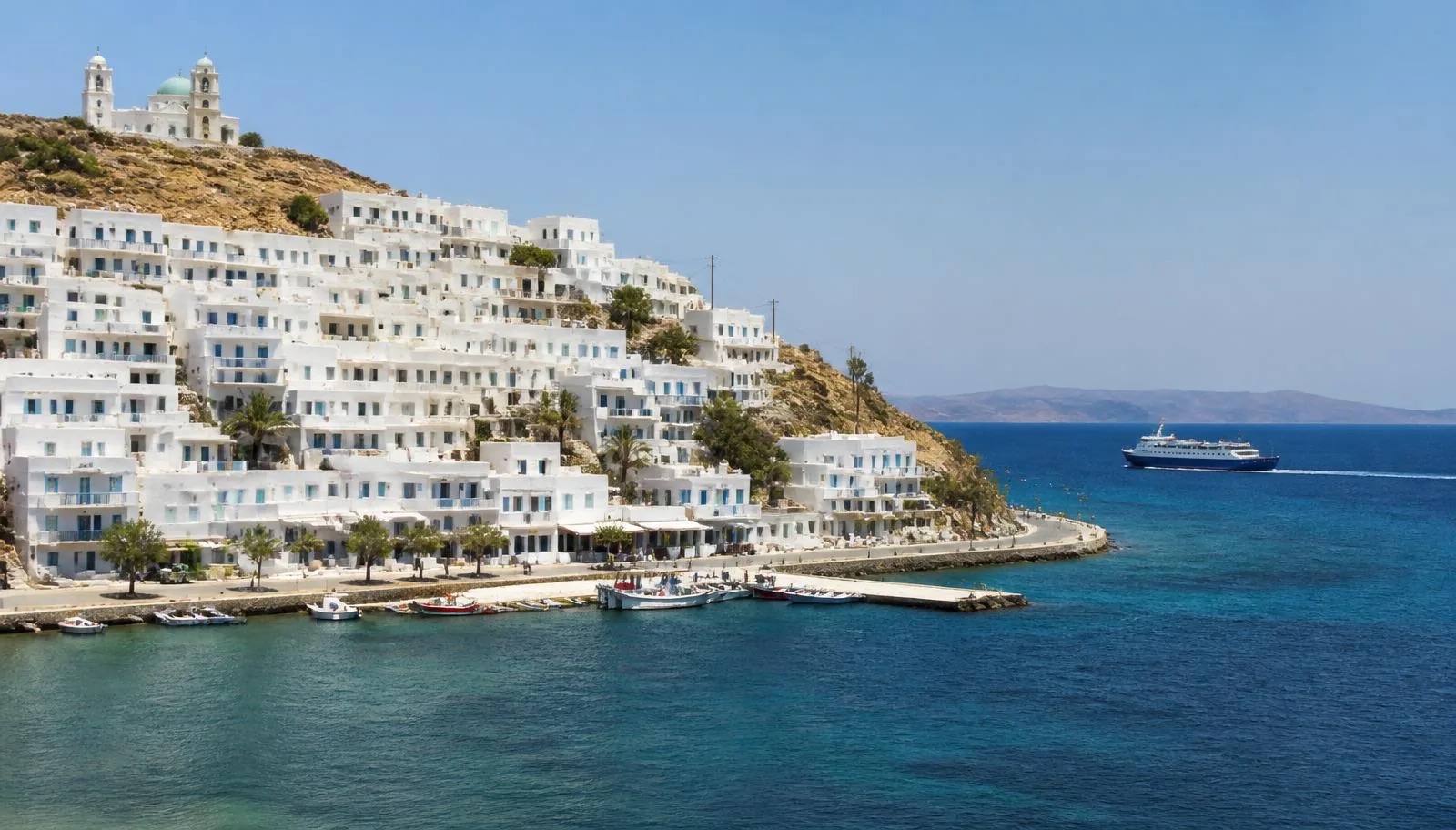
There is a specific sound to a Greek ferry ramp striking a stone quay at six in the morning—a metallic shudder that vibrates through the soles of your boots just as the smell of heavy diesel exhaust blends with wild oregano and damp sea air. I stood on the open stern deck of an inter-island car ferry, watching the cliffside village of Oia melt into a hazy morning twilight, camera body cold against my chest, and realised that trying to see "Greece" as a single homogenous destination is the quickest way to ruin a holiday.
With over two hundred inhabited islands scattered across the Aegean and Ionian Seas, Greece is not one destination but a vast, blue-water continent divided into distinct archipelagos. Each island chain possesses its own architectural DNA, wind patterns, culinary heritage, and ferry logistics. Choosing where to drop anchor depends entirely on whether you dream of dramatic volcanic calderas, dense pine forests tumbling into turquoise coves, or quiet harbour tavernas where local fishermen still repair their nets by hand.
This comprehensive guide breaks down the major Greek island groups, explaining how ferry networks operate, how the seasonal Meltemi wind influences travel, and how to select the ideal island combination for your specific travel style.
- Total Inhabited Greek Islands: Approximately 227 islands
- Major Archipelagos: Cyclades, Ionian, Dodecanese, Saronic, Sporades, North Aegean, and Crete
- Primary Ferry Hubs: Piraeus, Rafina, and Lavrio (Athens region)
- Peak Summer Wind: The Meltemi (northerly Aegean wind blowing strongest in July and August)
- Ideal Trip Pace: 2 to 3 islands per two-week itinerary
- Best Overall Weather Window: May to June and September to October
Table of Contents
- Understanding Greek Island Geography and Ferries
- The Cyclades: Iconic Blue Domes and Dramatic Landscapes
- Crete: A World of Its Own
- The Ionian Islands: Lush Greenery and Venetian Charm
- The Dodecanese: Medieval History and Eastern Influences
- The Saronic and Sporades: Quick Escapes and Pine-Clad Coasts
- The North Aegean: Unbroken Tradition and Quiet Beauty
- How to Choose: Matching Islands to Your Travel Style
- Planning Your Itinerary: Island-Hopping Logistics and Timing
Understanding Greek Island Geography and Ferries
The cardinal rule of island hopping in Greece is that islands are connected within their respective geographic groups, not across them. Moving between islands within the Cyclades or within the Dodecanese is straightforward, with daily ferry connections running throughout the high season. Crossing from an Ionian island like Corfu across to a Cycladic island like Santorini, however, requires either an overland journey across the mainland or a flight connection through Athens.
Ferries fall broadly into two categories: conventional passenger/car ferries and high-speed catamarans. Conventional ferries are large, stable vessels with open decks, ideal for watching the coastline drift past and photographing harbour arrivals. They move at a relaxed pace and handle rough seas exceptionally well. High-speed catamarans halve the travel time between ports, but passenger accommodation is fully enclosed, and routes can be subject to delays or cancellations when summer winds build up.
That summer wind is known as the Meltemi. A dry, northerly wind that blows across the Aegean Sea—primarily affecting the Cyclades, Sporades, and Dodecanese—the Meltemi usually gathers strength in late June, peaks in July and August, and dies down in September. While it offers welcome relief from intense summer heat, it can whip up choppy seas, disrupt light catamaran schedules, and make open-water swimming on northern beaches challenging. If you are particularly prone to motion sickness, booking larger conventional ferries during peak summer months is a wise operational choice.
The Cyclades: Iconic Blue Domes and Dramatic Landscapes
Forming a circular ring around the sacred island of Delos, the Cyclades represent the classic postcard image of Greece: brilliant white sugar-cube architecture, bright blue doors, terraced hillsides, and sun-bleached granite rocks rising starkly out of a deep blue sea.
Santorini and Mykonos: The High-Octane Icons
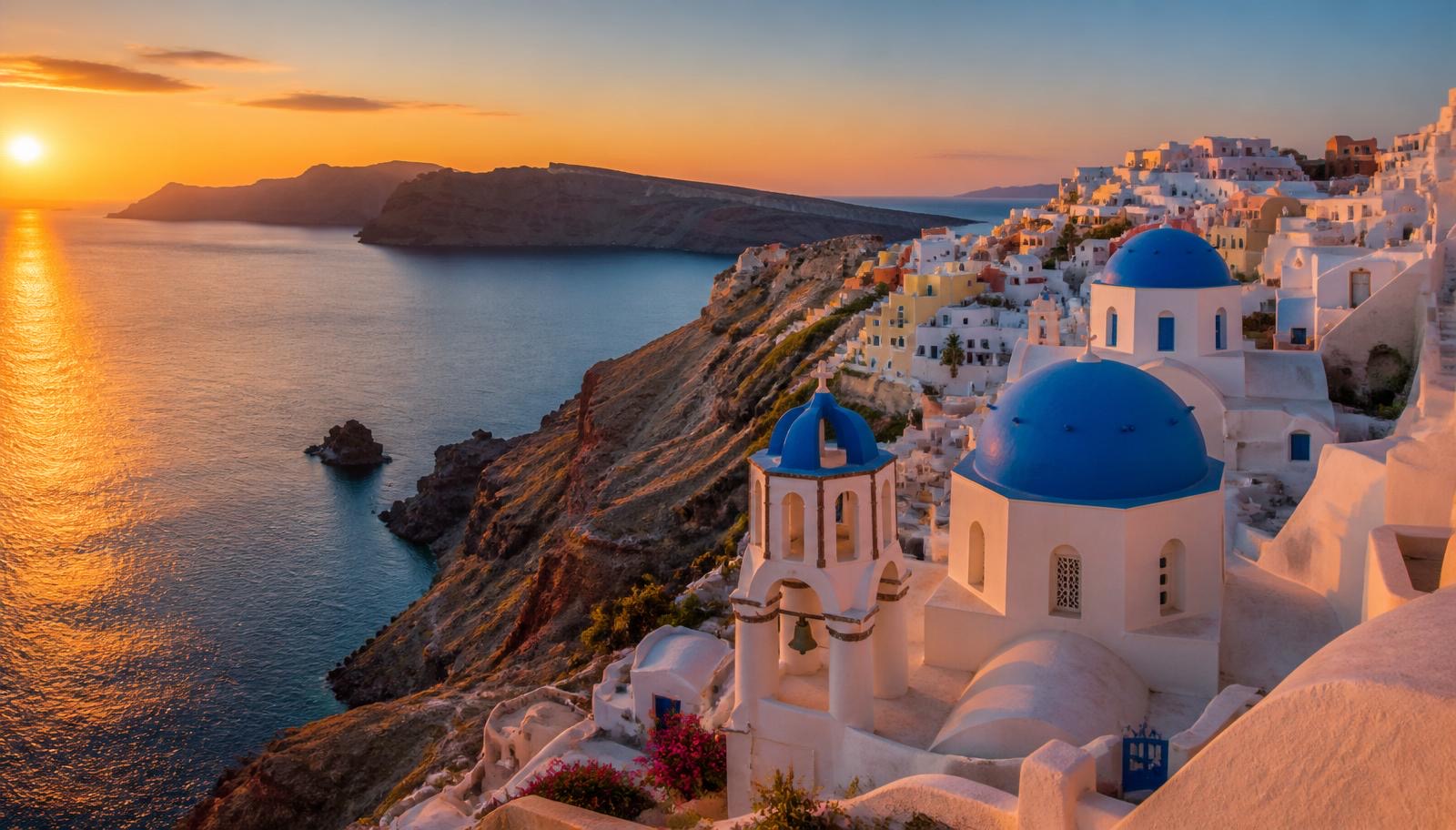
Santorini is unmatched for landscape photography. The view from the caldera rim, looking down into a drowned volcanic crater fringed by towering sea cliffs and capped by white villages, remains one of the world’s great geological sights. The trade-off is crowd density; narrow alleyways in Fira and Oia fill rapidly during cruise ship arrival windows. Mykonos offers immaculate Cycladic architecture, sleek beach culture, and world-class nightlife, set against a backdrop of historic windmills and wind-sculpted granite coves.
Naxos and Paros: Balanced All-Rounders
Naxos is the largest and most fertile island in the Cyclades. Because it relies heavily on agriculture—producing its own potatoes, cheeses, and citrus liquor—it maintains an authentic local economy that operates independently of tourism. Long stretches of yellow sand line the western coast, while mountainous interior villages like Apiranthos offer quiet cobblestone walking. Paros strikes an effortless middle ground between cosmopolitan chic and traditional charm. Its main ports, Parikia and Naoussa, feature white-washed alleys lined with bougainvillea, while the island's interior offers historic marble quarries and quiet walking paths.
Milos and Folegandros: Geological Wonders and Cliffside Peace
Milos is an photographer's dream due to its complex volcanic heritage. Sarakiniko Beach, with its smooth, moon-like white chalk formations dropping into neon-turquoise waters, is unlike anywhere else in the Mediterranean. Sea caves and colourful fishing villages with boat garages carved into the rock line the coast. A short ferry ride away, Folegandros presents a starker, quieter beauty. Its main village, Chora, perches precariously on the edge of a sheer cliff dropping hundreds of metres straight into the sea, offering dramatic sunset panoramas far removed from peak summer crowds.
Amorgos, Sifnos, and Ios: Trails, Taste, and Diversity
Amorgos is wild, steep, and dramatic, famous for the white-washed Monastery of Panagia Hozoviotissa, which appears glued to a vertical cliff face high above the Aegean. It is a premier hiking destination with deep-water anchorages. Sifnos is widely regarded as the culinary heart of the Cyclades, renowned for its traditional clay-pot cooking, wood-fired bakeries, and long history of fine pottery. Ios offers a dual personality: vibrant nightlife centred around its main village during peak summer, and tranquil, uncrowded beaches along its eastern coast year-round.
Crete: A World of Its Own
Crete is so expansive that treating it merely as another island is a conceptual mistake. It is the fifth-largest island in the Mediterranean, supporting its own distinct regional identity, dialect, culinary traditions, and high mountain ranges that stay snow-capped well into spring.
The island’s northern coast is defined by historical harbour towns like Chania and Rethymno, where Venetian stone light-houses, Ottoman minarets, and narrow cobblestone quarters wrap around active fishing ports. Step away from the coastline, and Crete transforms into a wilderness of steep gorges, high plateaus, and ancient olive groves. The Samaria Gorge—a sixteen-kilometre trek through vertical limestone walls—is one of Europe’s premier day-hikes, ending at the remote southern coastal village of Agia Roumeli.
Southern Crete faces the Libyan Sea and offers a distinctly different pace. Places like Hora Sfakion, Loutro, and Plakias feel rugged and isolated, bounded by mountains that drop directly into deep water. Beaches along the western and south-western corners, such as Elafonisi with its pink-hued coral sands and Balos Lagoon with its shallow turquoise basin, are world-renowned, though best visited early in the morning before day-trip boats arrive.
From an itinerary standpoint, Crete requires time. You cannot "see" Crete in three days; to do justice to its archaeological sites—such as the Minoan Palace of Knossos—its mountain villages, and its expansive coastlines, allocate at least a week, ideally hiring a car to navigate the mountainous terrain.
The Ionian Islands: Lush Greenery and Venetian Charm
Located off the western coast of mainland Greece, the Ionian archipelago presents a dramatic environmental contrast to the dry, wind-swept Aegean. Subject to heavy winter rainfall and historical governance by Venice rather than the Ottoman Empire, these islands are draped in dense olive groves, cypress trees, and pine forests that extend right to the water's edge.
Corfu and Kefalonia: Venetian History and Dramatic Topography
Corfu's Old Town is a UNESCO World Heritage site characterised by multi-storey pastel mansions, narrow pedestrian alleys (known locally as kantounia), and broad esplanades built during French and British protectorates. The island's northern interior features rugged limestone peaks, while the coastline harbours calm, crystal-clear bays. Kefalonia, the largest of the Ionian group, is defined by dramatic mountain scenery and sheer chalk cliffs. Myrtos Beach, viewed from the winding coastal road high above, is a stunning crescent of white pebbles set against iridescent blue water. The island also features underground lakes like Melissani and peaceful harbour villages such as Assos and Fiskardo.
Zakynthos, Lefkada, and Ithaca: Sea Caves, Wind, and Mythology
Zakynthos is famous for Navagio (Shipwreck) Beach, where a rusted freighter rests in a cove enclosed by vertical white limestone cliffs. While the cove itself attracts heavy tour boat traffic, the island’s northern capes offer quiet sea caves and excellent diving. Lefkada is unique because it is connected to the mainland by a floating pontoon bridge, making it easily accessible by road. Its western coast features world-class beaches like Porto Katsiki, while its southern bays are international hubs for windsurfing and sailing. Legendary Ithaca, home of Homer’s Odysseus, remains wonderfully quiet, characterised by deep natural harbours, peaceful walking paths, and a slow, traditional pace of life.
The Dodecanese: Medieval History and Eastern Influences
Anchored in the south-eastern Aegean near the coast of Asia Minor, the Dodecanese islands reflect a rich tapestry of historical influences. Here, Crusader castles, Venetian fortresses, and Ottoman mosques stand side-by-side with traditional Aegean settlements.
Rhodes and Kos: Fortified History and Wide Coastlines
Rhodes is the administrative and historical anchor of the chain. Its medieval Old Town, enclosed by massive stone ramparts constructed by the Knights of Saint John, is a living, inhabited fortress city. Beyond history, Rhodes offers long sandy beaches, the ancient acropolis of Lindos perched above a whitewashed village, and interior pine forests. Kos balances extensive Hellenistic and Roman archaeological sites—including the Asklepieion ancient medical centre—with flat terrain that makes its coastal towns uniquely bicycle-friendly.
Symi, Patmos, and Karpathos: Neoclassical Vistas and Ancient Customs
Symi presents one of the most striking harbour arrivals in Greece. Rather than whitewashed cubes, the amphitheatrical hills surrounding Gialos port are lined with elegant, pastel-coloured neoclassical mansions built during the island’s shipbuilding and sponge-diving heyday. Patmos holds profound religious significance as the site where Saint John wrote the Book of Revelation; its hilltop Monastery of Saint John dominates a maze of pristine white houses in Chora. Karpathos, tucked between Rhodes and Crete, remains one of the most culturally traditional islands in the Aegean. In the northern mountain village of Olympos, women still wear traditional embroidered dresses for daily tasks, and ancient agricultural practices remain part of daily life.
The Saronic and Sporades: Quick Escapes and Pine-Clad Coasts
The Saronic Gulf Islands: Car-Free Serenity Near Athens
Lying between the coastline of Attica and the Peloponnese, the Saronic Islands are the most accessible island escape from Athens, making them ideal for short stays or early-season trips. Hydra is the crown jewel of the group: entirely car-free, all transport is conducted on foot, by donkey, or via water taxi. Its horseshoe harbour is lined with stone mansions built by 18th-century shipowners, attracting artists and writers for decades. Aegina, famous for its pistachio orchards and the remarkably preserved Temple of Aphaia, is less than an hour from Piraeus by hydrofoil. Spetses offers a grand naval heritage, pine-scented coves, and elegant horse-drawn carriages operating along cobblestone seafront promenades.
The Sporades: Emerald Islands of the Northern Aegean
Situated off the eastern coast of the mainland north of Athens, the Sporades are defined by dense pine forests that march straight down to golden sand beaches. Skiathos is the liveliest, offering over sixty sandy beaches, reliable watersports, and an energetic nightlife scene centered around Skiathos Town. Skopelos, famous as a filming location for musical films, offers a quieter interior filled with plum orchards, ancient monasteries, and dramatic coastal cliffs. Alonnisos sits within a protected marine park—home to the rare Mediterranean monk seal—and appeals strongly to sea kayakers, hikers, and travellers seeking undisturbed nature.
The North Aegean: Unbroken Tradition and Quiet Beauty
The large, sparsely populated islands of the North Aegean receive fewer international package tourists than the Cyclades or Ionian chains, preserving an authentic, slow-paced slice of Greek island life.
- Lesvos (Mytilene): Famous for producing the country’s finest ouzo, Lesvos features vast olive groves, historic hot springs, a petrified forest, and wetlands that attract birdwatchers from across the globe.
- Samos: Home to the ancient mathematician Pythagoras, Samos offers towering mountain ranges, lush green valleys, world-class sweet Muscat wine, and quiet beaches facing the Turkish coastline.
- Ikaria: Renowned worldwide as a designated "Blue Zone" where residents routinely live past one hundred years, Ikaria operates on a uniquely relaxed schedule. Village plazas come alive late at night during traditional summer feast festivals called panigiria.
- Chios: Globally famous for its production of mastic gum resin, Chios features unique "mastic villages" like Mesta and Pyrgi. The walls of Pyrgi are decorated with intricate geometric black-and-white plaster patterns called xysta, found nowhere else in Greece.
How to Choose: Matching Islands to Your Travel Style
To avoid spending your holiday transferring between ports, select an island combination that aligns directly with your primary travel interests:
First-Time Visitors and Photographers
If you want the classic Greek experience with dramatic light and dramatic geology, combine classic Cycladic destinations. Pair Santorini (for landscape vistas) with Naxos or Paros (for traditional village life and long sandy beaches) and Milos (for unique coastal rock formations).
Hikers, Adventurers, and Nature Lovers
Target islands with steep topography and extensive footpath networks. Crete offers world-class gorge walking; Amorgos features ancient mountain pathways connecting hilltop monasteries; and Kefalonia or Samos offer dense forests and sweeping coastal trails.
Food Enthusiasts and Culinary Travellers
Head to Sifnos for refined earthenware cooking and slow-baked chickpeas, Crete for wild mountain greens, artisanal goat cheeses, and farm-fresh olive oil, or Lesvos for fresh sardines and regional ouzo distilleries.
Couples and Tranquility Seekers
Seek out quieter, car-free or slow-paced sanctuaries. Hydra offers romantic harbour promenades without engine noise; Folegandros delivers peaceful sunsets from high village squares; and Ithaca provides calm, clear coves surrounded by emerald hills.
Planning Your Itinerary: Island-Hopping Logistics and Timing
How Many Islands per Trip?
The most common mistake travellers make is packing too many ferry hops into a single itinerary. Moving between islands absorbs half a day when factoring in hotel check-outs, harbour transfers, wait times, ferry transit, and checking into new accommodation.
- 7 Days: Stick to 2 islands within the same group (e.g., Paros and Naxos) or concentrate entirely on Crete.
- 10 to 14 Days: Choose 3 islands maximum (e.g., Santorini, Naxos, and Milos).
- 21 Days: Explore 4 to 5 islands across one or two connected archipelagos.
Flights vs. Ferries
Major islands such as Crete (Chania and Heraklion), Santorini, Mykonos, Rhodes, Kos, Corfu, and Kefalonia feature international or domestic airports. Booking a open-jaw flight—flying into a regional island airport from mainland Europe or via Athens, hopping across neighbouring islands by ferry, and flying out from a different island port—saves substantial travel time compared to returning to Piraeus.
Best Time of Year to Visit
The ideal window for Greek island travel is during the shoulder seasons: May to early June and September to October. During these months, sea temperatures are comfortable, tavernas are open, ferry schedules run reliably, and accommodation rates are reasonable without the crushing mid-summer crowds or fierce Meltemi winds of July and August.
More Greece guides
Greece Itinerary: Best Islands, Athens and When to Go
How many days you need in Greece, which islands are worth it, ferry logistics and real costs — a 10-day itinerary from Athens to the…
Athens Itinerary: Acropolis, Markets, Day Trips
Two days in Athens done properly: the Acropolis without the worst crowds, the museums that matter, Plaka and Psyri, and the best day trips.
Things to Do in Greece: Ancient Sites and Islands
Athens, Delphi and the Peloponnese, island hopping in the Cyclades and Dodecanese, Meteora's monasteries, Crete's gorges and beaches, and…