Greece Itinerary: Best Islands, Athens and When to Go
How many days you need in Greece, which islands are worth it, ferry logistics and real costs — a 10-day itinerary from Athens to the Cyclades.
In this guide
- Table of Contents
- Why Greece Is Worth the Hype
- Best Time to Visit Greece
- Athens
- Santorini
- Mykonos
- Best Islands to Visit in Greece Beyond Santorini and Mykonos
- Greek Food Culture
- Ferry Logistics Between the Islands
- Is Greece Expensive to Visit? Costs and Daily Budget
- How Many Days Do You Need in Greece? A 10-Day Itinerary
- Final Practical Tips
- Explore Greece in Depth: My Detailed Guides
- Explore in Depth
Sunrise over the Aegean from a whitewashed rooftop in Naxos Town — the wind already off the sea, a small espresso pot boiling on the stove, and the first ferries slipping out of the harbour toward Paros and Amorgos — captures Greece's rare ratio of ordinary morning light to overwhelming beauty. Covering Athens, the Cyclades, the Dodecanese, Crete and the mainland north, this is the guide to read before your first flight into Eleftherios Venizelos.
Greece is much bigger and more geographically varied than most first-time visitors realise. Roughly 6,000 islands lie in Greek territorial waters — 227 of them inhabited — spread across four different sea regions that each have their own weather patterns, ferry systems and personalities. This guide is for the trip that gets past the two islands everyone posts and into the country underneath: where you eat a real octopus lunch under a fig tree, take a slow ferry through the middle Cyclades, and stand inside a 5th-century-BC theatre before the tour buses appear.
Table of Contents
- Why Greece Is Worth the Hype
- Best Time to Visit Greece
- Athens
- Santorini
- Mykonos
- Best Islands to Visit in Greece Beyond Santorini and Mykonos
- Greek Food Culture
- Ferry Logistics Between the Islands
- Is Greece Expensive to Visit? Costs and Daily Budget
- How Many Days Do You Need in Greece? A 10-Day Itinerary
- Final Practical Tips
Why Greece Is Worth the Hype
Greece sits at the meeting point of the Balkans, the eastern Mediterranean and — via history — much of Western civilisation, and it feels like all three at once. In a single week you can stand on the Acropolis where democracy was arguably invented, sleep in a cave house cut into a Santorini caldera cliff, dive the 5th-century-BC merchant wreck at Peristera off Alonissos, and eat a whole grilled fish caught that morning by the taverna owner's cousin.
What surprises most first-time visitors is how different each island group feels. The Cyclades (Santorini, Mykonos, Naxos, Paros) are the whitewashed, blue-domed ones you've seen on every travel poster. The Dodecanese (Rhodes, Kos, Symi, Patmos) are further east, closer to Turkey, with a heavier medieval Crusader and Ottoman overlay. The Ionians (Corfu, Kefalonia, Zakynthos) are lusher and greener, west of the mainland. Crete is essentially a country of its own — bigger, more agricultural, with its own dialect, cuisine and mountain culture. Plan for one Greece and you'll experience about a tenth of it.
The other thing worth saying is that Greece rewards slow travellers. Two islands in ten days done well beats five islands done badly, every time. The country's real charm is not the postcard shot from Oia at sunset — it's the two-hour lunch under a bougainvillea in a village nobody's heard of.
Best Time to Visit Greece
Greek tourism is heavily seasonal and picking the wrong month is the single most common mistake first-time visitors make.
- Peak (mid-July to late August): hot (35–40°C on many islands), packed, and expensive. Every ferry is full, every taverna needs a booking, and Santorini's caldera path physically cannot fit the crowds it gets. If you can, avoid.
- High shoulder (late May to mid-June, and September): arguably the sweet spot. The sea is warm enough to swim (22–25°C in September), the light is spectacular, prices drop noticeably from peak, and you can actually get a table on the waterfront without booking days ahead. September is arguably the best month for the Cyclades.
- Low shoulder (April to mid-May, and October): cooler (18–24°C), some smaller island tavernas and hotels not yet open in April or already closed by late October, but Athens and Crete are perfect. Great for archaeology.
- Off-season (November to March): Athens and Thessaloniki are lovely and much cheaper; most smaller islands effectively shut down, ferry schedules drop to a couple of runs a week, and many hotels close entirely. Not the trip most people are looking for.
The best window is early to mid-September: the sea is at its warmest, tourist numbers drop the day school terms restart in Europe, and light is at its most photographic. Next best is late May before the summer wave.
Athens
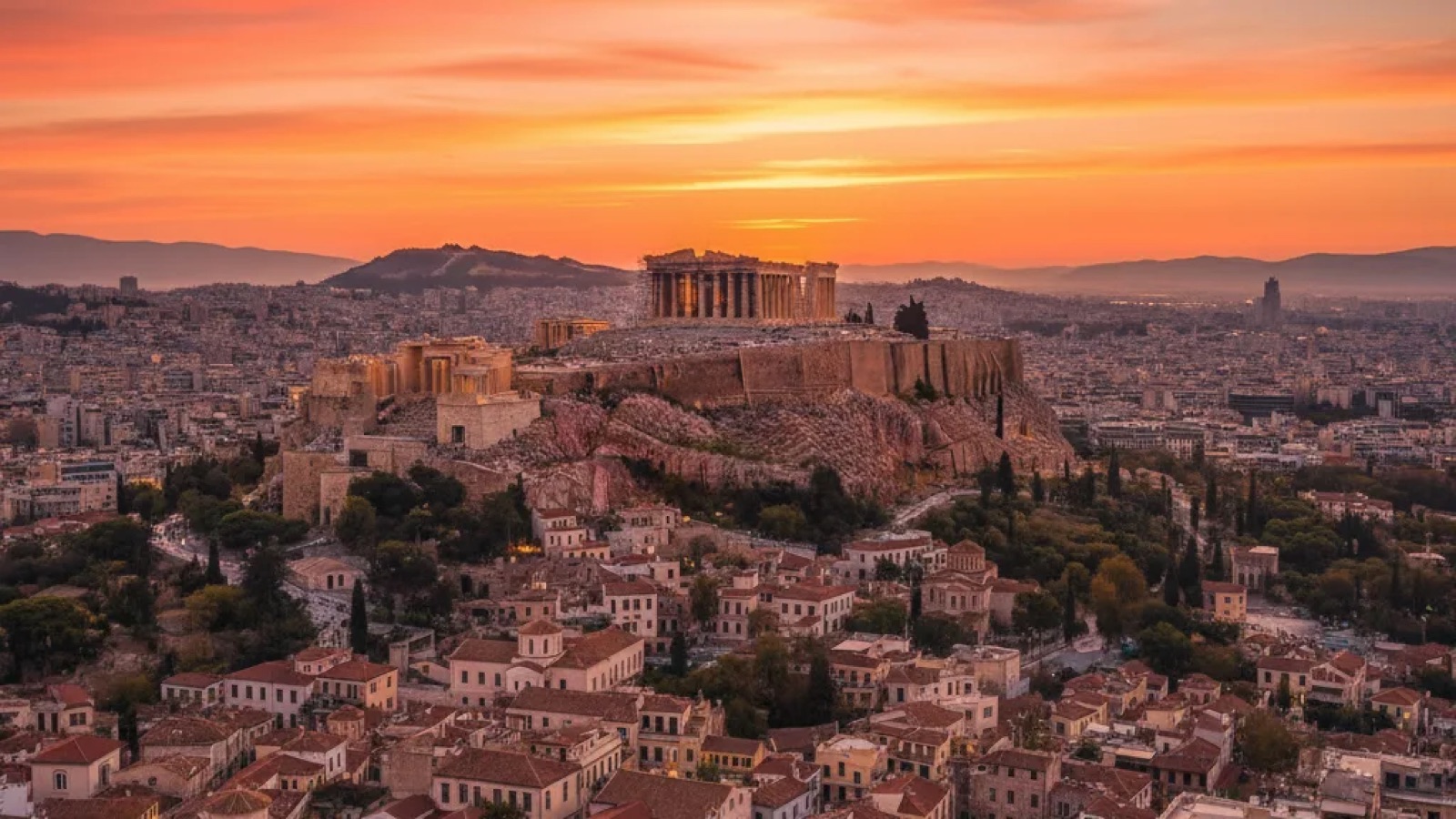
Athens is one of the great cities of the ancient world and, in the last decade, one of the more interesting cities in the modern one. Most first-time visitors give it a single day and rush to the ferry — it deserves three full nights. The neighbourhoods deserve time.
The essential areas:
- Plaka: the tangle of pedestrian streets at the base of the Acropolis. Yes, it's touristy; it's also unavoidable and genuinely lovely at 7am before the day-trippers arrive. Use it as a base for a first trip.
- Monastiraki and Psyri: north of Plaka, grittier, full of small restaurants, rooftop bars, and the flea market at Monastiraki Square. A great choice for a second trip.
- Koukaki and Makrygianni: south of the Acropolis, quiet, residential, five minutes' walk from the Acropolis Museum entrance. The nicest neighbourhood to actually stay in.
- Kolonaki: upmarket, Athenian rather than touristy. Good coffee, good galleries, better restaurants.
- Exarcheia: the traditional anarchist/student quarter. Interesting to walk through by day, worth an evening for the bars and cheap taverna scene.
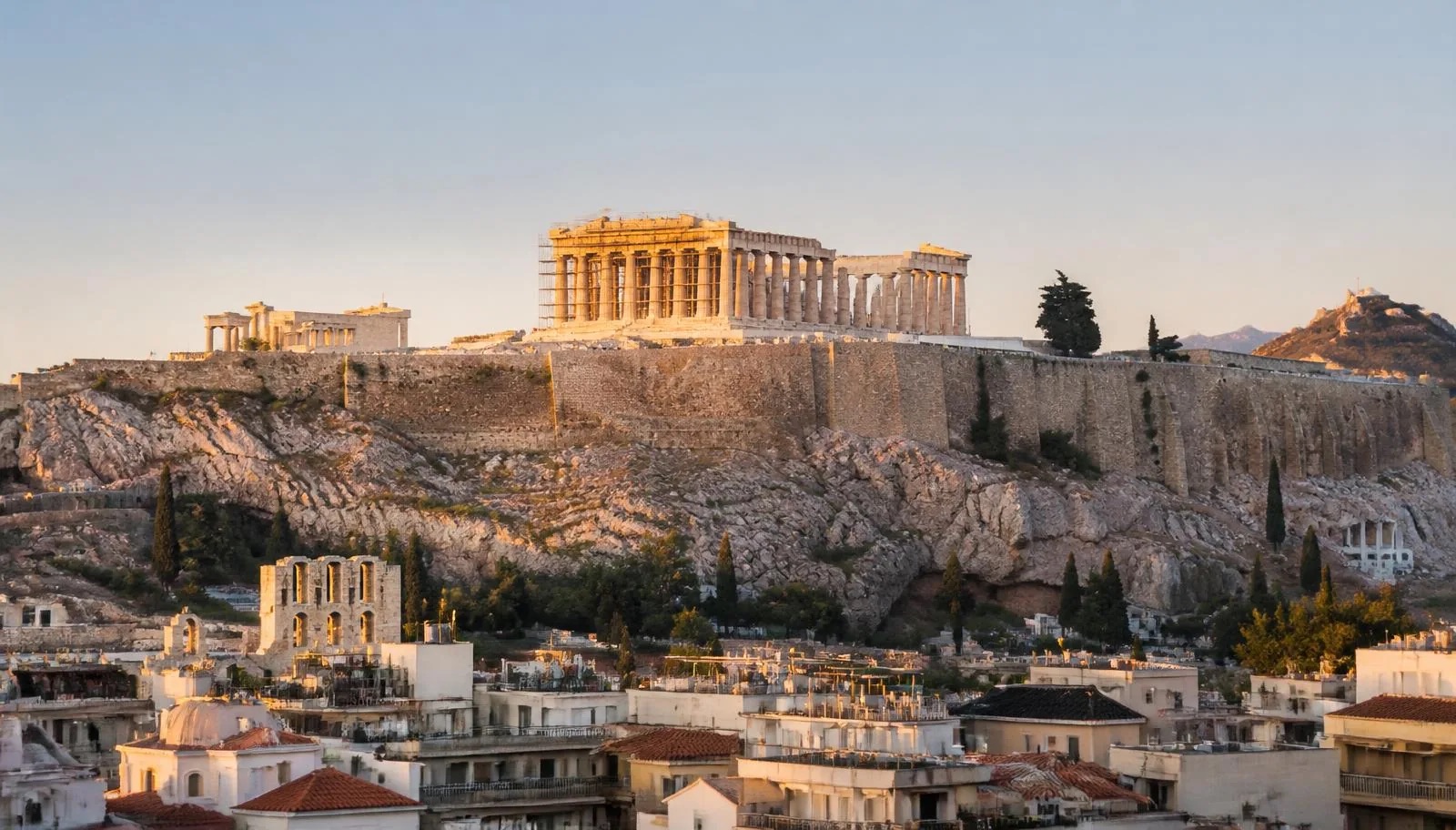
Non-negotiables: the Acropolis at 8am opening (buy the timed ticket online — 30€ in 2026; the old multi-site combined ticket was discontinued in April 2025, so the other ancient sites are ticketed separately), the Acropolis Museum just below (the top-floor Parthenon Gallery is arranged in exact proportion to the temple above), the Ancient Agora, and the National Archaeological Museum in Exarcheia, which is one of the great archaeological museums in the world. Give it half a day; the Cycladic and Mycenaean galleries alone deserve two hours.
Eat: souvlaki at Kostas on Agia Irini Square near Monastiraki (weekday lunch only, cash preferred, queue is worth it), a proper long taverna dinner in Psyri, and coffee at any old-school kafeneio in Plaka. Sunset from Filopappou Hill facing the Acropolis is free and better than any rooftop bar.
Santorini
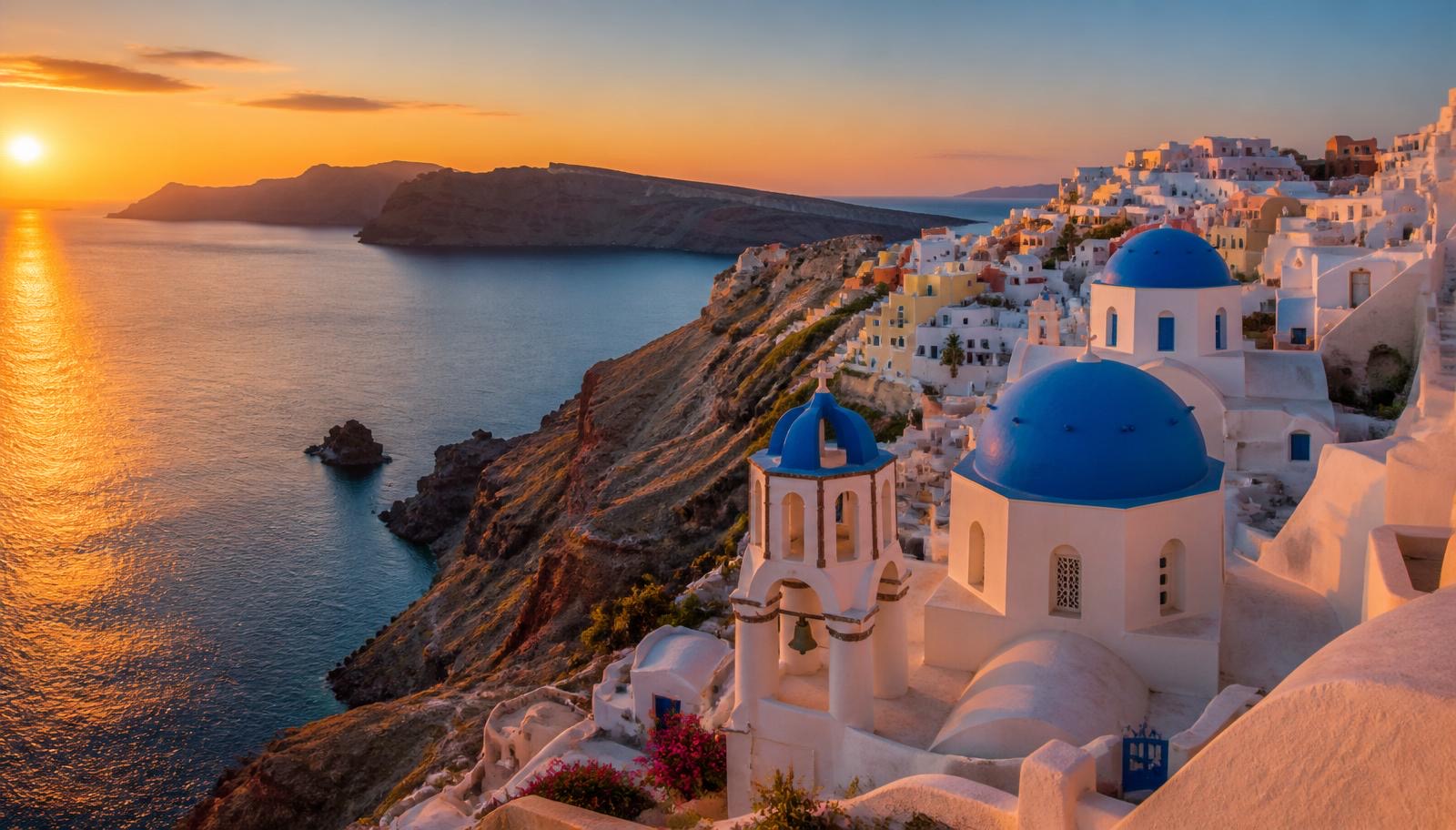
Santorini is exactly as beautiful as the photos and about three times more crowded. It's the caldera of a submerged volcano, and the whitewashed villages of Fira, Firostefani, Imerovigli and Oia cling to the western rim, 300 metres above the sea. Give it two full nights, maximum three.
The truth about Santorini is that most of what makes it iconic — the caldera view, the sunset, the blue domes — is concentrated on the western cliff. The east coast is a normal, quite nice Greek island beach with black-sand beaches (Perissa, Kamari) that are much more affordable. Base yourself on the caldera if you can afford it, on the east coast if you can't.
What actually to do:
- The Fira to Oia caldera walk (about 10 km, 3–4 hours) is the single best thing on the island. Start at 6:30am from Fira to walk it in the cool and beat the tour groups.
- Oia sunset is famous, packed, and honestly the sunset from Imerovigli or Firostefani (both on the walk) is nearly as good with a tenth of the crowd. If you must do Oia, get there 90 minutes ahead.
- Akrotiri, at the southern tip, is a Minoan-era Bronze Age city buried and preserved by a volcanic eruption around 1600 BC. It's Pompeii, essentially, but 1,700 years older. Don't skip.
- A caldera boat trip to Nea Kameni (the volcano crater) and the hot springs, ideally on a small sailboat rather than the big group boats.
- Assyrtiko wine tastings. Santorini's volcanic soil produces some of the best white wine in Greece — Domaine Sigalas, Estate Argyros and Santo Wines all do good tastings.
Where to stay: Imerovigli is the quietest and most beautiful of the caldera villages. Oia is the most photogenic and the most expensive. Firostefani is a good compromise. Fira itself is the transport hub — convenient but noisier.
Mykonos
Mykonos in 2026 is basically two islands. The traditional whitewashed Chora (Mykonos Town), with its narrow alleys, church of Panagia Paraportiani and the famous windmills, is genuinely lovely at sunrise. The Mykonos of Instagram — Nammos, Scorpios, €50-a-drink beach clubs on Psarou and Paraga — is a very particular scene that either delights you or repels you. Know which you're going for.
What's worth doing regardless of style:
- Walk Chora at 7am before the cruise ships disgorge. The whitewashed alleys and bougainvillea-covered doorways are otherwise elbow-to-elbow by midday.
- Little Venice for sunset from a waterside bar (Kastro's or Caprice), 20€ cocktail, no apologies.
- The beaches on the south coast — Paradise, Super Paradise, Elia, Agrari — are the party beaches. The quieter alternatives on the north coast (Fokos, Agios Sostis, Ftelia) are the better pick for an actual beach day.
- Delos, the uninhabited neighbouring island and UNESCO World Heritage site, is one of the most extensive ancient sites in the Aegean. The ferry from Mykonos runs mornings only; go on a Tuesday to Sunday (closed Mondays) and take water.
Mykonos is expensive by any European standard. A modest beach-club sunbed can run 100–200€, cocktails at Scorpios start around 25€, a decent taverna dinner for two easily hits 150€. Budget accordingly or head to Naxos.
Best Islands to Visit in Greece Beyond Santorini and Mykonos
The islands you don't hear about are often the most rewarding. A short guide to the ones worth building a trip around:
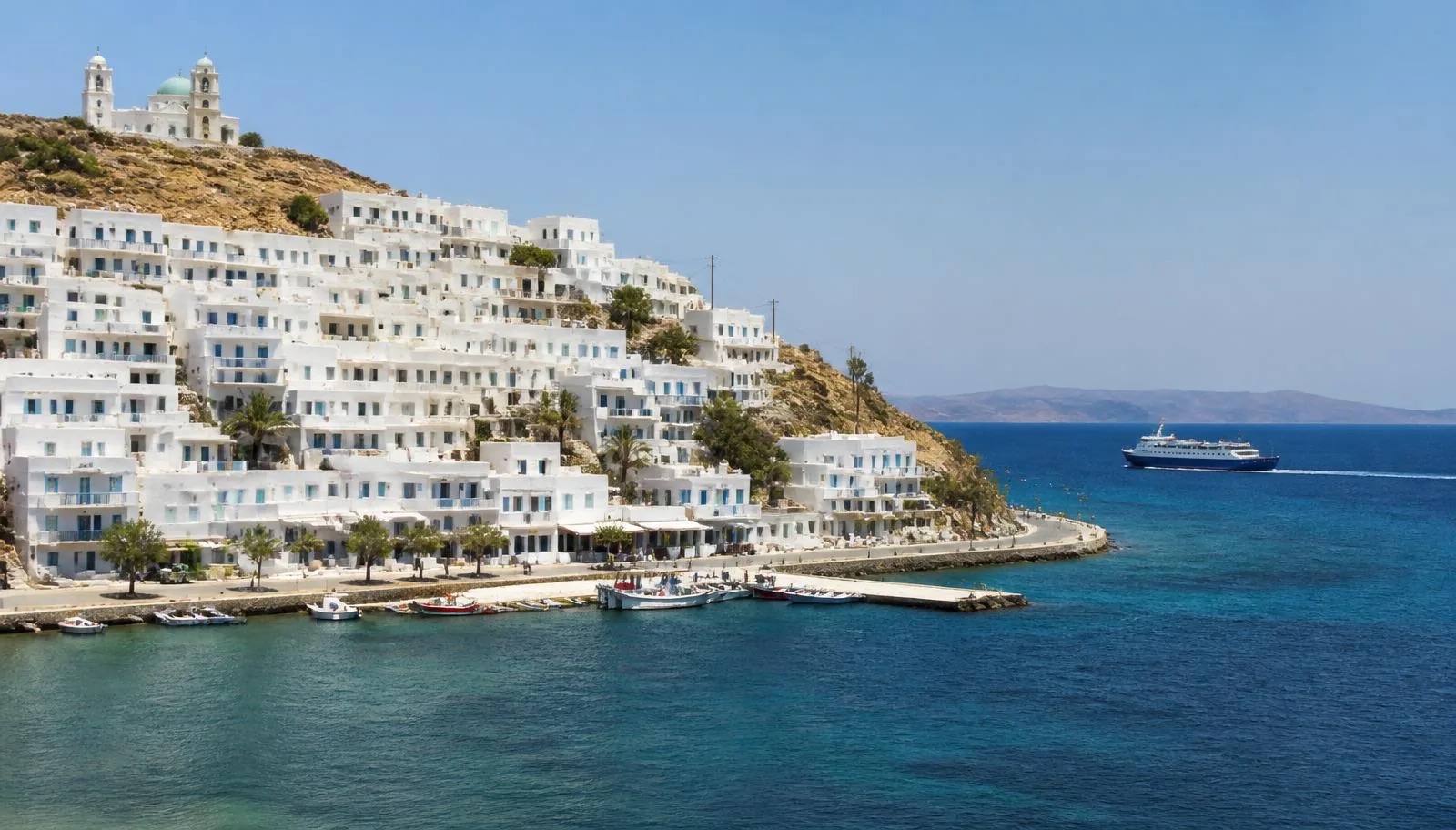
- Naxos is the biggest and most self-sufficient of the Cyclades. It has excellent long white-sand beaches (Plaka, Agia Anna, Mikri Vigla for windsurfing), a Venetian castle at the top of Naxos Town, and mountain villages in the interior (Halki, Filoti, Apiranthos) that feel like a completely different island. Arguably the best food scene of any Cycladic island. Give it three or four days.
- Milos is a volcanic-formed island with some of the most extraordinary beaches in Greece: the lunar-white cliffs of Sarakiniko, the multi-coloured pumice of Firiplaka, the pirate-cave beach at Kleftiko (boat access only). Two or three days.
- Paros and Antiparos are the "if you like Mykonos but can't afford it" alternative — beautiful whitewashed villages (Naoussa, Lefkes), good beaches, better food, half the price.
- Amorgos is the far-eastern Cyclades — the film The Big Blue was shot here. Fewer tourists, extraordinary hiking, one of the most spectacular cliffside monasteries in Greece (Panagia Hozoviotissa).
- Folegandros and Sifnos are the two quiet gems most travel writers try not to talk about. Both feel like the Cyclades of 20 years ago. Sifnos also happens to have some of the best food in the Aegean.
- Crete is a country in itself — you can spend two weeks and only cover a fraction. The Samaria Gorge hike, the Minoan palace of Knossos, the Venetian old towns of Chania and Rethymno, and the beaches of the south coast (Elafonisi, Balos, Preveli) all deserve their own trip.
- Rhodes and Symi, in the Dodecanese further east, add a fortified-medieval-Crusader-city layer that the Cyclades don't have.
Greek Food Culture
Greek food is one of the most consistently good and consistently misunderstood cuisines in Europe. A few things to know before your first bite:
- Meze culture is the point. Greek meals are ordered as a table of small shared plates — tzatziki, taramosalata, htipiti, dolmades, saganaki, grilled octopus, keftedes, gigantes plaki — with bread and wine. Order five or six for two people, add a mains if you're hungry, and settle in for two hours. Rushing this is a mistake.
- Fish is priced by the kilo at proper waterfront tavernas. The waiter will bring the fish to your table on ice; you pick which one you want, they weigh it and you agree the price before it's cooked. A whole grilled sea bream for two runs 30–60€ depending on the island. Never accept "market price" without a weight.
- The Greek salad is deceptively simple — good tomatoes, cucumber, red onion, Kalamata olives, a proper slab of feta on top, oregano, olive oil — and it is not the same dish at home. Order it and you'll understand why.
- Regional dishes: moussaka is central Greek; pastitsio (baked pasta with béchamel) is central-mainland; kleftiko (slow-cooked lamb) is best in Cyprus and the Aegean; dakos (rusks with tomato and mizithra) is Cretan; loukoumades (honey doughnuts) are everywhere and best fresh.
- Drinks: Greek wine is dramatically better than its international reputation. Assyrtiko (Santorini), Moschofilero (Peloponnese) and Xinomavro (Naoussa) are the three whites and reds worth searching out. Ouzo is the anise-based aperitif; drink it with water and ice as a slow pre-dinner. Raki (or tsipouro on the mainland) is the grape-based post-dinner spirit and is often free after a meal.
- Coffee: a proper Greek frappé (instant coffee shaken with ice) is much better than it sounds. Freddo espresso is the modern version. Filter coffee ("gallikó") barely exists outside Athens.
Eat early or eat late — never in between. Greeks lunch at 2–3:30pm and dinner from 9pm onward. The 7pm empty taverna is empty for a reason. Sit down at 9:30pm and it will be packed.
Ferry Logistics Between the Islands
The Greek ferry network is huge and looks intimidating from outside. The truth is it's fairly simple once you understand three things.
- There are two kinds of boat: big open-deck car ferries and small high-speed catamarans. The big ferries (Blue Star, ANEK, Minoan) are slower, cheaper, more stable in wind, and take cars. Fast catamarans (SeaJets, Golden Star) are twice as fast and twice the price, and get cancelled first when the meltemi wind picks up in July–August.
- Piraeus is the main port, on the metro line from Athens. Rafina, on the east coast, serves the Cyclades on faster routes but is a longer drive from central Athens. Almost every Cycladic island is reachable from Piraeus.
- Book online in advance. Ferryhopper or the official Blue Star and SeaJets sites are the most reliable options. In July and August especially, weekend departures fully sell out.
Rough sample times (from Piraeus): Santorini ~5h fast / 8h slow; Mykonos ~2.5h fast / 5h slow; Naxos ~3.5h fast / 5.5h slow; Milos ~3h fast / 7h slow. Between islands, the "middle Cyclades" cluster (Paros–Naxos–Ios–Santorini) has multiple ferries a day in summer; less-connected islands (Amorgos, Folegandros) sometimes have just one boat a day.
The meltemi wind — a strong north-westerly that blows July–August — is the single thing that can wreck a Cycladic itinerary. Fast ferries get cancelled first; big open-deck ferries usually still run. Build a buffer day before your international flight home.
Is Greece Expensive to Visit? Costs and Daily Budget
Greece has become genuinely more expensive over the last decade, especially on the marquee islands. Actual daily budgets from recent trips, in US dollars, excluding international flights:
- Backpacker (hostel dorm, gyros, ferry deck seats, shared kitchens): US$50–75 per day. Doable on Athens, Naxos, Crete, harder on Santorini or Mykonos.
- Mid-range (nice studio or 3-star hotel, taverna dinners with wine, a couple of paid activities, ferry economy class): US$120–200 per day per person. This is where most travellers land.
- Comfort (boutique hotel, ferry business seats, restaurant dinners, wine tastings, guided tours): US$280–450 per day per person.
- Luxury (caldera cave suites in Santorini, beach-club sunbeds in Mykonos, chartered boat days): the ceiling is very high — a Santorini caldera-side suite in July starts around US$1,000 a night, a Nammos day for two can burn through US$800 without effort.
Concrete price points from 2025–2026 trips: gyros pita 3.50–5€, taverna main 12–22€, glass of Assyrtiko 6–9€, decent boutique hotel double 120–250€, ferry Piraeus to Naxos 40–60€ economy, rental car 40–80€ per day, Acropolis ticket 30€, sunbed rental in the Cyclades 15–30€ per day (much higher on Mykonos).
Tipping is not obligatory but rounding up to the next euro at a taverna and leaving 5–10% for good service at a nicer restaurant is normal. Cash is still preferred at village tavernas and for taxis.
How Many Days Do You Need in Greece? A 10-Day Itinerary
Ten days is enough for Athens and two islands done properly. This is the best route for a first-time visitor, in September:
- Day 1 (arrive Athens): land, taxi to Koukaki, dinner at a quiet taverna, early night.
- Day 2 (Acropolis + Old Athens): Acropolis at 8am opening, Acropolis Museum, lunch in Plaka, walk the Ancient Agora, sunset from Filopappou Hill, dinner in Psyri.
- Day 3 (National Archaeological Museum + day trip): half day at the museum, afternoon walking Kolonaki or a day trip to Cape Sounion for the Temple of Poseidon at sunset.
- Day 4 (ferry to Naxos): Blue Star or SeaJets from Piraeus, arrive lunch, walk Naxos Town, dinner at Meze² or another Chora taverna.
- Days 5–6 (Naxos): one day on the west-coast beaches (Plaka, Mikri Vigla), one day driving the mountain villages (Halki, Filoti, Apiranthos, the Temple of Demeter, Apollonas kouros).
- Day 7 (ferry to Santorini): short two-hour hop between the islands, arrive Fira, check in, sunset from Imerovigli walking the caldera path.
- Day 8 (Santorini): Fira to Oia walk in the cool early morning, afternoon at Akrotiri (Bronze Age site), sunset from Oia.
- Day 9 (Santorini): caldera boat trip (small sailboat), afternoon Assyrtiko winery tasting, dinner in Firostefani.
- Day 10 (fly Athens, head home): direct flight Santorini to Athens (40 min) and connect internationally, or return by ferry with a buffer day in Piraeus.
Have another week? Swap out Santorini for Milos + Sifnos, or add Crete (fly Santorini–Heraklion) for the mountains, Chania, and the Samaria Gorge.
Final Practical Tips
- Visa: Greece is in the Schengen Area. Most Western passports (US, Canada, UK, Australia, NZ, all EU) get 90 days visa-free in any rolling 180-day period. EU passport-holders can stay indefinitely.
- Money: euros. ATMs everywhere on inhabited islands; some smaller village tavernas are still cash-only.
- SIM cards: Cosmote and Vodafone both sell tourist SIMs at Athens airport. eSIMs (Airalo, Holafly) also work well and are cheaper.
- Plugs: EU two-pin, 220V.
- Language: English is spoken by essentially everyone under 50 in tourist regions. Learn kaliméra (good morning), efharistó (thank you), parakaló (please), yámas (cheers) and Greeks will meet you halfway on everything else.
- Water: tap water in Athens and most mainland cities is safe to drink. On many islands it's brackish and cistern-supplied — bottled is safer.
- Sun: UV is brutal from June to September. Reef-safe sunscreen if you're going near marine parks; a wide-brimmed hat is worth its weight on a Cyclades summer day.
- Buffer day before flying home: ferry cancellations from meltemi wind are a real risk in July–August. Always come back through Athens the day before your international flight, not the same day.
Greece rewards travellers who slow down. Two islands and Athens in ten days will always beat five islands in ten days. Eat late, sit long, and trust that the country underneath the postcards is much richer than the postcards ever suggested. That's the whole point — you'll come back.
Explore Greece in Depth: My Detailed Guides
This guide is the overview. When you are ready to plan a specific part of the trip, these deep-dives go further, and each one links back here:
Things to do
Islands and beaches
Explore in Depth
More Greece guides
Best Islands in Greece: Cyclades, Crete or Ionian?
Choosing among the Greek islands can feel daunting. From the Cyclades to the Ionian, this guide breaks down archipelagos, ferries, and…
Athens Itinerary: Acropolis, Markets, Day Trips
Two days in Athens done properly: the Acropolis without the worst crowds, the museums that matter, Plaka and Psyri, and the best day trips.
Things to Do in Greece: Ancient Sites and Islands
Athens, Delphi and the Peloponnese, island hopping in the Cyclades and Dodecanese, Meteora's monasteries, Crete's gorges and beaches, and…