Cairo Travel Guide: Pyramids, Museums, Old Cairo
How to see Cairo properly: Giza pyramids without the stress, the Egyptian Museum, Islamic and Coptic Cairo, and getting around.
In this guide
- Quick Facts
- Planning Your Cairo Stay: How Many Days?
- Where to Base Yourself: Giza, Zamalek, or Downtown?
- Navigating the Chaos: Getting Around Cairo
- The Main Event: The Pyramids of Giza
- Handling Touts and Animal Welfare on the Plateau
- Egypt's Crown Jewels: The Grand Egyptian Museum & Tahrir
- Beyond Giza: Saqqara and Dahshur
- The Heart of Islamic Cairo
- The Soul of the Souq: Khan el-Khalili
- A Pocket of Peace: Coptic Cairo
- Cairo on a Plate: Essential Eats
- Practicalities: Dress, Timing, and Baksheesh
- Explore in Depth
- Frequently Asked Questions
- Final Thoughts
This guide is part of our Egypt Travel Guide: Pyramids, the Nile and Practical Tips — start there for the overview, when to go and how to get around.
Crossing a street in Downtown Cairo can feel like it will take forever. A torrent of cars, motorbikes and horse-drawn carts flows without pause, drivers leaning on horns that play a constant, chaotic symphony. Between the noise, the humanity and the dust catching the golden sunset, it’s clear that Cairo isn’t a city you simply observe; it’s a living, breathing entity you have to surrender to and experience with all your senses. It's overwhelming, it's ancient, and it's utterly magnificent.
This guide covers the essentials for making your first, or fifth, trip to Cairo a success: where to base yourself, how to navigate the city's infamous traffic, and how to stand in awe before the Pyramids of Giza without getting overwhelmed by the touts. It dives into the sprawling halls of the city's world-class museums, ancient markets, quiet Coptic churches and towering mosques, and of course, some of the most delicious street food on the planet.
Quick Facts
- Location: Northern Egypt, on the banks of the River Nile, near the Nile Delta.
- Getting There: Cairo International Airport (CAI) is the main hub. Most nationalities can get a visa on arrival, but always check the latest official government requirements for your passport before you travel.
- Getting Around: Ride-hailing apps are the easiest option for travellers. The Cairo Metro is efficient for longer distances. Taxis are common but require negotiation. Walking is only practical within specific neighbourhoods.
- Language & Currency: The official language is Arabic (Egyptian Arabic dialect). The currency is the Egyptian Pound (EGP). English is widely spoken in tourist areas.
- Best Time to Visit: October to April offers pleasant, mild-to-warm weather perfect for sightseeing. Summer (May-September) is scorching hot and best avoided if you can.
Planning Your Cairo Stay: How Many Days?
A common question is how long you need for Cairo, and the honest answer is "more than you think". Many package tours rush through in two days, which is a real shame. To do the city any justice at all, you need a minimum of three full days. This allows for one day dedicated to the Giza Plateau and the pyramids further south at Saqqara, one day for the major museums and Islamic Cairo, and a third for Coptic Cairo, the Khan el-Khalili market, and soaking in the modern city vibe.
If you can, extend this to four or five days. An extra day or two allows you to move at a more human pace, revisit a favourite spot, spend a whole afternoon just sipping mint tea in a traditional ahwa (coffeehouse), or take a felucca sail on the Nile at sunset. Cairo rewards slow travel; it gives you the space to look past the monuments and see the intricate, vibrant life of the city itself.
Where to Base Yourself: Giza, Zamalek, or Downtown?
Your choice of neighbourhood will profoundly shape your experience of Cairo. There’s no single "best" area; it all depends on what you prioritise. Here’s a breakdown of the main contenders.
Giza
The Pros: The obvious advantage is proximity to the pyramids. Waking up and seeing the Great Pyramid from your window is a truly unforgettable, pinch-me moment. You can get to the Giza Plateau entrance at opening time, beating the worst of the crowds and the heat. It’s a photographer’s dream for sunrise and sunset shots.
The Cons: Giza is quite far from Cairo's other main attractions like the museums, Islamic Cairo, and the Khan el-Khalili. The traffic between Giza and central Cairo can be horrendous, turning a simple trip into a long, frustrating journey. The immediate area around the plateau is tourist-focused and lacks the local character and dining options of other neighbourhoods.
Zamalek
The Pros: This leafy island in the middle of the Nile is an excellent base. It's an upscale, cosmopolitan district with art galleries, lovely boutiques, and some of Cairo's best restaurants and cafes. It feels calmer and greener than the rest of the city, offering a welcome respite after a long day of sightseeing. It's also relatively central, providing a good middle ground between Giza and Downtown.
The Cons: It’s one of the more expensive areas to stay in. While it’s ‘central’, you'll still need a car or ride-share for almost every journey, as it's not well-connected by the metro and is too large to be entirely walkable.
Downtown (Wust El Balad)
The Pros: If you want to be in the absolute heart of the action, this is it. Built in the 19th century, its grand, Parisian-style architecture is now beautifully faded. It’s loud, chaotic, and energetic 24/7. You’re within walking distance of the Egyptian Museum, Tahrir Square, and countless local eateries. It’s also very well-connected by the metro, making it a great base for independent exploring.
The Cons: The noise and traffic are relentless. It can feel overwhelming and grimy for first-time visitors. Accommodation can be more hit-or-miss here compared to the more polished offerings in Zamalek.
Navigating the Chaos: Getting Around Cairo
Cairo's traffic isn't just a challenge; it's a spectacle. My first piece of advice is to build buffer time into every single journey. A 5-kilometre trip can take 15 minutes or it can take an hour and a half. Patience is key.
For travellers, ride-hailing apps are the undisputed champion. They remove the need for haggling, language barriers, and worrying about being overcharged. You have a record of your trip, the price is set upfront, and it's generally safe and reliable. This has been the single biggest improvement to navigating Cairo in recent years.
The Cairo Metro is another excellent option, especially for traversing long distances like from Downtown to Coptic Cairo. It’s cheap, avoids all traffic, and is an experience in itself. Stations are marked with a red star. Do yourself a favour and note the women-only carriages, usually the middle two cars of the train. They offer a much more comfortable and less crowded experience for female travellers. Tickets are bought from a small kiosk at the station before you pass through the turnstiles.
As for traditional black-and-white taxis, only use them if you speak some Arabic and are confident with haggling. For most visitors, it’s more stress than it’s worth. Always agree on the fare *before* you get in the car. It’s almost always better to just use a ride-hailing app.
The Main Event: The Pyramids of Giza
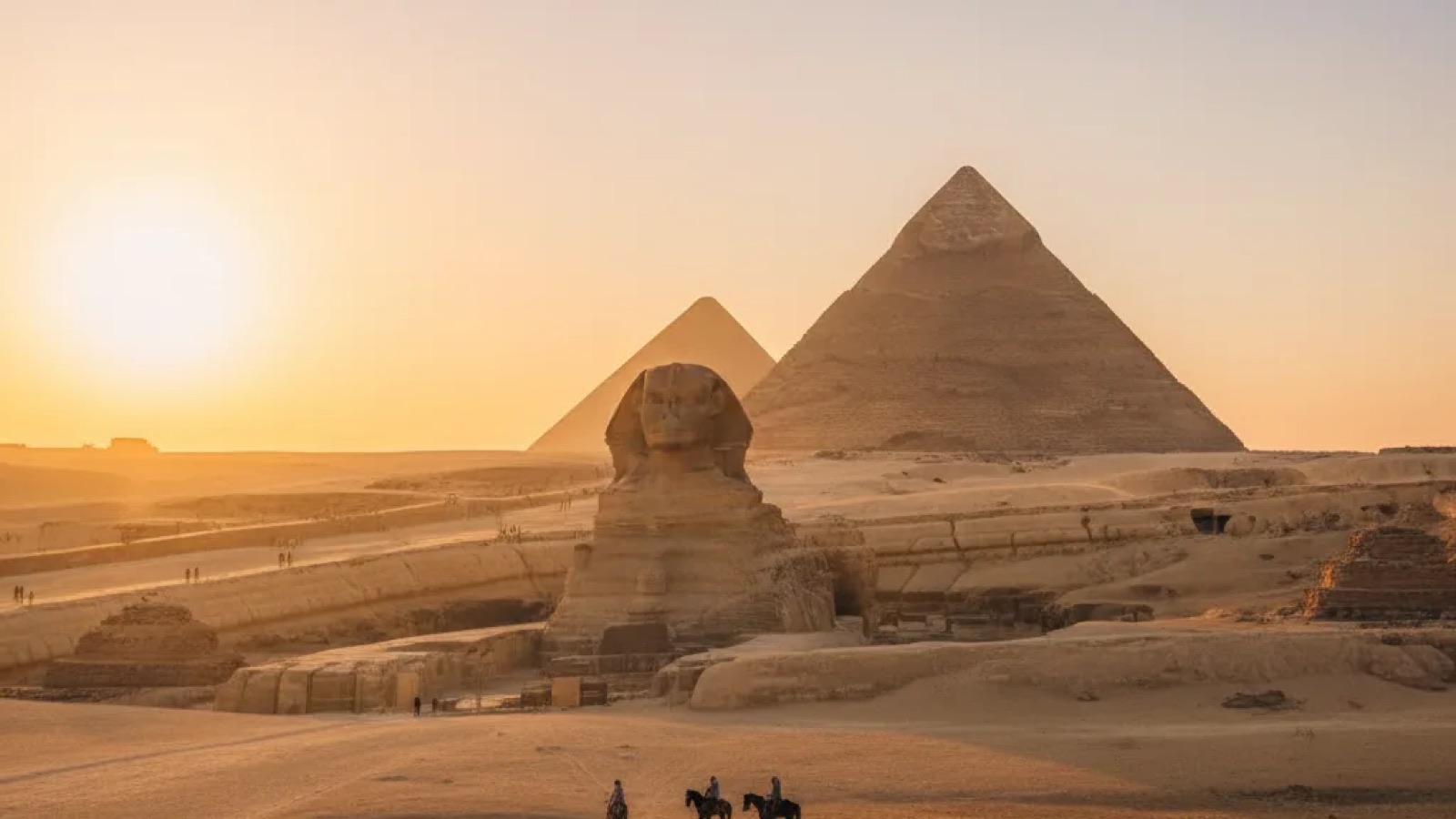
No amount of photos or documentaries can prepare you for the moment you stand at the foot of the Great Pyramid of Khufu. The scale is simply staggering. These limestone blocks, each weighing more than an elephant, rise 139 metres into the desert sky. It’s a 4,500-year-old statement of power and belief that humbles you completely.
The Giza Plateau contains the three main pyramids—the Great Pyramid of Khufu, the slightly smaller Pyramid of Khafre (which often looks taller because it’s on higher ground and still has some of its original polished casing stone at the peak), and the smallest, the Pyramid of Menkaure. And guarding them all is the enigmatic Great Sphinx.
You can buy a general entrance ticket for the plateau, but entering the pyramids themselves requires separate tickets, which are sold at the main ticket office and are limited in number. Should you go inside? It’s a bucket-list experience for some. Be prepared: the passage is steep, narrow, and incredibly stuffy. It's not for the claustrophobic. You ascend a long, wooden ramp to the King's Chamber—a stark, granite room that is empty save for a sarcophagus. There are no hieroglyphs. The magic isn't in what you see, but in the feeling of being in the heart of this ancient wonder.
Photography Tip: The classic view of all three pyramids is from the "Panorama Point" to the south-west of the main complex. Any carriage or camel guide will know where to take you. For the best light, with the sun illuminating the faces of the pyramids and the Sphinx, go as early as possible in the morning.
Handling Touts and Animal Welfare on the Plateau
Your visit to Giza will involve interacting with camel and horse operators, guides, and souvenir sellers. Their hustle is relentless and can be exhausting. The key is to be firm, polite, and maintain your sense of humour. A simple, firm "La, shukran" (No, thank you) with a smile and continuing to walk is the most effective strategy. Do not engage in long conversations if you are not interested.
If you do want to ride a camel or horse, approach it on your own terms. First, look at the animal's condition. Does it look healthy? Is it well-fed? Avoid any animal with visible sores or signs of distress. There has been a lot of work to improve animal welfare at Giza, but it’s always on us as travellers to vote with our wallets. Agree on the price, the duration, and the exact route *before* you get on. Confirm that the price includes getting off again—a classic tactic is to demand more money to let you dismount. Having your licensed tour guide negotiate for you is often the safest bet.
Egypt's Crown Jewels: The Grand Egyptian Museum & Tahrir
For decades, the dusty-pink Egyptian Museum in Tahrir Square was the keeper of Egypt's greatest treasures. Crammed to the rafters, it was a glorious, chaotic treasure chest to get lost in. Now, a new chapter has begun with the long-awaited Grand Egyptian Museum (GEM) out near the Giza Pyramids.
This is a crucial point for planning your trip: the GEM fully opened on 1 November 2025, and the complete Tutankhamun collection, including the golden death mask, is now displayed there. However, many other masterpieces remain in Tahrir.
Therefore, you must check the official websites for both the GEM and the Egyptian Museum in Tahrir before your visit. They will have the most current information on opening status, ticketing, and which collections are on display in which location. Seeing the golden death mask of Tutankhamun in its new home at the GEM is a moment that will stay with you forever. The craftsmanship is simply breathtaking.
Beyond Giza: Saqqara and Dahshur
If the crowds at Giza get too much, there's a perfect antidote: a day trip south to Dahshur and Saqqara. This is where the story of pyramid-building began, and it can be an even more profound experience than Giza. Here, the desert feels more vast, the sites are blissfully uncrowded, and you get a real sense of archaeological discovery.
Your first stop should be Dahshur. Here you'll find the incredible Bent Pyramid, a perfect example of a trial-and-error construction where the builders changed the angle halfway up to prevent collapse. A short distance away is the Red Pyramid, so-named for its reddish limestone. This was the first successful true, smooth-sided pyramid, and you can often enter it with barely another soul in sight. The feeling of descending into its chambers alone is unforgettable.
Next, head to Saqqara, a vast necropolis that served the ancient capital of Memphis. Its centrepiece is the Step Pyramid of Djoser, the world's oldest major stone structure. It's a revolutionary piece of architecture, and wandering through its surrounding complex, with its colonnades and courtyards, feels like stepping back 4,700 years. Saqqara is also home to countless tombs of nobles, many of which contain incredibly vivid and detailed hieroglyphs depicting daily life—a fascinating contrast to the royal and divine scenes in the pyramids.
The Heart of Islamic Cairo
A walk through Islamic Cairo is a journey into the medieval heart of the city. Start at the Citadel of Salah al-Din, a massive fortress that has dominated Cairo's skyline for centuries. Inside its walls, the main attraction is the magnificent Mosque of Muhammad Ali. Its grand dome and twin minarets are an iconic symbol of the city. While the architecture is Ottoman-inspired, the real reward is the stunning panoramic view of Cairo from its terrace. On a clear day, you can see all the way to the Pyramids.
From the Citadel, make your way to the epic Sultan Hassan and Al-Rifai Mosques. They stand side-by-side, creating a canyon of monumental Mamluk architecture. Sultan Hassan is a masterpiece of its era—vast, imposing, and architecturally brilliant. Afterwards, lose yourself in the kilometre-long stretch of Al-Muizz Street, which is like an open-air museum of medieval Islamic architecture, lined with mosques, mausoleums, and historic homes.
Photography Tip: For another incredible view, and a bit of an adventure, seek out the nearby Mosque of Ibn Tulun. It’s one of the oldest and largest in Cairo, with a unique, spiralling external minaret. For a small amount of baksheesh to the caretaker, you can often climb it for a spectacular, unconventional view over the rooftops of Islamic Cairo.
The Soul of the Souq: Khan el-Khalili
No trip to Cairo is complete without getting lost in the labyrinthine alleys of the Khan el-Khalili. This sprawling market, dating back to the 14th century, is a sensory explosion. The air hangs heavy with the scent of spices, perfumes, and shisha smoke. The sound is a constant hum of chatter, the clanging of metalworkers' hammers, and vendors calling out their wares. You can find everything here, from shimmering lanterns and intricate jewellery to spices, textiles, and tourist trinkets.
Bargaining is not just expected; it's part of the experience. Follow a few simple rules: have a price in your head you're willing to pay, always be friendly and polite, never show too much excitement over an item, and be willing to walk away. Often, your first offer should be about half the asking price, and you'll meet somewhere in the middle. Think of it as a friendly game, not a battle. And when you're done shopping, find a seat at one of the historic cafes, order a mint tea, and just watch the world go by.
A Pocket of Peace: Coptic Cairo
Tucked away in the southern part of the city, the area known as Coptic Cairo feels like another world entirely. Within the walls of the old Roman fortress of Babylon, you'll find a quiet, spiritual enclave that is home to some of Egypt's oldest Christian churches. This area is a vital part of the city's multicultural history.
The most famous site is the Hanging Church (Saint Virgin Mary's Coptic Orthodox Church), which is so-named because it was built atop the gatehouse of the fortress, with its nave suspended over a passage. The interior is beautiful, with intricate wooden screens and ancient icons. Nearby, you'll find the Church of St. Sergius and Bacchus, which is believed to have been built on the spot where the Holy Family rested during their flight into Egypt. Wandering these quiet lanes offers a profound sense of peace and a fascinating glimpse into a community that has existed here for two millennia.
Cairo on a Plate: Essential Eats
Cairo's food is hearty, delicious, and incredibly affordable. Forget fancy restaurants for a moment; the real flavour of the city is found on its streets and in its small, bustling eateries.
You absolutely must try koshari, the national dish. It’s a carb-lover's dream: a jumble of rice, macaroni, and lentils topped with chickpeas, a tangy tomato-vinegar sauce, and crispy fried onions. It sounds strange, but it's pure comfort food. Look for dedicated koshari joints where locals are queuing up.
For breakfast, there's nothing better than ful medames. It's a rich, slow-cooked fava bean stew, often mashed with olive oil, lemon juice, and cumin. It's usually scooped up with fresh, warm flatbread. Along with ful, you'll find ta'ameya (the Egyptian version of falafel, made with fava beans instead of chickpeas), which is lighter, greener, and arguably even more delicious. These dishes are the fuel that powers Cairo.
Practicalities: Dress, Timing, and Baksheesh
A little planning goes a long way in Cairo. The best time to visit is from October to April when the weather is comfortable for walking around. The summer is brutally hot and can make sightseeing a real chore.
If your trip coincides with Ramadan, be aware that the city's rhythm changes. Many restaurants will be closed during the day for the fast. The upside is experiencing the festive, communal iftar (evening meal) and the celebratory atmosphere at night. It's a special time to be there, but requires more planning.
Dress code: Cairo is a conservative city, but it's also cosmopolitan. For travellers, the key is respect. Both men and women should aim to cover their shoulders and knees. For women, carrying a lightweight scarf is a brilliant idea; it's useful for covering your hair when entering mosques and can provide extra coverage or sun protection when needed. Loose, lightweight clothing made of cotton or linen is your best friend in the Egyptian climate.
Finally, a word on baksheesh. You will hear this word a lot. It can mean a tip, a bribe, or an act of charity. It is a fundamental part of the culture. A small tip is expected for any small service: a bathroom attendant, someone who shows you a "secret" view, a child who helps you park. Don't see it as a scam; see it as a way of life in a place with low wages. Carry a stash of small-denomination notes and hand them out graciously. It will make your interactions smoother and is often genuinely appreciated.
Explore in Depth
Cairo is a universe in itself, with endless layers to uncover. Once you have the basics down, you can dive deeper into its specific passions, from market shopping to unique local experiences. These guides can help you on your way.
Frequently Asked Questions
Is it better to stay in Giza or Downtown Cairo?
It depends on your priority. Stay in Giza if your absolute focus is the pyramids and you want to wake up to those iconic views, get there early, and enjoy sunrise/sunset photography. Stay in Downtown or nearby Zamalek if you want a more rounded Cairo experience. These areas offer better access to museums, diverse food options, markets, and local life. For a first trip of 3-4 days, Zamalek or Downtown is the better choice to minimise travel time across the city and experience more than just the ancient sites.
Are ride-hailing apps like Uber safe and reliable in Cairo?
Yes, absolutely. Using ride-hailing apps is the single best way for travellers to get around Cairo. It solves the three main problems of traditional taxis: haggling over the price, communicating your destination, and safety concerns. The fares are set, the journey is GPS-tracked, and the driver and car details are recorded in the app. It makes navigating the city significantly easier and less stressful. Just be prepared for drivers to sometimes call to confirm your location.
What should I wear when visiting mosques in Cairo?
Both men and women should dress modestly. This means covering your shoulders and knees at a minimum. For men, shorts are generally not appropriate; long trousers are best. For women, long trousers or a long skirt, along with a top that covers your shoulders and chest, are ideal. You will also need to cover your hair, so always carry a lightweight scarf with you for this purpose. Some major mosques, like the Muhammad Ali Mosque at the Citadel, may provide cover-ups for visitors who are not dressed appropriately.
I'm claustrophobic, is going inside the Great Pyramid a bad idea?
Yes, it's best avoided if you suffer from even mild claustrophobia. The main passage, the Grand Gallery, is impressive but the ascending and descending corridors are very narrow, low-ceilinged, and steep. The air is warm and stuffy, and you will be sharing the tight space with other people moving in both directions. The final chamber is a small, stark room. The experience is about the journey and the significance, not the destination, but it can be physically and psychologically uncomfortable if you dislike enclosed spaces.
How do I politely handle the 'baksheesh' culture?
The best approach is to be prepared and view it as part of the local economy. Keep a good supply of small Egyptian pound notes in a separate, easily accessible pocket. When someone provides a small service (like a bathroom attendant or someone pointing out a photo spot), give a small note with a smile and a "shukran" (thank you). Do not feel pressured to give large amounts. For unwanted offers of service, a polite but firm "la, shukran" while continuing to walk is the best response. It's a system of small gratuities, not a demand for your life savings.
Final Thoughts
Cairo doesn't do things by halves. It's a city of immense contrasts—of staggering ancient wealth and bustling modern life, of quiet spiritual moments and the loudest traffic jams on earth. It will challenge you, exhaust you, and frustrate you. And in the very next moment, it will present you with a scene of such profound beauty, a taste of such simple perfection, or an act of such genuine warmth that you'll fall completely in love with it.
My best advice is to embrace the chaos. Don't try to fight it. Slow down, build extra time into your schedule, sit down for that mint tea, and let the city reveal its secrets to you at its own pace. The rewards—the memories, the photographs, the stories—are more than worth it. Cairo is not just a destination; it's one of the world's greatest adventures.
More Egypt guides
Egypt Travel Guide: Pyramids, the Nile and Practical Tips
When to visit, visas and entry, getting around, 7 to 14 day itineraries, safety and local customs, Egyptian food and what a trip to Egypt…
Egypt Weather Guide: The Complete Month-by-Month Breakdown
Month-by-month weather for Cairo, Luxor and the Red Sea - cool winter temple days, peak summer diving heat - so you can pick the right…
Pyramids of Giza: Tickets, Timing and How to Visit
Giza tickets and prices, the best time to visit for weather and crowds, transport to the plateau and what to see across the necropolis…