Cesky Krumlov Guide: Czechia's Storybook Town
A day trip or overnight in Cesky Krumlov: the castle and tower, the Vltava loop, when to go and how to dodge the tour-bus hours.
In this guide
- Quick Facts
- The Golden Rule: Why You Must Stay the Night
- Getting to Cesky Krumlov from Prague & Beyond
- The State Castle and Chateau: A Town Within a Town
- A Baroque Time Capsule: The Castle Theatre
- Wandering the UNESCO Old Town
- On the River: Rafting and Canoeing the Vltava
- A Note on Cobblestones and Luggage
- Photography Tips for a Picture-Perfect Town
- Best Time to Visit: Seasons, Festivals, and Crowds
- Beyond Krumlov: Day Trips in South Bohemia
- Explore in Depth
- Frequently Asked Questions
- Final Thoughts
This guide is part of our Things to Do in the Czech Republic: Beyond Prague — start there for the overview, when to go and how to get around.
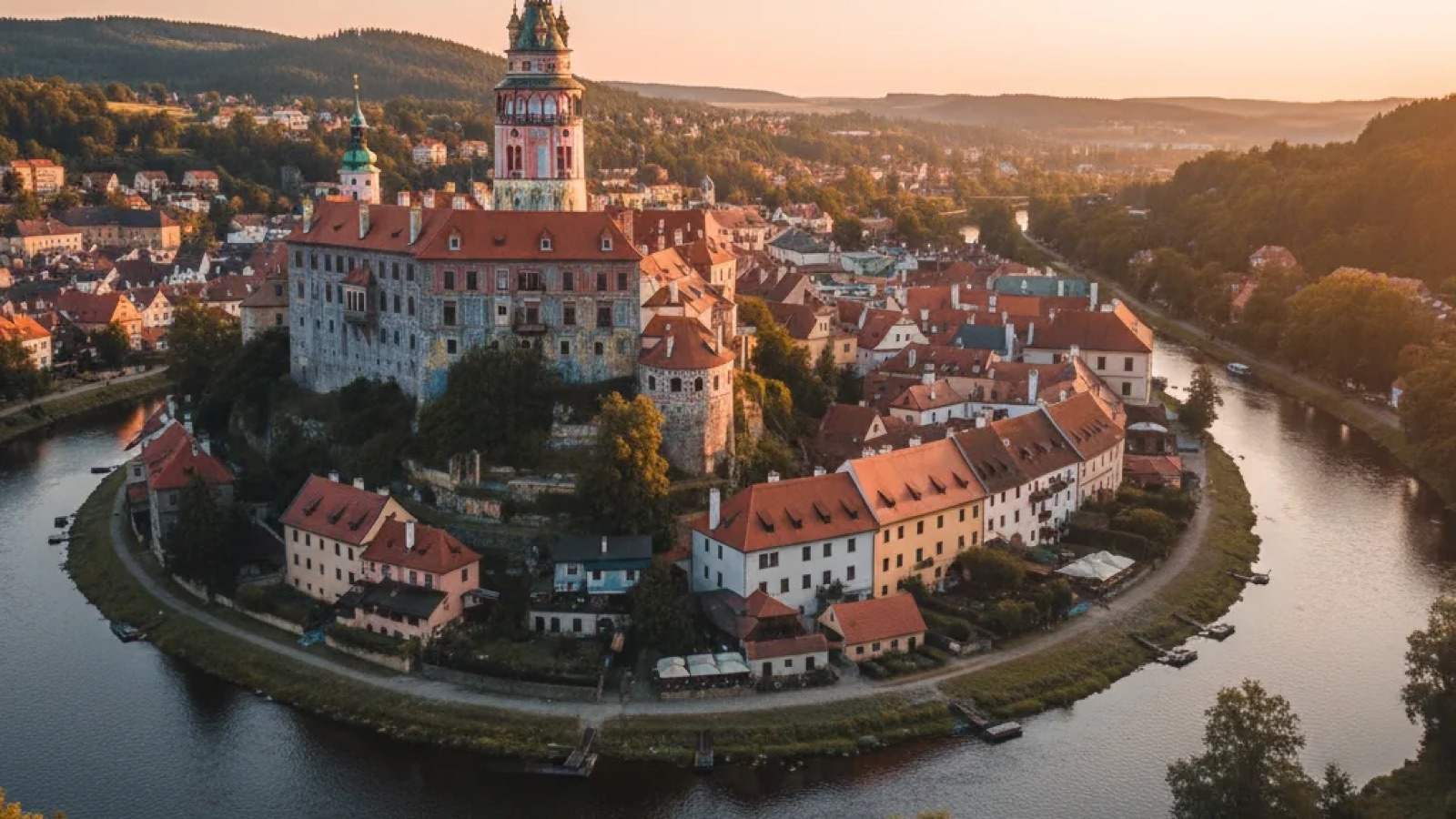
Cesky Krumlov is at its most captivating from a stone terrace high above the town, as the last of a soft autumn sun paints the castle tower in shades of apricot and rose. Below, the Vltava River coils around the old town centre, a perfect, dark turquoise horseshoe. The air is crisp, carrying the scent of woodsmoke and damp earth. A hush falls once the last of the day-trip buses rumble away, leaving the cobblestone lanes to the locals and a handful of travellers who know the secret: this town's real magic begins at dusk.
For a place so famous it borders on fantasy, Cesky Krumlov is profoundly real. Tucked away in South Bohemia, it’s a perfectly preserved medieval town crowned by a colossal castle, all cradled in a bend of the river. It’s also, let’s be honest, one of the most popular tourist spots in Central Europe. This guide is about how to experience it properly. We’ll cover how to get here from Prague, Vienna, or Salzburg, why you absolutely must stay overnight, and how to explore the castle complex, from its resident bears to its jaw-dropping Baroque Theatre. We’ll also talk about floating down the Vltava in summer, cosy Christmas markets in winter, and where to find the best photographic angles away from the crowds. This is your guide to finding the authentic heart of Czechia’s storybook town.
Quick Facts
- Location: South Bohemia, Czech Republic, about 175 kilometres south of Prague.
- Getting There: Direct bus from Prague is easiest (approx. 3 hours). By train, you'll likely change at České Budějovice. Shuttle services are popular from Vienna and Salzburg.
- Getting Around: The historic centre is compact and entirely pedestrian. Good footwear is essential for the cobblestones. You won’t need any transport within the town itself.
- Language & Currency: Czech (Čeština). English is widely spoken in tourist-facing businesses. The currency is the Czech Koruna (CZK).
- Best Time to Visit: May-June and September-October for pleasant weather and fewer crowds. Winter offers a magical, quiet atmosphere and Christmas markets, while July-August is peak season and very busy.
The Golden Rule: Why You Must Stay the Night
The single best piece of advice for visiting Cesky Krumlov is this: book a room and stay at least one night. Between about 10 am and 4 pm, the town swells with day-trippers arriving on coaches from Prague and beyond. The main square, Latrán street, and the castle courtyards can feel more like a theme park than a living town. It’s a crush of selfie sticks and tour groups, and it’s easy to feel disillusioned.
But then, magic happens. As the afternoon wanes, the buses depart. A quiet calm descends. The cobblestone lanes, slick with evening dew, reflect the warm glow of streetlamps. You can hear the gurgle of the Vltava, the chatter spilling from a local pub, the chime of the church bell. This is the real Cesky Krumlov. The early mornings are just as special, when river mist clings to the rooftops and you can have the castle viewpoints all to yourself. Staying overnight transforms your visit from a frantic photo-op into a genuine, immersive experience. You get to see the town breathe.
Getting to Cesky Krumlov from Prague & Beyond
While it feels a world away, Cesky Krumlov is well connected. The most common route is from Prague, and you have two main options: bus or train. The bus is generally the more straightforward choice. Several companies run modern, comfortable coaches directly from Prague’s main bus terminals to Cesky Krumlov’s bus station, which is a short (but uphill) walk from the old town centre. The journey is direct and takes just under three hours.
The train journey is more scenic but a little more complicated. There isn't a direct high-speed line. You’ll take a train from Prague's main station (Praha hlavní nádraží) to České Budějovice, the regional capital, and then switch to a smaller, local train for the final leg to Cesky Krumlov. While beautiful, it often takes longer than the bus. The train station in Cesky Krumlov is also a bit further from the centre than the bus station. Always check current timetables and book in advance, especially in high season.
If you’re coming from Austria, shared or private shuttle services are an extremely popular and efficient option from cities like Salzburg, Hallstatt, and Vienna. They offer door-to-door service, which can be a godsend if you have luggage. They are a bit of a splurge compared to public transport but save a lot of time and hassle over complex train or bus connections across the border.
The State Castle and Chateau: A Town Within a Town
You can’t miss the castle. It’s a sprawling, magnificent complex of palaces, courtyards, and gardens that dominates the town from its rocky perch above the Vltava. It’s the second-largest castle complex in the Czech Republic (after Prague Castle), and you could easily spend half a day exploring it.
Your first encounter will likely be with the bears. Yes, actual bears. For centuries, bears have been kept in the deep, dry moat at the castle's main entrance, a tradition linked to the Rosenberg family who once ruled here. It's a slightly strange, anachronistic sight, but one that’s part of the castle’s unique story.
The undeniable highlight is the painted Round Tower. Its beautiful Renaissance-era facade isn’t tile or stone, it’s trompe-l'œil—artfully painted plasterwork designed to mimic stonework. It’s worth every one of the steps to climb to the top. The panoramic view from the gallery is the definitive vista of Cesky Krumlov, showing the town and its river loop in all their glory. Try to go early to avoid the queues.
From the tower, you progress through a series of five courtyards, eventually reaching the stunning Cloak Bridge (Plášťový most). This multi-story corridor on massive stone pillars connects the residential part of the castle with the theatre and gardens. Standing on it, with the town dizzyingly far below, you really appreciate the sheer scale and audacity of the architecture.
A Baroque Time Capsule: The Castle Theatre
Tucked away within the castle complex is one of Europe’s greatest cultural treasures: a magnificently preserved Baroque Theatre. This isn't a museum reconstruction; it’s the real thing. Completed in the 1760s, it retains its original stage building, auditorium, orchestra pit, machinery, sets, and props. It’s one of only a handful of theatres like it left in the world where you can see how 18th-century opera was staged, complete with wooden machinery for thunder, rain, and wave effects.
Because of its incredible fragility, access is strictly limited. You can't just wander in. You can only visit as part of a special guided tour, and these have limited spots and must be booked in advance. If you are interested in theatre, history, or architecture, check the official castle website for tour schedules and booking information well ahead of your visit. It’s a truly unforgettable glimpse into a lost world.
Wandering the UNESCO Old Town
The Old Town (Vnitřní Město) is the heart of Cesky Krumlov, the island-like centre encircled by the Vltava. The best thing to do here is simply to get lost. Every winding lane and hidden alleyway reveals another gabled burgher’s house with a frescoed facade, a quiet courtyard, or a little shop selling Bohemian glass or wooden puppets.
The main square, Svornosti Square (Náměstí Svornosti), is lined with handsome Renaissance and Baroque buildings and features a prominent plague column at its centre. From here, all roads lead somewhere charming. Don’t miss Horní street, which offers some beautiful perspectives back towards the castle tower.
The Gothic Church of St. Vitus is the town’s main ecclesiastical landmark, its tall, slender spire providing a beautiful counterpoint to the castle tower on the skyline. It’s free to enter and offers a peaceful respite from the busy streets. Inside, the soaring net-vaulted ceilings are a masterpiece of late Gothic design.
Art lovers should also seek out the Egon Schiele Art Centrum. The controversial Viennese artist lived here briefly with his mistress in 1911, and though he was driven out by the conservative locals, his time in his mother's hometown produced some of his most famous cityscapes. The museum, housed in a former brewery, showcases his work alongside rotating exhibitions of 20th-century and contemporary art.
On the River: Rafting and Canoeing the Vltava
In the warmer months, from late spring to early autumn, the river comes alive with colour and activity. One of the most popular things to do is to rent a canoe, kayak, or inflatable raft and float down the Vltava. Seeing the town from water level offers a completely different perspective. You paddle past medieval walls, glide under bridges, and navigate gentle weirs that provide a bit of a splashy thrill.
Multiple rental companies operate in town, offering various trip lengths. You can opt for a short trip that just loops around the city centre, or a longer, multi-hour journey starting further upstream. It’s a fantastic way to spend a sunny afternoon, and immensely popular with locals and Czechs on holiday. Just be prepared to share the water—on a hot July weekend, it can feel like a floating festival.
A Note on Cobblestones and Luggage
Here’s a practical tip: pack light, or choose your luggage wisely. Cesky Krumlov’s old town is a beautifully preserved tapestry of authentic, uneven, historic cobblestones. They are incredibly charming to look at and walk on (with good shoes!), but they are an absolute nightmare for wheeled suitcases. It’s common to see travellers wrestling with their bags, the small plastic wheels catching, rattling, and sometimes breaking on the ancient stones.
If your accommodation is deep within the pedestrianised zone, consider using a backpack instead of a roller bag. If you must bring a suitcase, one with large, sturdy wheels will fare much better. Many hotels are aware of this challenge and may be located closer to the edge of the old town, or you can sometimes arrange a taxi to get you as close as vehicle access allows. It's a small practical detail that can make a big difference to your arrival and departure.
Photography Tips for a Picture-Perfect Town
Cesky Krumlov is almost embarrassingly photogenic, but a few spots stand out. For the classic, postcard-perfect shot, head to the Seminární zahrada terrace. This viewpoint, located just below the main castle road, perfectly frames the castle tower with the Church of St. Vitus and the colourful town below. It’s stunning at any time of day but especially in the late afternoon light.
Dawn is an excellent time to shoot. Climb up to the castle courtyards first thing, often before they are officially "open" (the grounds themselves are generally accessible). The sun rises behind the hills, and its first rays catch the top of the Round Tower, making it glow. In autumn and winter, this is when you’re most likely to find a beautiful layer of mist blanketing the river, adding an ethereal mood to your photos.
Don't just shoot the grand vistas. Look for details: the sgraffito on the building facades, the reflections in the river, the narrow lamplit lanes after dark. The town is full of intimate scenes that tell a story just as powerfully as the big panoramas.
Best Time to Visit: Seasons, Festivals, and Crowds
Your experience of Cesky Krumlov will be dramatically different depending on when you go. July and August are the peak of the peak season. The weather is warm, perfect for rafting, but the streets are packed. If you're visiting then, an overnight stay is non-negotiable to find moments of peace.
The shoulder seasons—May to June and September to October—are ideal. The weather is generally mild and pleasant, the summer crowds have thinned, and the town is still vibrant. Autumn, in particular, is gorgeous, as the foliage along the river turns brilliant shades of gold and red.
Winter offers a completely different kind of magic. The crowds disappear almost entirely. With a dusting of snow, the town looks like it’s been lifted straight from a Christmas card. From late November through December, a charming Christmas market takes over the main square. It’s much smaller and more intimate than Prague’s, with a focus on traditional crafts, warm drinks, and local food. Be aware that some attractions, including the castle interiors, may have reduced hours or be closed in the dead of winter, so always check ahead.
A special mention goes to the Five-Petalled Rose Festival, usually held over a weekend in June. The town goes back in time to its Renaissance heyday with parades, medieval markets, jousting tournaments, and locals dressed in period costumes. It’s an incredible spectacle, but be warned: the town is exceptionally crowded and accommodation is booked out months, if not a year, in advance.
Beyond Krumlov: Day Trips in South Bohemia
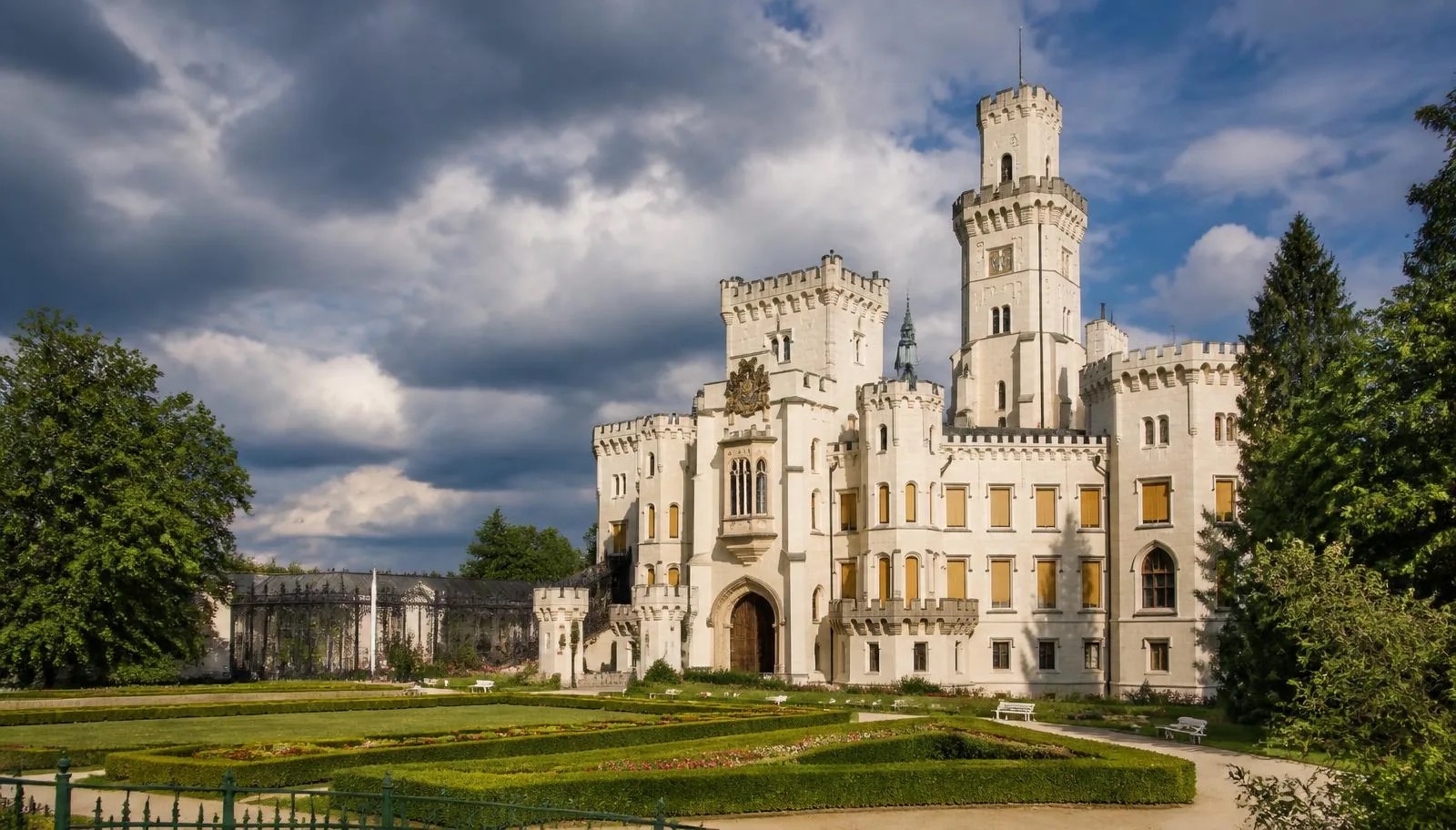
If you have an extra day, Cesky Krumlov is an excellent base for exploring the wider South Bohemian region. Just a short drive or bus ride away is the spectacular hilltop chateau of Hluboká nad Vltavou. Rebuilt in the 19th century in a romantic neo-Gothic style inspired by England's Windsor Castle, it’s a fairytale vision of gleaming white turrets and ornate interiors. It’s a complete contrast to Krumlov’s more steadfast medieval and Renaissance character.
The regional capital, České Budějovice, is also well worth a visit. It’s a bustling, handsome city with one of the largest town squares in Europe, lined with elegant arcaded buildings. This is also the original home of Budweiser beer (Budvar, not the American version!), and the city has a proud brewing tradition. Exploring the local pub culture here gives you a more everyday, non-touristy slice of Czech life.
Explore in Depth
Cesky Krumlov is often a traveller's second stop in the Czech Republic. For more on the capital and the country's other incredible castles, see the dedicated guides.
Frequently Asked Questions
Is Cesky Krumlov too touristy to be worth visiting?
This is a fair question. During midday in summer, it can feel overwhelmingly touristy. However, it is still worth it, provided you plan smart. By staying overnight, you get to experience the town in the quiet mornings and evenings when the day-trippers have left. The architectural and historical significance of the place is undeniable, and its beauty is genuine. The key is to manage your expectations, avoid the midday crush in the most popular spots, and allow yourself to see the town at its most atmospheric moments.
How many days should I spend in Cesky Krumlov?
Plan for a minimum of one full day and one night. This allows you to arrive, explore the castle complex and old town at a leisurely pace, and then enjoy the magical evening and early morning atmosphere. If you want to take a rafting trip on the river, visit the museums in-depth, or use it as a base for a day trip to Hluboká Castle or České Budějovice, then two nights would be a more relaxed and rewarding stay. Anything less than one night really doesn't do it justice.
Can I visit the castle bears in winter?
Yes, the bears in the castle moat are there year-round. Unlike wild bears, they don't typically hibernate in the same way due to their managed environment and consistent food supply. You might find them less active in the cold weather, but they can still be seen in their enclosure. The tradition of keeping bears at the castle is centuries old, and they are a permanent, if unusual, fixture of the castle grounds, regardless of the season. Visiting in winter can be a great time to see them without the crowds.
Is it easy to get by with English in Cesky Krumlov?
Yes, for the most part, you will find it very easy. Given its popularity as an international travel destination, almost everyone working in hotels, restaurants, shops, and major tourist sites speaks English well. However, learning a few basic Czech phrases like "Dobrý den" (Good day), "Prosím" (Please/You're welcome), and "Děkuji" (Thank you) is always appreciated by locals and shows respect for their culture. In smaller, out-of-the-way shops or pubs, you might encounter less English, but a smile and a bit of pointing usually gets the job done.
I have mobility issues, is Cesky Krumlov a suitable destination?
This is an important consideration. Cesky Krumlov can be challenging for travellers with mobility issues. The entire historic centre is covered in authentic, uneven cobblestones, which can be difficult to walk on and are not suitable for most wheelchairs or mobility scooters. The town is also quite hilly, with steep inclines leading up to the castle and in other areas. While the scenery is beautiful, navigating the streets requires a good degree of physical fitness. The castle itself also involves many stairs and sloped paths. It is something to consider seriously before planning your trip.
Final Thoughts
There are places in the world that are famous for a reason, and Cesky Krumlov is one of them. It walks a fine line between being a perfectly preserved historical treasure and a major tourist magnet. Its soul is easiest to find after the last bus rolls away and the gas lamps begin to flicker on: in the quiet of a deserted alley, in the view from the Cloak Bridge at twilight, and in the simple pleasure of a cold Czech beer in a vaulted cellar.
Don't just pass through. Stay a while. Walk the walls at dawn. Get lost in the lanes at dusk. Let the town reveal its quieter, more profound self to you. Do that, and you’ll leave with more than just a camera full of pretty pictures—you’ll leave with a piece of the magic, too.
More Czech Republic guides
Best Castles in the Czech Republic: Where to Go
Hrad or zámek? A guide to Czech castles and châteaux — Prague Castle, Karlštejn, Hluboká, Lednice-Valtice, Pernštejn and Loket — and how…
Prague Itinerary: 3 Days of Old Town, Castle and Beer
A three-day Prague itinerary plus day trips to Český Krumlov and Kutná Hora — Old Town, the Castle, beer halls and what a Czech trip costs.
Things to Do in the Czech Republic: Beyond Prague
Past Prague: Český Krumlov, Kutná Hora's ossuary, the Karlovy Vary spa towns, Bohemian Switzerland's arches, Brno and Moravia's wine…