Northern Thailand: Chiang Mai to Chiang Rai
Planning northern Thailand: the Chiang Mai to Chiang Rai route, Pai and the Mae Hong Son loop, temples, and the burning season to avoid.
In this guide
- Quick Facts
- Getting To and From Northern Thailand
- Planning Your Northern Thailand Route
- Getting Around: The Scooter vs. Driver Dilemma
- Chiang Rai: A Trio of Otherworldly Temples
- The Golden Triangle: Where Three Nations Meet
- The Rooftops of Thailand: Doi Suthep and Doi Inthanon
- Pai and the Legendary Mae Hong Son Loop
- A Word on Ethical Elephant Tourism
- Visiting Hill Tribe Communities Respectfully
- Seasons, Smoke, and Lanterns: When to Visit
- Explore in Depth
- Frequently Asked Questions
- Final Thoughts
This guide is part of our Thailand Travel Guide: Bangkok, Islands and Itineraries — start there for the overview, when to go and how to get around.
The air turns sharp and cool, a welcome shock after the thick heat of the lowlands, as the road to Pai (Route 1095) winds through its legendary 762 curves on the first leg of the Mae Hong Son Loop. Below, valleys wake under a thick blanket of morning mist clinging to emerald green rice paddies. Hand-painted signs point down dirt tracks to "Coffee. View.", where the only sounds are the buzz of insects and the distant crow of a rooster, and a potent local brew comes with a scene that feels a million miles and a hundred years from anywhere. This is Northern Thailand, a world away from the busy streets of Chiang Mai’s Old City.
Most travellers dip a toe into the north with a few days in Chiang Mai, but the real magic lies beyond the city walls. This is a land of towering mountains, mist-shrouded temples, quiet riverside towns, and a rich tapestry of Lanna and hill tribe cultures. This guide shares hard-won knowledge of the region. We'll cover the practicalities of getting around, the must-see sights from Chiang Rai to Pai, the ethical considerations of interacting with elephants and local communities, and the crucial timing of your visit to avoid the smoke or catch the incredible lantern festivals. So, grab a map and let's plan a proper northern adventure.
Quick Facts
- Location: The northernmost region of Thailand, bordering Myanmar and Laos. The main hubs are Chiang Mai and Chiang Rai.
- Getting There: Fly into Chiang Mai International Airport (CNX) or Mae Fah Luang - Chiang Rai International Airport (CEI) from Bangkok and other regional hubs. You can also take an overnight train or long-distance bus from Bangkok to Chiang Mai.
- Getting Around: Renting a scooter (for experienced riders only!), hiring a private car with a driver, using local songthaews (red share-taxis), and intercity buses or minivans.
- Language & Currency: The official language is Thai, with a distinct northern dialect (Kham Mueang). English is common in tourist areas. The currency is the Thai Baht.
- Best Time to Visit: The cool, dry season from November to February offers pleasant weather and clear skies. The March-April period is best avoided due to intense heat and the "burning season" causing poor air quality.
Getting To and From Northern Thailand
Your journey to the north will almost certainly start from Bangkok. You have three main choices, each offering a different balance of time, cost, and experience.
By Air: This is the fastest and easiest way. Multiple budget and full-service airlines run a constant stream of flights from Bangkok's two airports (Suvarnabhumi and Don Mueang) to both Chiang Mai and Chiang Rai. The flight is just over an hour, making it the best choice if you're short on time. It's efficient and often surprisingly affordable if you book in advance. You can be having khao soi for lunch in Chiang Mai the same day you left your Bangkok hotel.
By Overnight Train: For a touch of old-world travel romance, you can’t beat the overnight train from Bangkok's Krung Thep Aphiwat Central Terminal to Chiang Mai. Waking up to see the jungle-clad mountains of the north sliding past your window is a brilliant experience. Book a bed in a first or second-class air-conditioned sleeper carriage for comfort. It's slower than flying, taking around 12-14 hours, but it’s an experience in itself. Always book your train tickets well in advance, especially during peak season, as they sell out quickly. You can do this via the official State Railway of Thailand website or at the station.
By Bus: The most budget-friendly option is the long-distance bus. Numerous companies run services from Bangkok's Mo Chit Bus Terminal to Chiang Mai and Chiang Rai. The journey is long (9-11 hours), but the "VIP" buses are quite comfortable, with reclining seats, snacks, and air conditioning. It’s a solid choice for backpackers and those travelling on a shoestring.
Planning Your Northern Thailand Route
Chiang Mai acts as the natural hub for the entire region. My advice is to fly or train in, spend a few days acclimatising and exploring the city, and then use it as a base for your onward adventures. Don't try to do everything; the north rewards a slower pace.
Here are a few classic routes and trip structures:
- The Chiang Mai Base Camp (5-7 days): Stay in or near Chiang Mai and take day trips. This is perfect for first-timers. You could spend one day at an ethical elephant sanctuary, another exploring Doi Suthep temple, and a third venturing out to the highest point in Thailand at Doi Inthanon National Park.
- The Eastern Loop to Chiang Rai (3-4 days): From Chiang Mai, head east towards Chiang Rai. This journey takes about 3-4 hours by bus or private driver. Spend two full days in Chiang Rai visiting the famous White and Blue Temples, the Baan Dam Museum, and then perhaps venturing further north to the Golden Triangle before returning to Chiang Mai.
- The Western Loop: Pai & Mae Hong Son (4-7 days): This is the ultimate northern road trip. Rent a scooter (if you're a confident rider) or hire a car and tackle the Mae Hong Son Loop. Head west from Chiang Mai to the bohemian town of Pai (about 3-4 hours), stay for a night or two, then continue on the winding mountain roads to the provincial capital of Mae Hong Son. From there, you can loop back to Chiang Mai via Mae Sariang. This is an epic journey for adventure seekers.
Getting Around: The Scooter vs. Driver Dilemma
The freedom of a scooter is the quintessential Northern Thailand experience for many. But it comes with serious caveats. The roads, especially on the Mae Hong Son Loop, are mountainous and winding. Thai road safety standards are not what you might be used to at home.
Here’s some honest advice: only rent a scooter if you are an experienced and confident motorcycle rider. Before you even think about it, you must have the correct documentation. This means a valid motorcycle licence from your home country AND a corresponding International Driving Permit (IDP). Without both, your travel insurance will almost certainly be void in the event of an accident. Police checkpoints are also common, and fines will be issued if you don't have the right papers. Always wear a helmet, and never drink and drive.
For everyone else, hiring a private car with a driver is an excellent alternative. It’s more comfortable, safer, and you get the benefit of a local guide. You can organise this through your hotel or local travel agencies in Chiang Mai. For a group, it can be surprisingly economical. For shorter distances and travel within cities, the local red songthaews are a great hop-on-hop-off option, and app-based ride-sharing services are also widely available.
Chiang Rai: A Trio of Otherworldly Temples
While Chiang Mai is famous for its ancient, history-soaked temples, Chiang Rai has become a pilgrimage site for its incredible contemporary religious art. Three sites, in particular, are an absolute must-see.
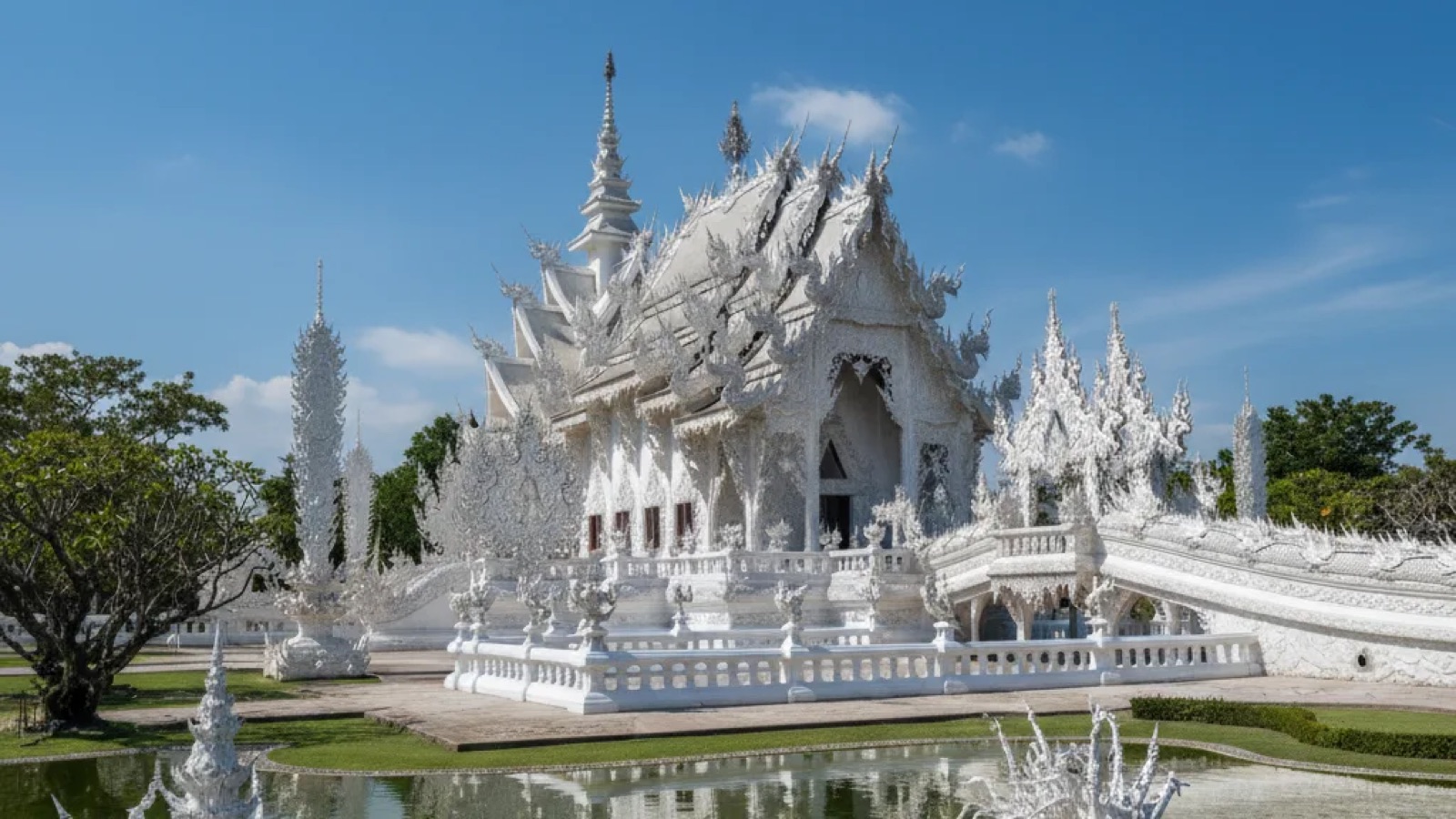
Wat Rong Khun (The White Temple): This is one of the most remarkable structures in Thailand. It’s not an ancient temple but a privately owned art exhibit in the style of a Buddhist temple, designed by artist Chalermchai Kositpipat. The entire building is a brilliant, almost blinding white, inlaid with mirrored glass that sparkles in the sun. To reach the main hall, you cross a bridge over a sea of grasping, desperate hands representing desire. It’s a powerful, surreal, and deeply symbolic journey. Photography tip: get there early to avoid the worst of the crowds and catch the soft morning light on the mirrored mosaics.
Wat Rong Suea Ten (The Blue Temple): A short drive from the centre of Chiang Rai, this temple is a stunning explosion of colour. The main hall is painted in a mesmerisingly rich sapphire blue, with intricate gold detailing. Inside, a huge white porcelain Buddha sits in serene contrast. The whole place feels immersive and vibrant, a modern interpretation of classic Lanna design built by a student of the White Temple's creator.
Baan Dam Museum (The Black House): Often incorrectly called the "Black Temple," this is the artistic estate and masterpiece of the late Thawan Duchanee. It's a collection of nearly 40 buildings, designed in a mix of traditional northern Thai and starkly modern styles. The "black" comes from the colour of many of the structures and the use of dark wood, animal hides, bones, and skulls in the decor. It’s provocative, mysterious, and sometimes a little macabre, but utterly fascinating—a profound meditation on life, death, and suffering.
The Golden Triangle: Where Three Nations Meet
A little over an hour north of Chiang Rai lies the point where the Ruak River flows into the mighty Mekong, creating the border between Thailand, Laos, and Myanmar. This is the infamous Golden Triangle, once the heart of the world’s opium trade. Today, the illicit past has been replaced by tourism. You can stand at a viewpoint and see all three countries at once, visit the impressive Hall of Opium museum to understand the area's complex history, and take a longtail boat out onto the Mekong itself for a closer look at the shorelines of the neighbouring nations. While it can feel a little like a tourist trap at times, the geographical and historical significance of the place is undeniable. Just standing on the riverbank, watching the slow, brown water of the Mekong slide by, you can’t help but feel the weight of the history this region has witnessed.
The Rooftops of Thailand: Doi Suthep and Doi Inthanon
Two of Northern Thailand's most important mountains are easily accessible day trips from Chiang Mai.
Wat Phra That Doi Suthep is arguably Northern Thailand’s most sacred temple. Perched on the mountainside overlooking Chiang Mai, its golden chedi is said to contain a relic of the Buddha. The journey up is part of the experience: you can either climb the 306-step Naga serpent staircase or take a funicular. The atmosphere at the top is incredible, with the sound of temple bells, the scent of incense, and, on a clear day, panoramic views of the city and valley below. Remember to dress respectfully—shoulders and knees must be covered.
Further afield is Doi Inthanon National Park, home to Thailand’s highest peak at 2,565 metres. It's not a strenuous climb; you can drive almost to the summit. The air up here is cool and refreshing, and the landscape is a unique high-altitude cloud forest draped in moss and orchids. The highlights are the magnificent twin chedis, Phra Mahathat Naphamethanidon and Naphapholphumisiri, built to honour the late King Bhumibol Adulyadej and Queen Sirikit. Their surrounding gardens are beautiful, especially when the mountain mists roll in.
Pai and the Legendary Mae Hong Son Loop
For many, this is the ultimate northern adventure. The Mae Hong Son Loop is a 600-kilometre circuit that starts and ends in Chiang Mai, taking in some of the most spectacular mountain scenery in all of Southeast Asia. The road is famous for its 1,864 curves (yes, someone counted).
The first major stop is Pai, a small town nestled in a picturesque valley. In the last two decades, it has evolved into a major backpacker and bohemian hub, with a laid-back vibe, countless healthy cafes, yoga studios, and a bustling night market. It's a fantastic place to relax for a couple of days, exploring nearby waterfalls, the Pai Canyon, and hot springs.
Continuing on from Pai, the road gets even more remote and beautiful. The town of Mae Hong Son itself is much quieter and more traditional, set around a lovely lake. This leg of the journey gives you a real sense of being off the beaten path. The landscape is dotted with small villages, teak forests, and viewpoints that will take your breath away. Completing the loop is a true badge of honour for any traveller in Thailand.
A Word on Ethical Elephant Tourism
You will see countless advertisements for elephant experiences in Northern Thailand. This is a complex issue, and it's vital to make an informed and ethical choice. For decades, elephants were used for logging, and when that was banned, many were forced into the tourism industry, often in cruel conditions involving riding and performing tricks.
A genuinely ethical sanctuary puts the elephant's welfare first. Here’s what to look for when you research:
- No Riding. Ever. An elephant's spine is not designed to carry the weight of people, and the process of "breaking" an elephant to accept riders is brutal.
- No Tricks or Performances. Elephants painting, dancing, or playing football is not natural behaviour and is the result of cruel training methods.
- Observation Over Interaction. The best sanctuaries focus on allowing you to observe elephants being elephants—foraging, bathing, and socialising in a large, natural environment. While some may allow gentle feeding or bathing with them (not on them), the trend is moving toward observation-only for the best welfare outcome.
- A Focus on Rescue and Rehabilitation. Look for places that openly share the stories of their elephants, many of whom have been rescued from logging or street begging.
Do your research thoroughly. Choose a place that prioritises the animals' freedom and well-being over a visitor's photo opportunity. A true sanctuary allows elephants to retire in peace and dignity.
Visiting Hill Tribe Communities Respectfully
The hills of Northern Thailand are home to a diverse array of ethnic minority groups, often referred to as hill tribes, including the Hmong, Karen, Akha, and Lisu. Visiting their villages can be a fascinating cultural experience, but it’s another area fraught with ethical pitfalls.
Spur-of-the-moment visits to villages, especially those marketed as "long-neck Karen" villages, can feel voyeuristic and exploitative, like visiting a human zoo where the community sees little benefit. To ensure your visit is positive and respectful, go through a reputable tour operator that has a long-standing, genuine relationship with the village. Even better, seek out Community-Based Tourism (CBT) projects. These are initiatives often run by the villagers themselves, ensuring they control the narrative, the experience, and the income. This way, your visit becomes a meaningful exchange rather than a one-sided transaction, supporting the preservation of their culture and providing a sustainable livelihood.
Seasons, Smoke, and Lanterns: When to Visit
Timing your trip to Northern Thailand is critical and goes beyond just rain or shine.
The Cool Season (November - February): This is peak season for a reason. The weather is fantastic, with comfortable daytime temperatures, cool evenings, and mostly clear blue skies. It’s the perfect time for trekking, motorbiking, and photography. The downside? It's the busiest and most expensive time to travel.
The Hot & Smoky Season (late February - April): This period is best avoided if possible. Temperatures soar, but the main issue is the "burning season." Farmers across the region burn their fields to prepare for the next crop, blanketing the valleys in a thick, unhealthy smog. Air quality can reach hazardous levels, obscuring views and posing a serious health risk, especially for those with respiratory issues. Check the Air Quality Index (AQI) daily if you must travel during this time.
The Wet Season (May - October): Don't be completely put off by the term "wet season." Yes, it rains, but typically in short, intense downpours in the afternoon rather than all-day drizzle. The huge advantage is that the landscape is at its most spectacular—impossibly green and lush. Waterfalls are at full power, and there are far fewer tourists. For photographers, the dramatic skies and vibrant colours are a dream.
Loy Krathong and Yi Peng Festivals
Chiang Mai is the epicentre for one of Thailand's most beautiful festivals. Loy Krathong involves floating small, candle-lit banana-leaf boats (krathongs) on the rivers, while Yi Peng is the northern tradition of releasing paper lanterns (khom loi) into the sky. The sight of thousands of lanterns drifting into the night is utterly mesmerising.
It's crucial to understand a few things:
- The dates change every year as they are based on the full moon of the 12th month of the Thai lunar calendar (usually in November). Check official tourism sources for the exact dates well in advance.
- There are free, public celebrations all over Chiang Mai city, especially along the Ping River and around the moat. This is an authentic and beautiful experience.
- The images you've likely seen of thousands of lanterns being released simultaneously are from large, ticketed events held at private venues outside the city. These tickets sell out months in advance and can be expensive. Be sure you are buying from an official vendor.
Explore in Depth
These guides offer a deeper dive into more of Thailand's best places and experiences, from the bustling streets of its capital to the quietest corners of its countryside.
Frequently Asked Questions
Is it safe to ride a scooter on the Mae Hong Son loop?
It can be safe, but only if you are an experienced and licensed motorcycle rider. The road has thousands of curves, steep sections, and variable surface conditions. If you are a novice, don’t attempt it. The risks are very real. Always wear a quality helmet, never ride at night or in the rain if you can help it, and make sure you have the required International Driving Permit to validate your travel insurance. For non-riders, hiring a car with a driver offers a much safer way to experience the same incredible scenery.
How many days do I really need for Northern Thailand?
Allow a minimum of one week. This gives you enough time to explore Chiang Mai for 3-4 days and then choose one other area, like a 3-day trip to Chiang Rai or Pai. To do the region justice, including the full Mae Hong Son loop at a relaxed pace, you should budget 10-14 days. Trying to rush the north means you'll miss its greatest asset: the slow, peaceful pace of life. It’s a place to be savoured, not ticked off a list.
Is the burning season in March and April really that bad?
Yes, it can be very bad. It's not just a bit of light haze; the air quality can reach levels considered "unhealthy" or "hazardous" for days on end. The smoke obscures the beautiful mountain views, stings your eyes, and can cause serious problems for anyone with asthma or other respiratory conditions. While the severity varies year to year, travellers, especially families and those with health concerns, should avoid visiting Northern Thailand from late February through to mid-April if possible.
What’s the main difference between Pai and Chiang Rai?
Think of them as two very different personalities. Pai is a small, bohemian town that has become a famous hub for backpackers and wellness travellers. Its charm lies in the beautiful surrounding valley, its relaxed atmosphere, waterfalls, and vibrant, youthful energy. Chiang Rai, by contrast, is a much larger provincial city. It feels more "Thai" and less like a tourist bubble. It serves as the gateway to the Golden Triangle and is primarily famous for its incredible, boundary-pushing contemporary temple art, like the White Temple and Blue Temple.
Can I visit a hill tribe village ethically on my own?
It's extremely difficult to do ethically on your own. Simply showing up in a village unannounced can be intrusive. The most well-known villages often have exploitative setups where locals are treated as exhibits. A far better approach is to book a tour with a guide who has established a respectful, long-term relationship with a community. This ensures your presence is welcome and that the economic benefits are shared fairly. Even better is to support a formal Community-Based Tourism project, where the village itself manages the experience.
Final Thoughts
Northern Thailand is more than just a place on a map; it's a feeling. It's the warmth of a smile from a stranger, the taste of a fiery northern sausage at a roadside stall, the chill of the morning mist in a mountain valley. It’s a region that asks you to slow down, to look closer, and to step outside your comfort zone. Every visit reveals a new road to explore, a new waterfall to discover, a new quiet cafe to while away an afternoon.
My best advice is to embrace the journey. Don't overschedule your days. Leave room for spontaneous detours. Talk to people. Try the dish you can’t pronounce. Whether you’re winding through the mountains on two wheels or watching the world go by from the window of a train, let the gentle spirit of the Lanna Kingdom work its magic on you. You'll leave with more than just photos; you'll leave with memories that last a lifetime.
More Thailand guides
Best Time to Visit Thailand: Seasons by Region
Thailand's cool, hot and rainy seasons, month-by-month weather, how the north and the east and west coasts differ, shoulder-season value…
Sak Yant Tattoos in Thailand: The Complete Cultural Guide
What a Sak Yant is, common designs and meanings, temples versus ajarns in Chiang Mai and Bangkok, the ceremony, hygiene, costs and the…
Sukhothai Travel Guide: Visiting Thailand's Ancient Capital
How to visit Sukhothai, Thailand's first capital — the Historical Park's ruins, getting there from Bangkok or Chiang Mai, and the best…